Cycling through the High Caucasus
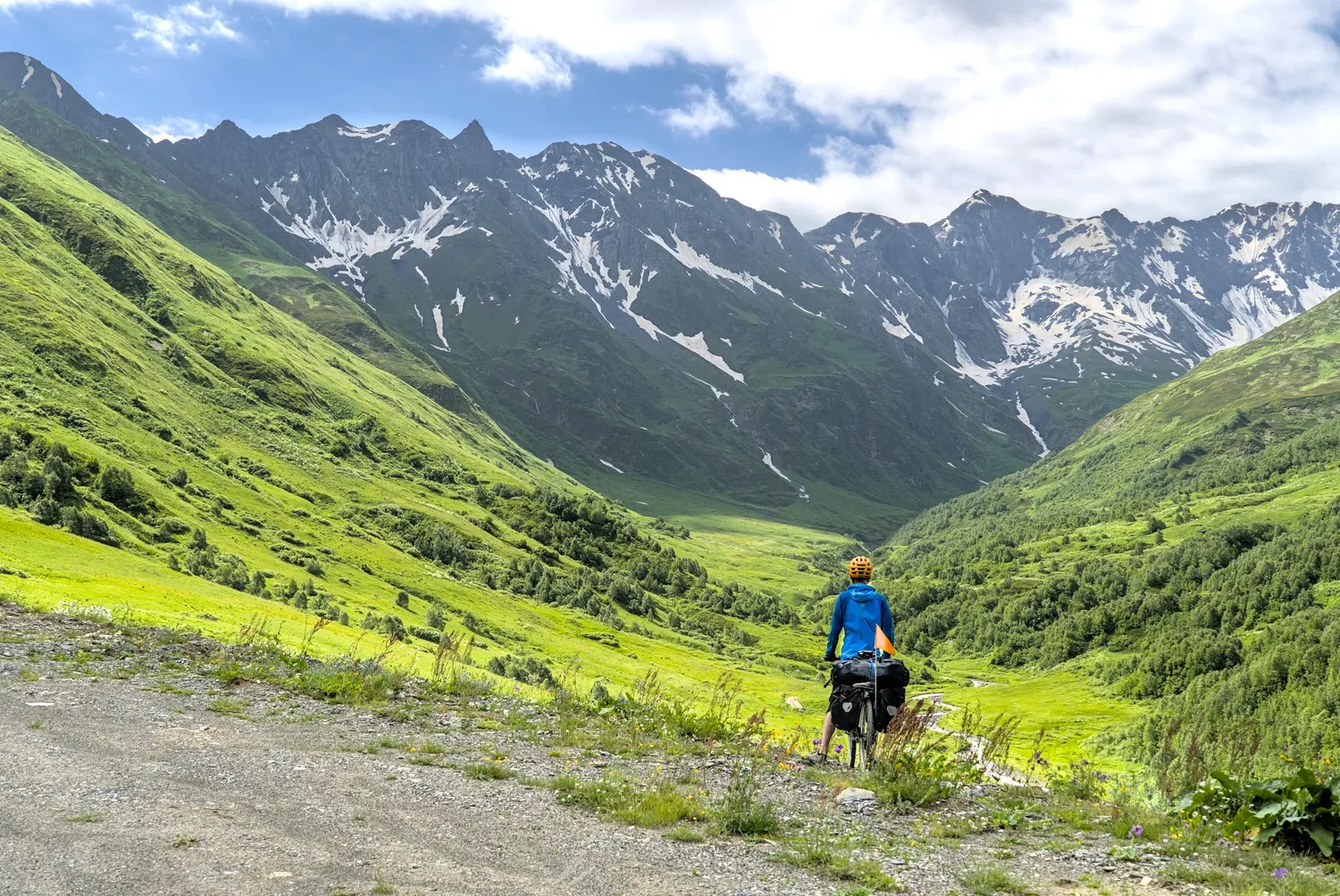
Georgia is one of the Caucasus countries, and of course I wanted to properly cycle through this mighty mountain landscape at least once. I had planned a classic among cycle tourists in the Georgian region of Svaneti: from Zugdidi to Mestia, on to Ushguli and then over the Zagaro Pass to Lentekhi. I had already heard quite a bit about this route – poor road quality, steep climbs and incredibly beautiful views. Even if it probably wouldn't be smooth cycling, it was definitely worth it.
But first it was a matter of waiting, because for the first three weeks of my time in Georgia it rained. And riding unpaved roads in constant rain isn't something you do voluntarily. At the beginning of July things finally looked good, so I cycled towards the starting point, Zugdidi. On the way there I made two detours to freely accessible hot springs – something I definitely associate with Georgia.
When I was about to continue after a lunch break a little way past Zugdidi, two bicycles seemed to appear on the horizon. A few minutes later I was greeted by Daniela and Milan from Switzerland. We had the same plans and for now cycled on together. It didn't take long before we suddenly left the flat landscape behind for a valley bursting with green, with mighty mountains all around us. The road was still in good condition here, so the first kilometres into the Caucasus mountains were sweaty but still quite bearable. On the first night we pitched our tents next to a small roadside restaurant. We also had company from a Swiss family travelling in an expedition vehicle – a lovely evening with plenty of stories from the road.
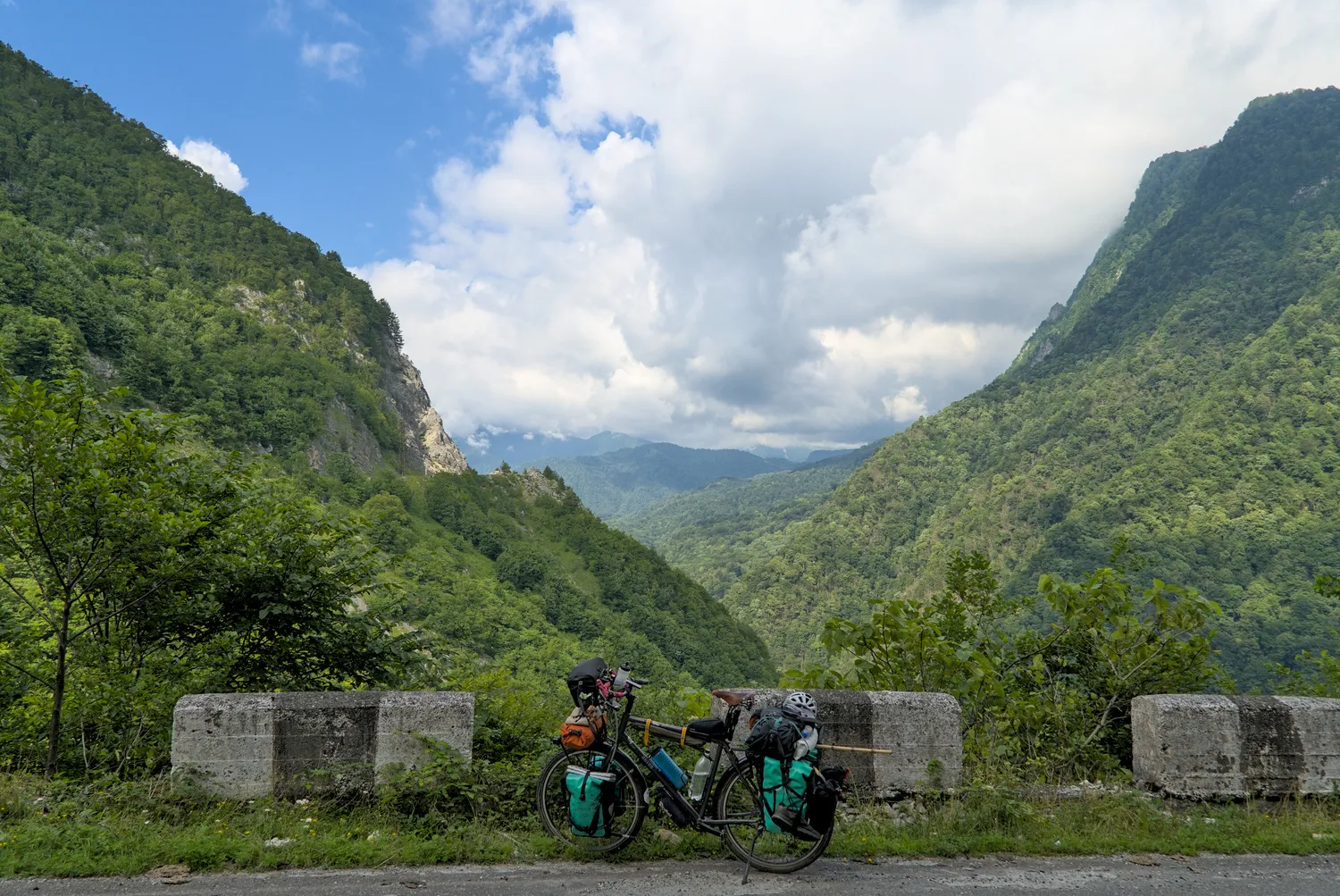
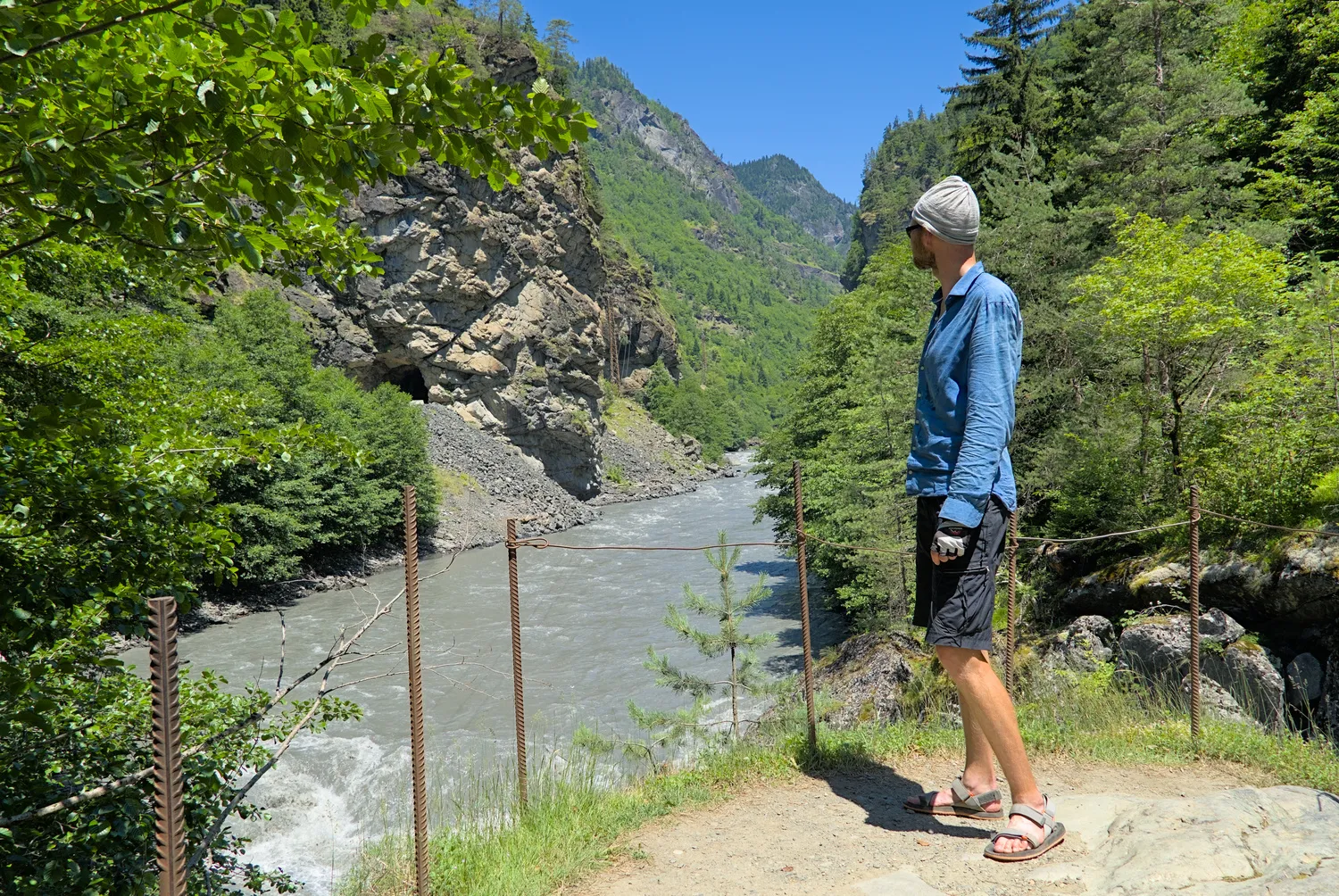
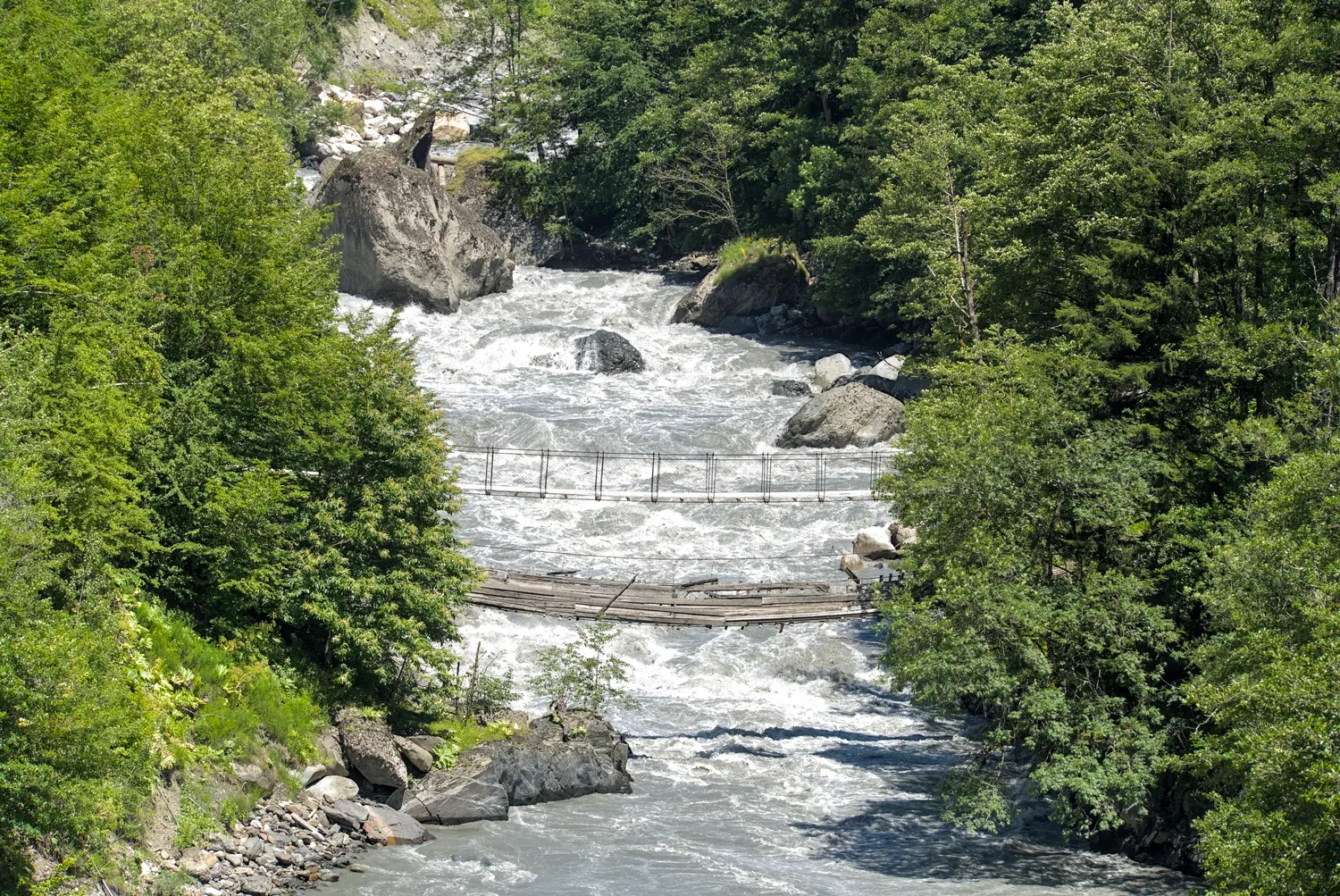
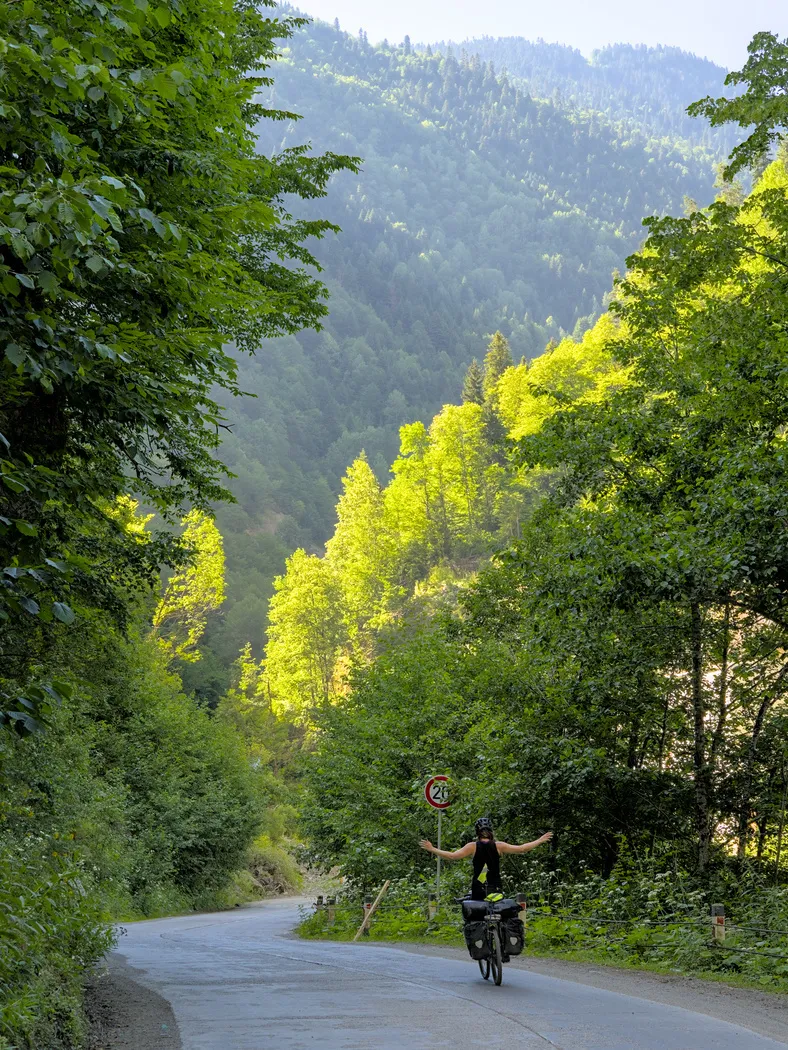
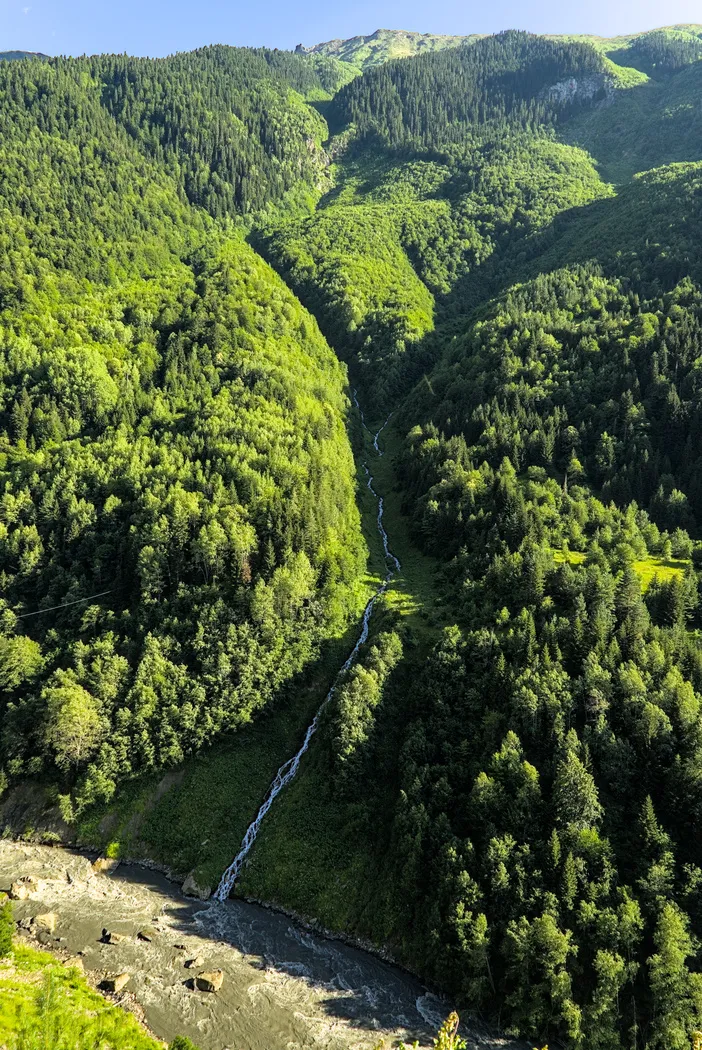
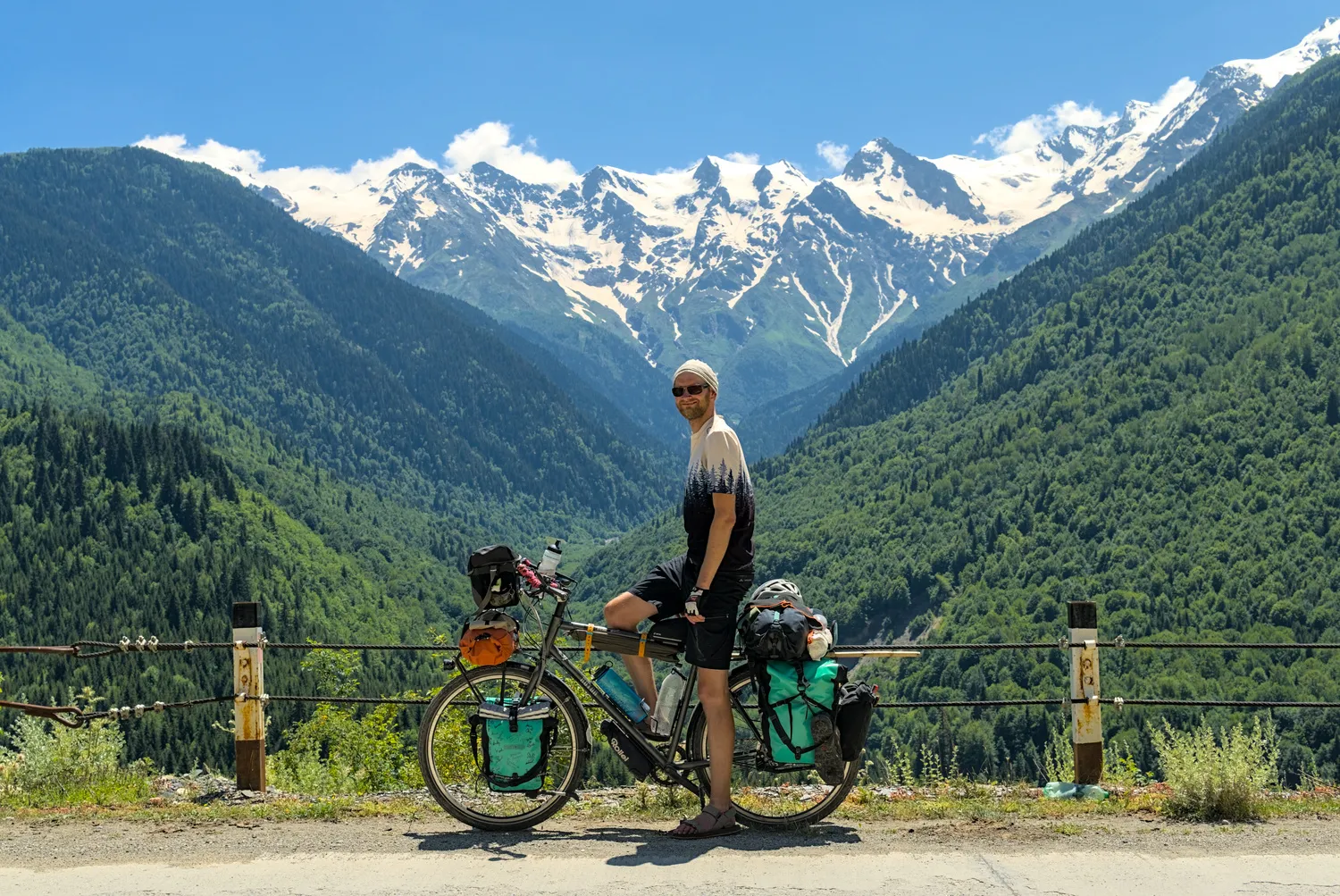
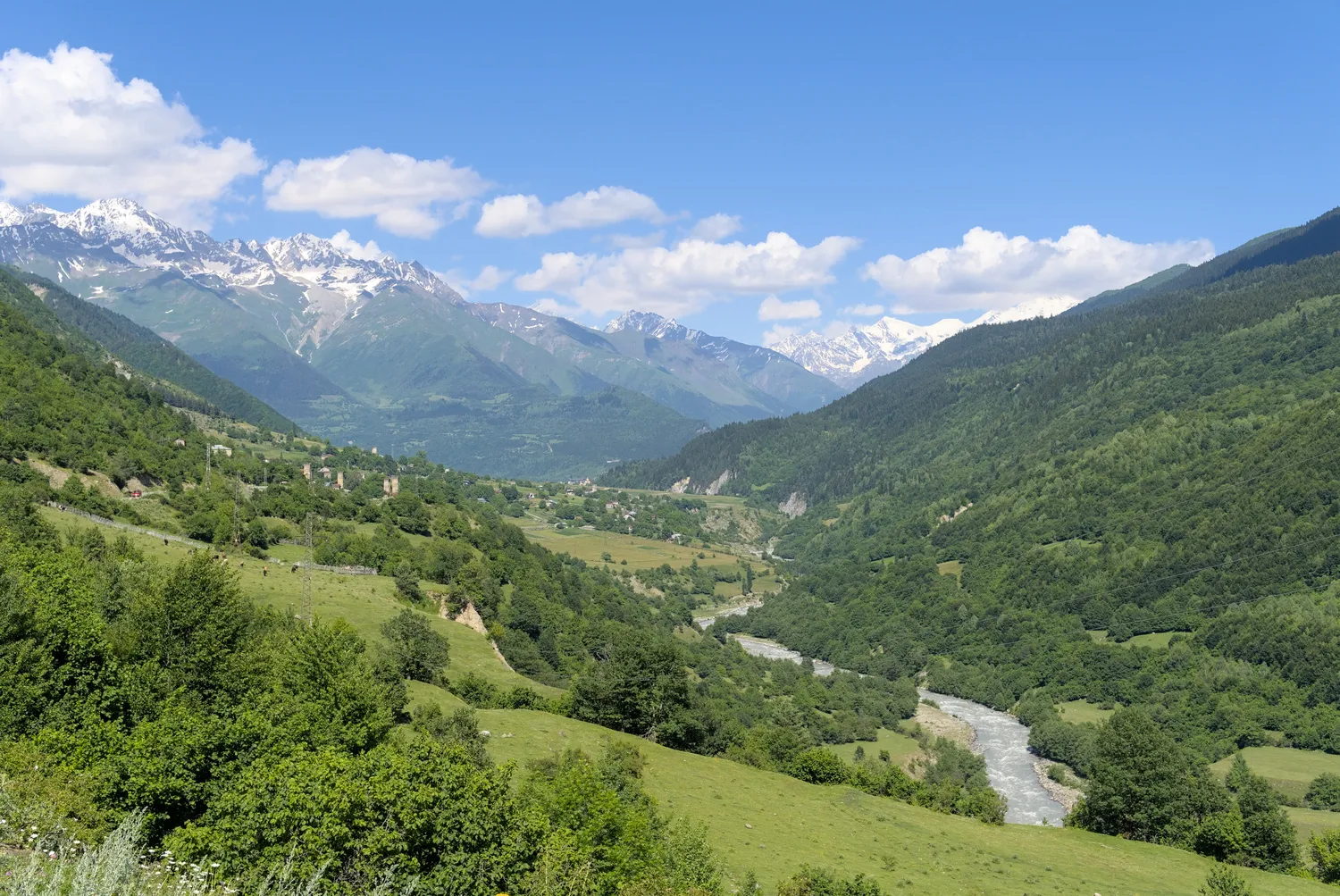
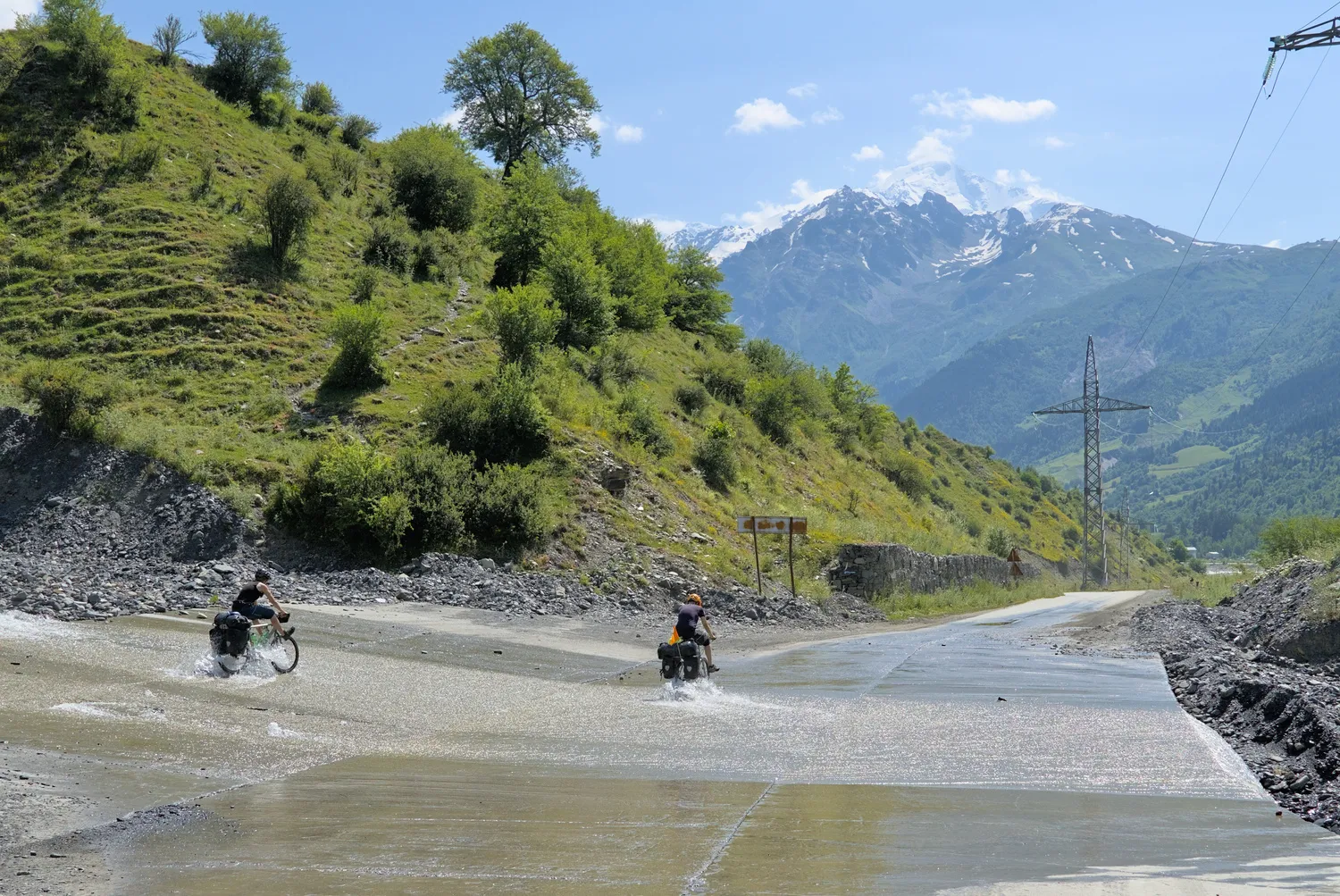
In perfect cycling weather we continued towards Mestia for the next two days. Slowly the road began to show the first traces of the harsh mountains and of rather less care. But we still had asphalt or concrete under our tyres and made pretty good progress. The mountain tops around us were slowly starting to wear white crowns – in summer a good sign of real high mountains. From afar we could hear the raging mountain stream down in the valley, and at one point I spotted a rather creepy-looking suspension bridge. Lucky we didn't have to cross that one. The closer we got to the small mountain town of Mestia, the more often we passed through tiny settlements and villages. Always there were the defensive towers typical of Svaneti. The oldest of them probably date back to the eighth century. Typically every family built one next to their house, to take refuge in during an attack and at the same time defend the area from above.
At some point a motorbike traveller came towards us and told us that the road was closed a little way past Mestia. How long that would last was unclear. But since we had planned a short break in the mountain town anyway, we were still full of hope that the problem would somehow sort itself out.
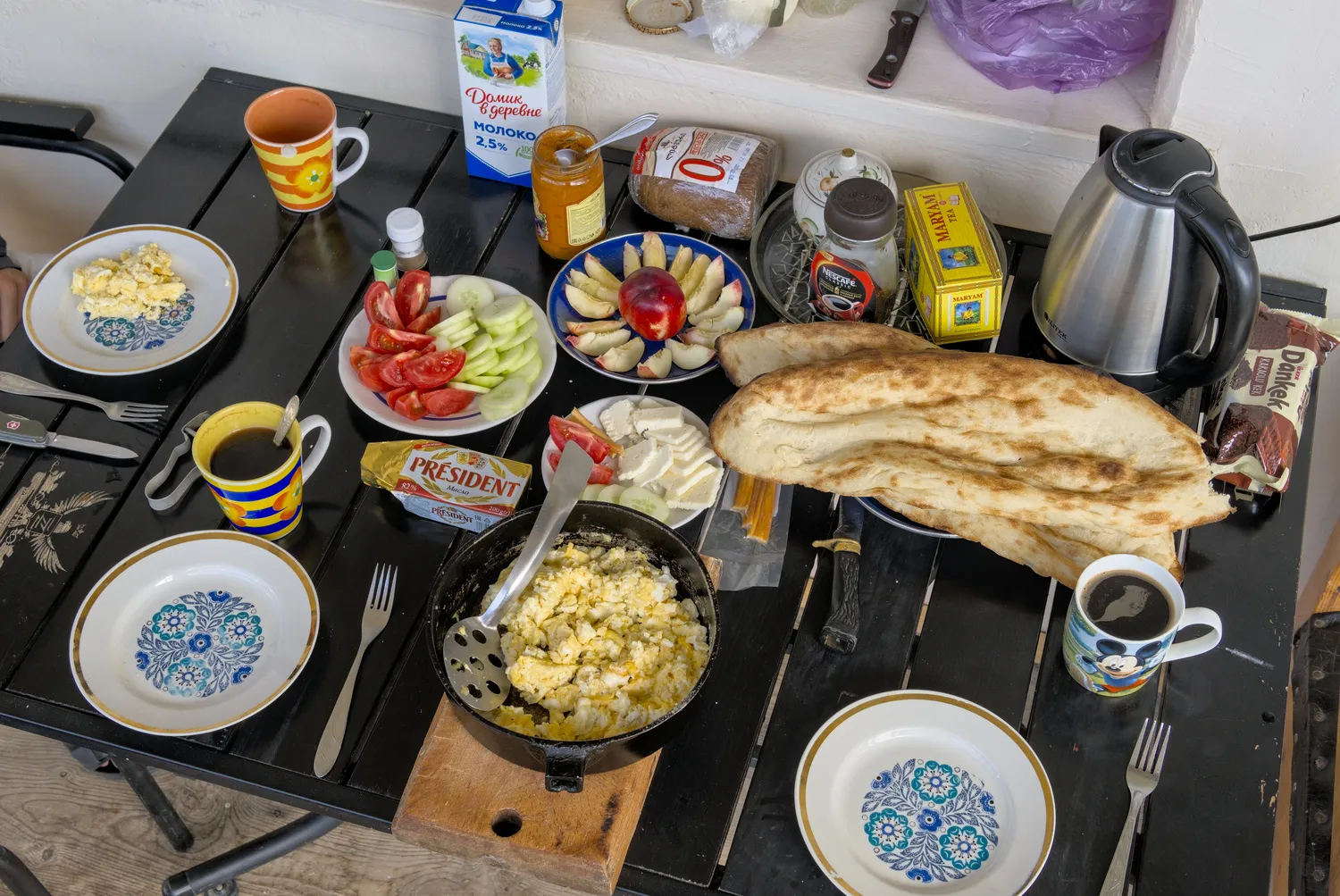
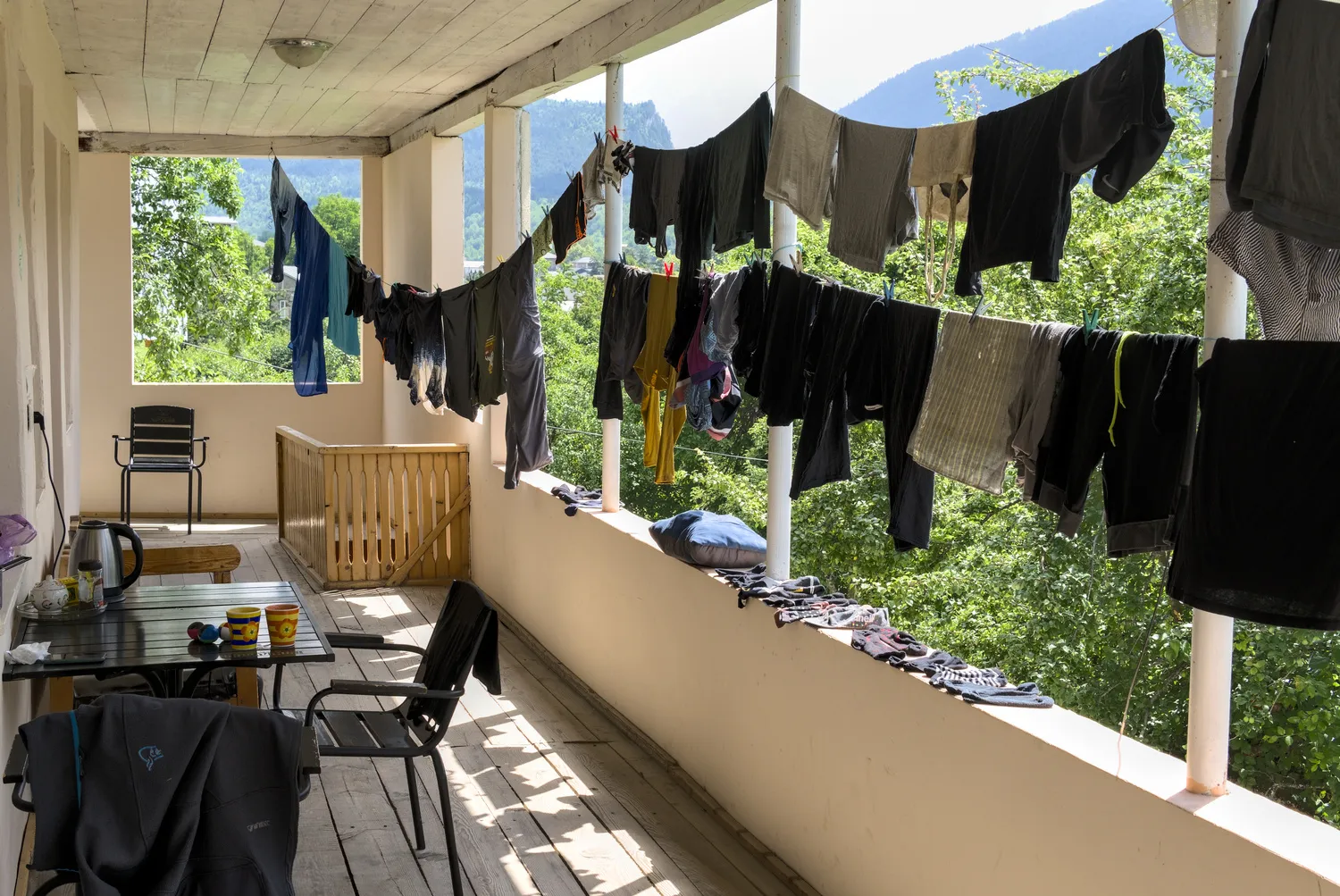
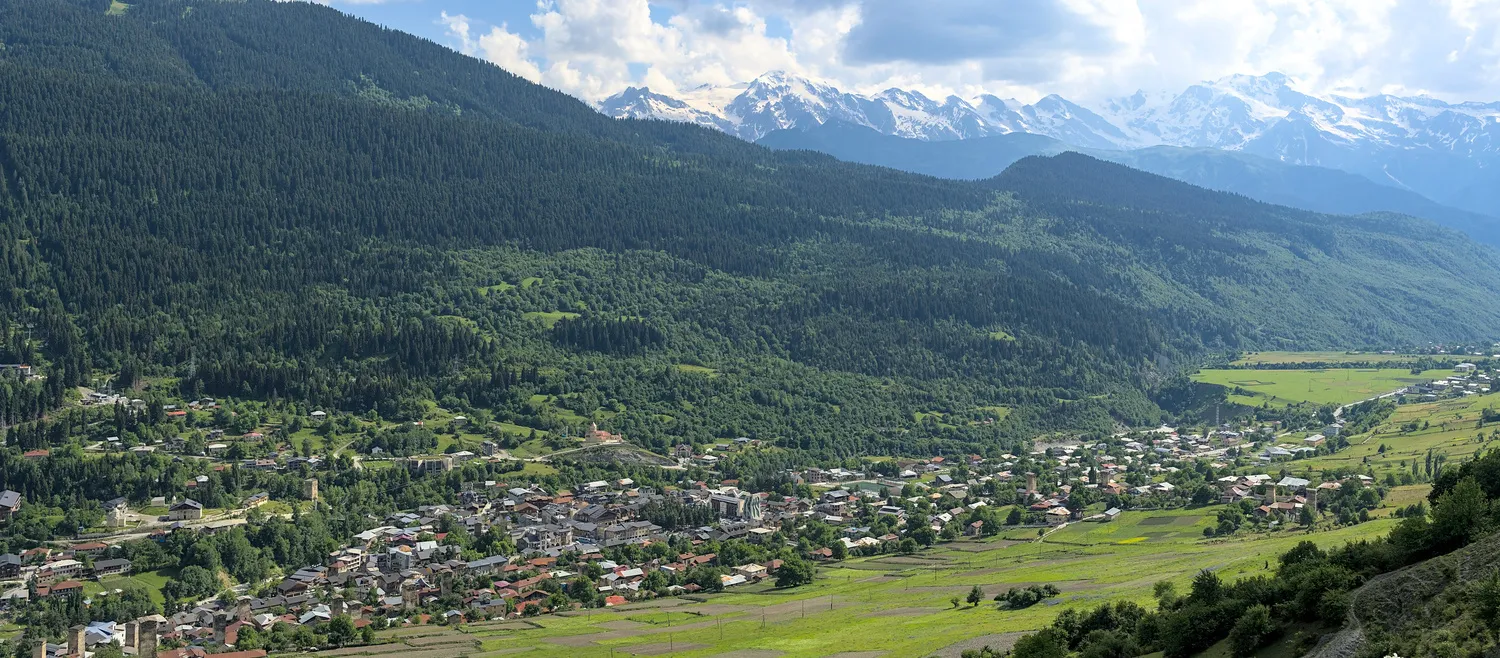
Mestia is the tourist town of Svaneti par excellence. It feels as if the whole town is geared solely towards mountain-loving tourists. That may sound very tiring, but at the time of our visit it was still quite pleasant. The mountain town isn't particularly big, and even though many travellers stay here, it can't be compared with a town in the Austrian Alps. At Katja's Guesthouse we found a wonderful little place for the next two days.
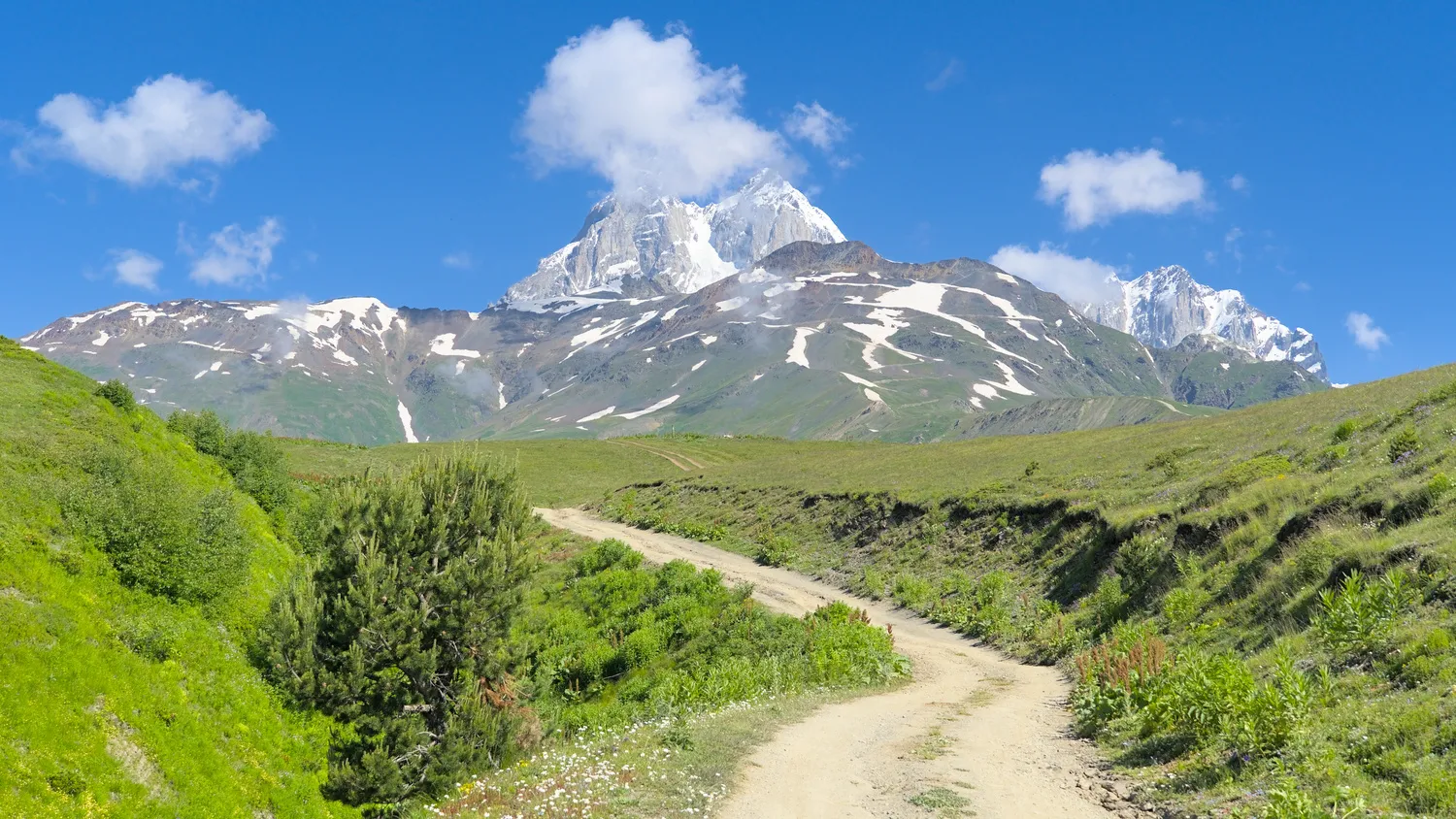
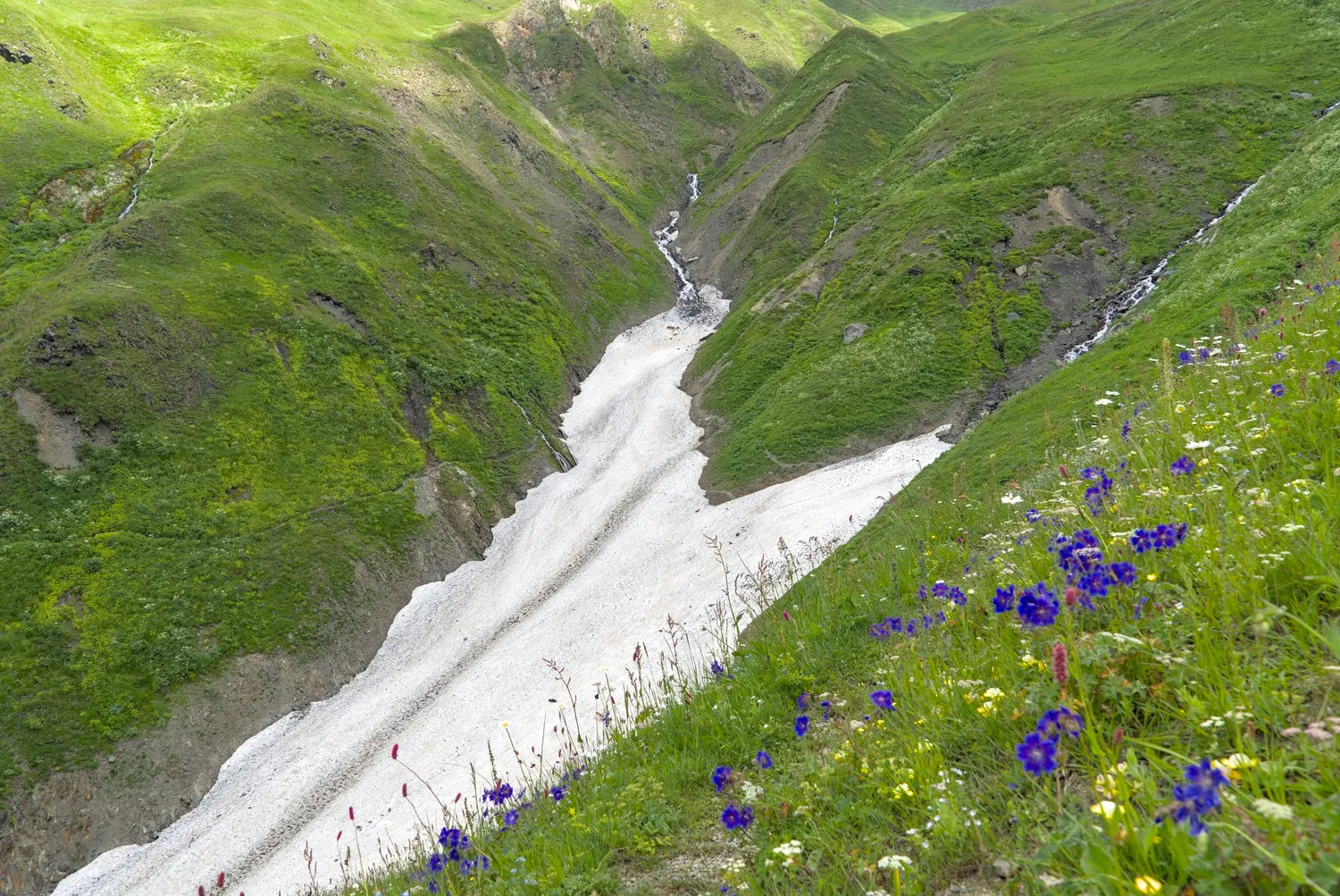
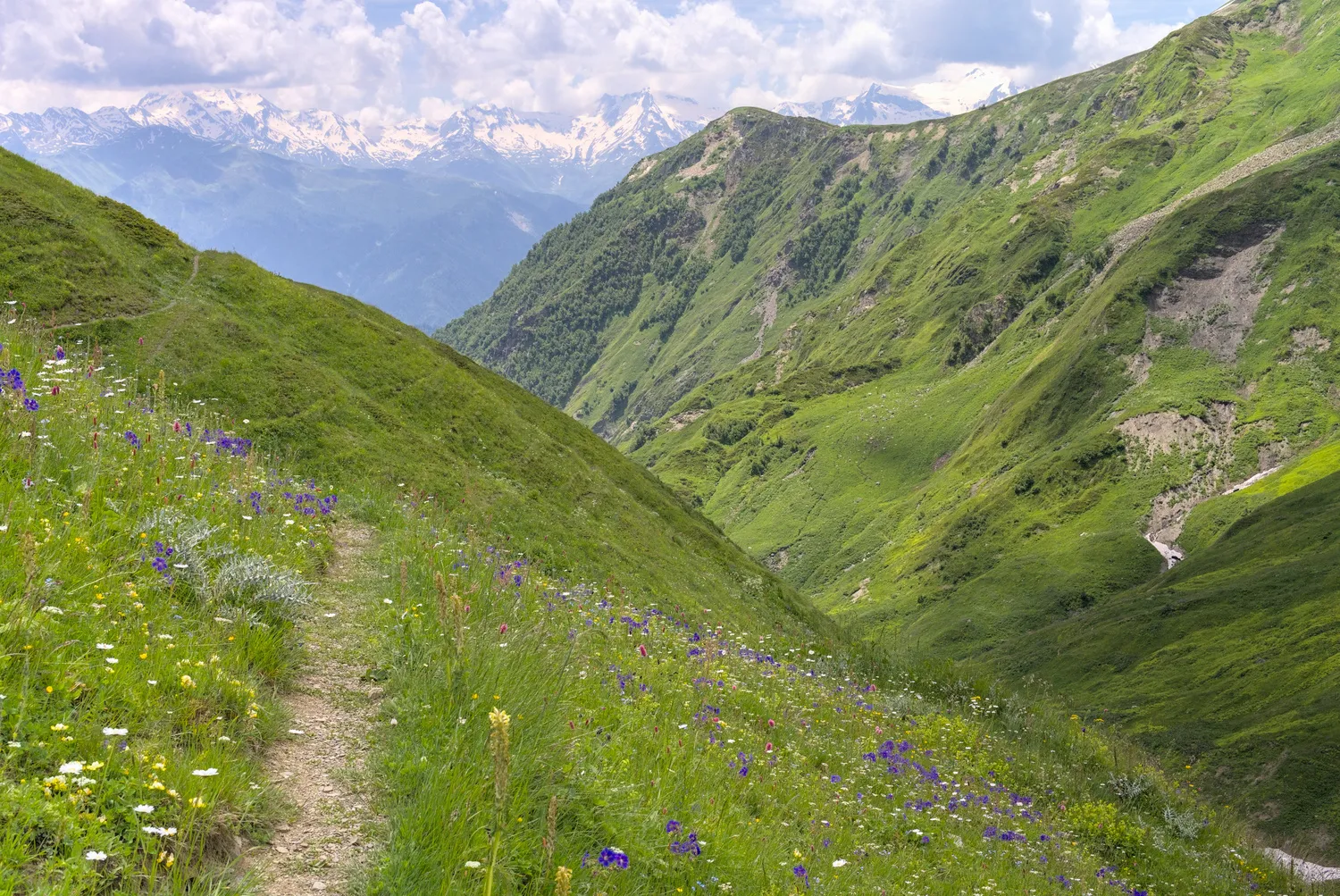
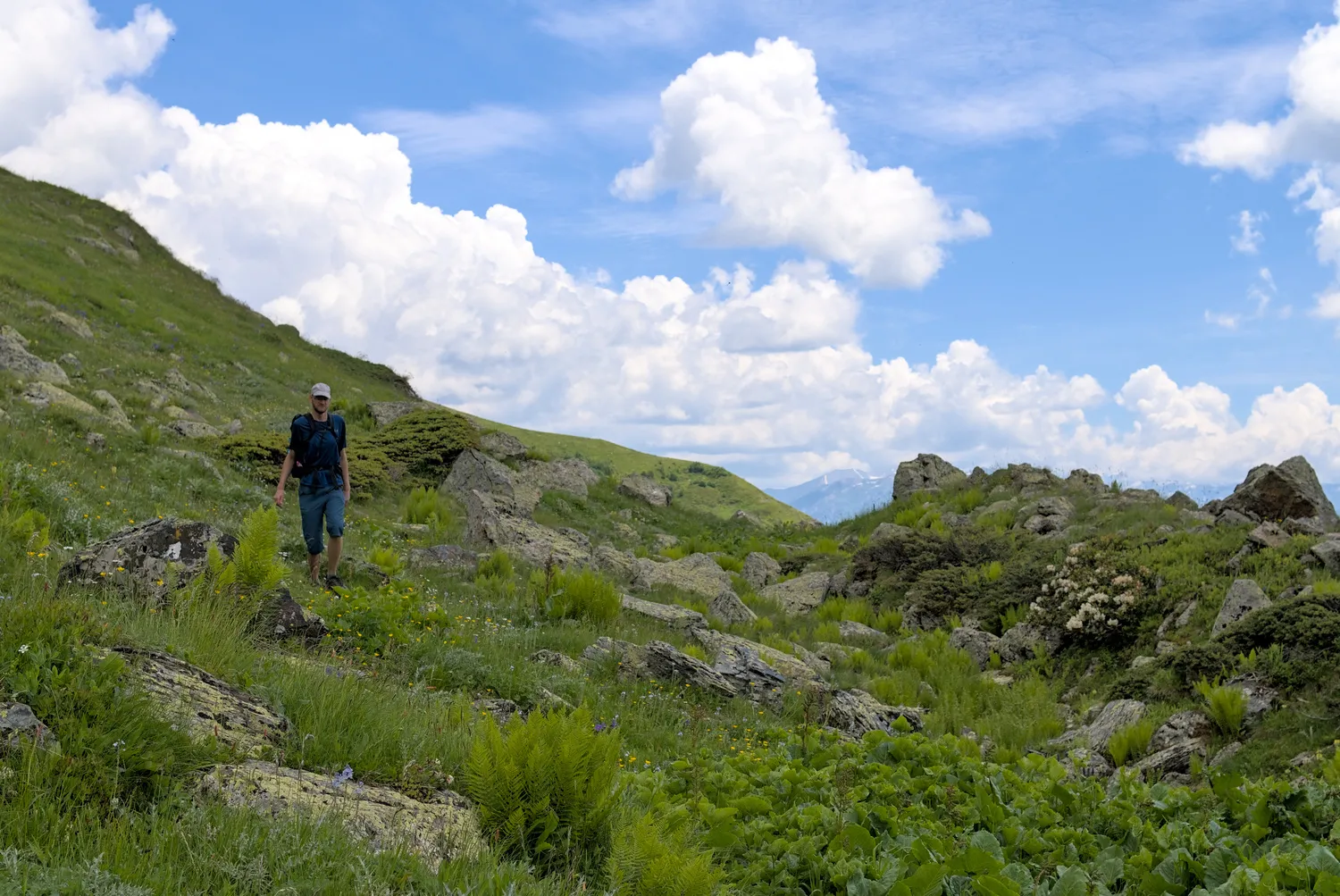
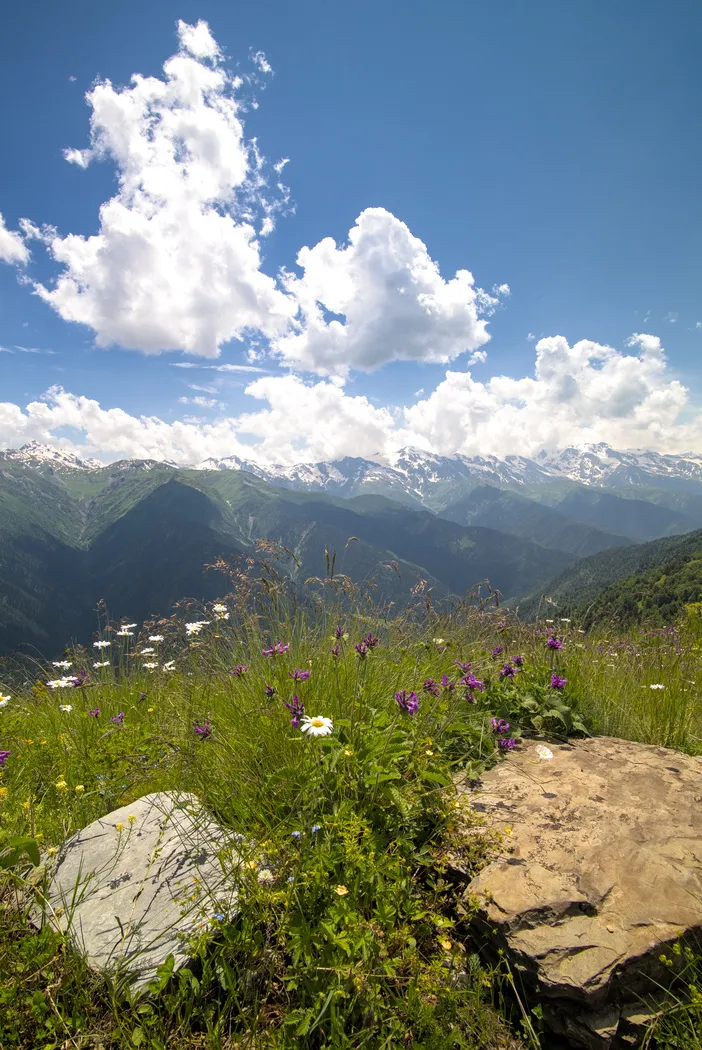
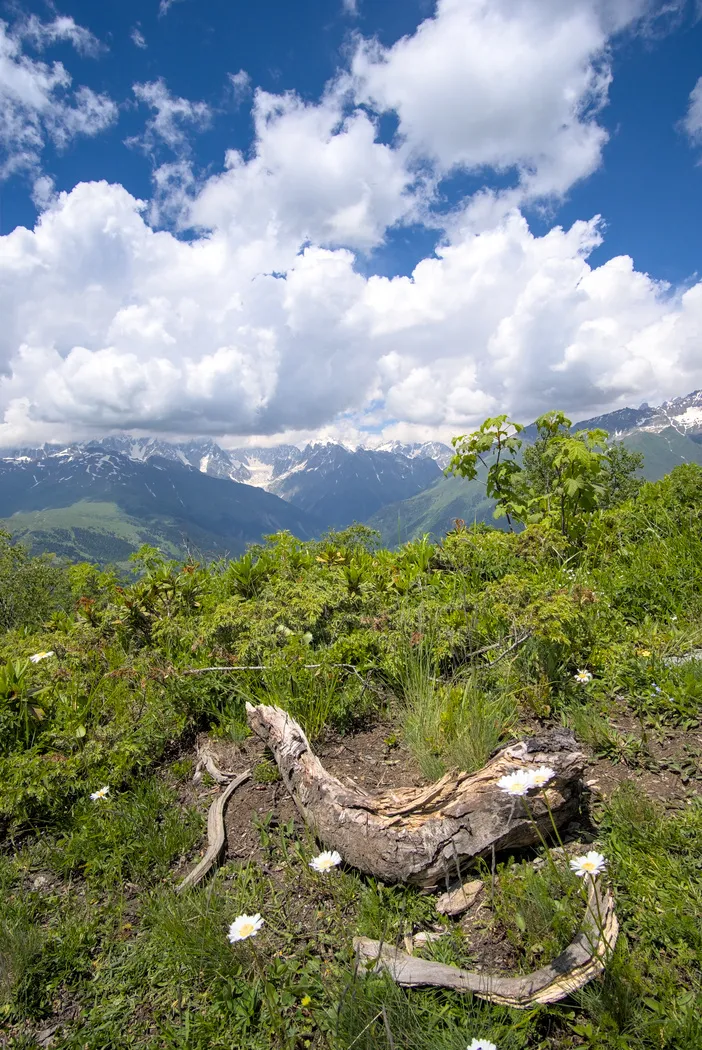
Quite early the next morning I set off towards the Gulli Pass. I had long been looking forward to some proper hiking again, and it was a dream! First the trail climbed quite steeply out of the valley to a viewpoint with a magnificent panorama. In every direction there were snow-capped giants to marvel at – each more beautiful than the last, except for one – the king of Svaneti: Mount Ushba. With its double summit it is the icon of Svaneti, and it showed itself in its full glory, almost free of clouds, for at least a few minutes – a sight I wouldn't get to see again in the following days. From the viewpoint a track then led further up towards the Koruldi Lakes. At some point, though, my route turned left and became a narrow path along a steep slope that was quite challenging. But I enjoyed every metre – hiking in alpine terrain is simply great. At a notch, however, that was it – at least I didn't dare go any further. Ahead of me lay a fairly large snowfield with three small streams flowing underneath it. There were no traces of other hikers, and the stability of the whole thing was extremely questionable. All on my own, the risk of breaking through the snowfield was simply too high. In the end, on the way back, I made a small detour via the Koruldi Lakes. They aren't necessarily spectacular in themselves, but they sit at a good viewpoint with more brilliant views, among others towards the nearby Russian border.
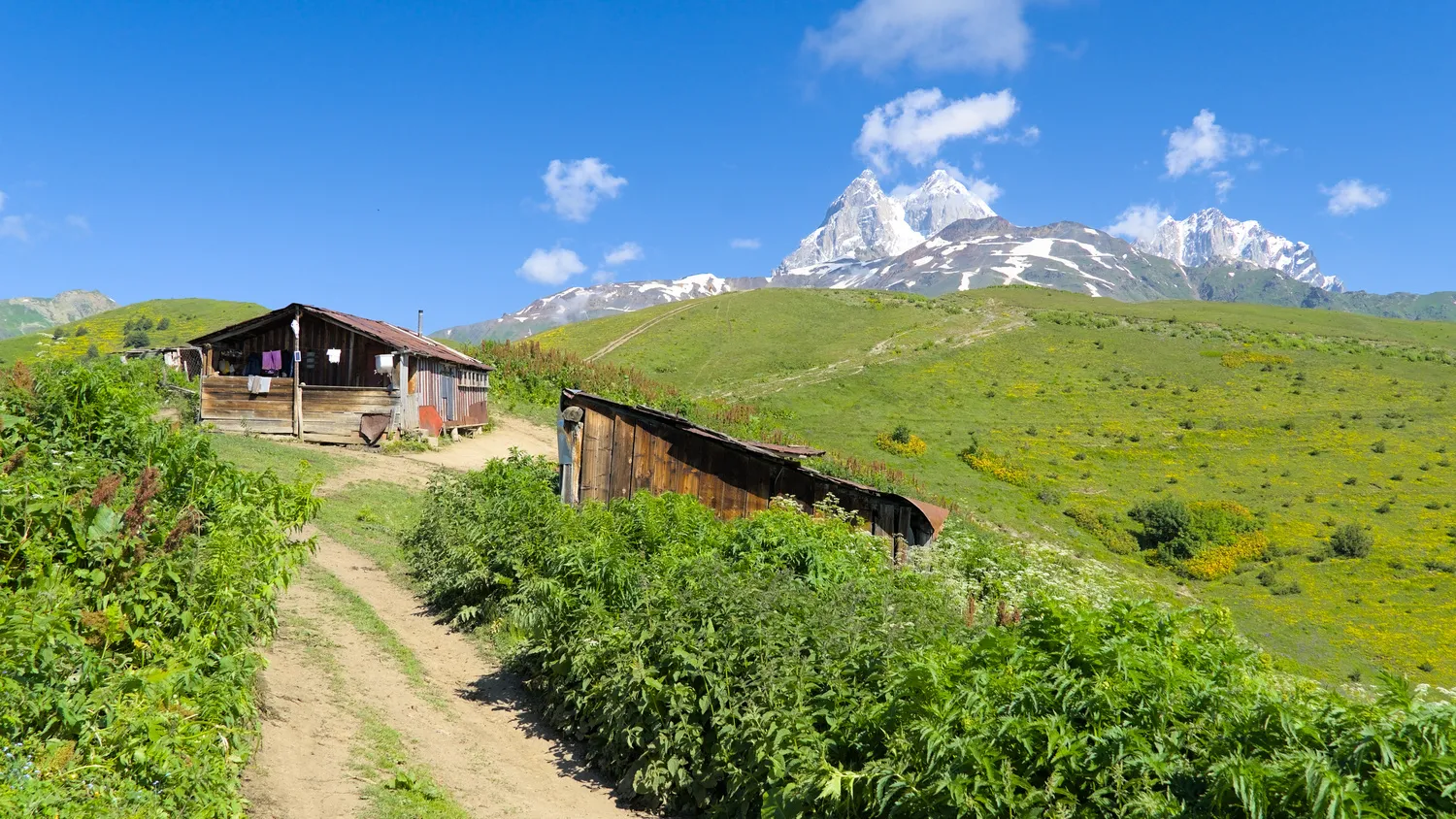
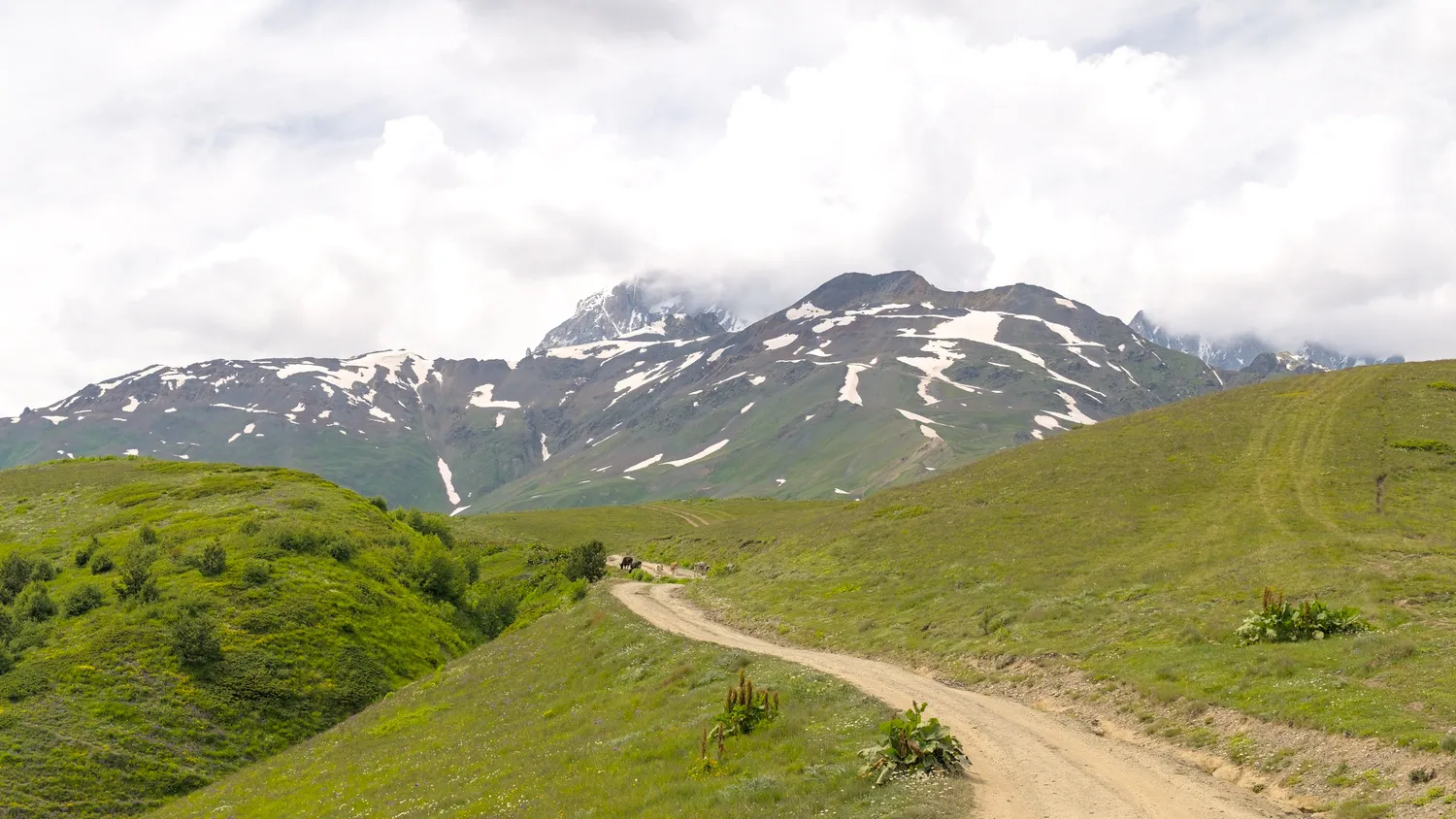
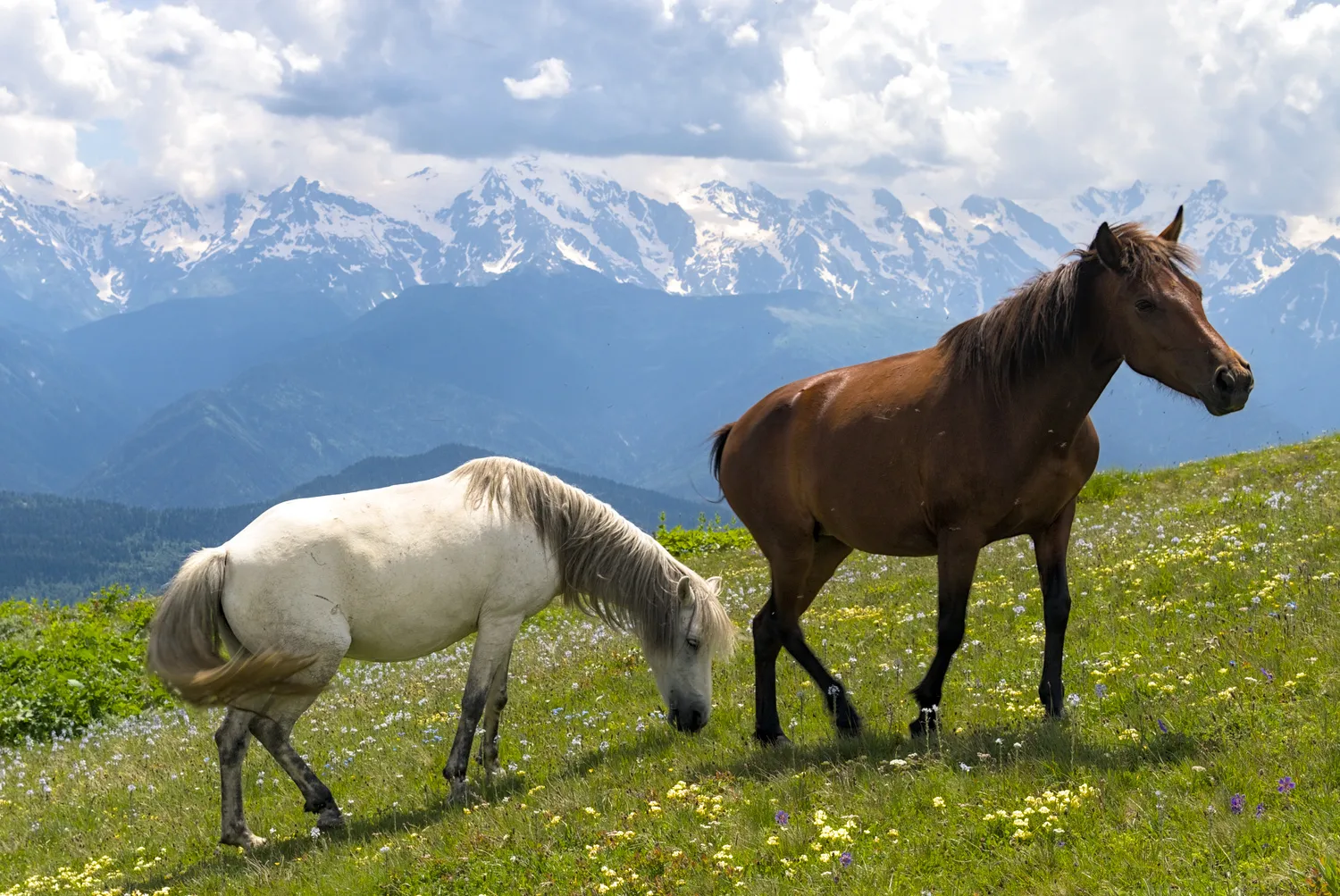
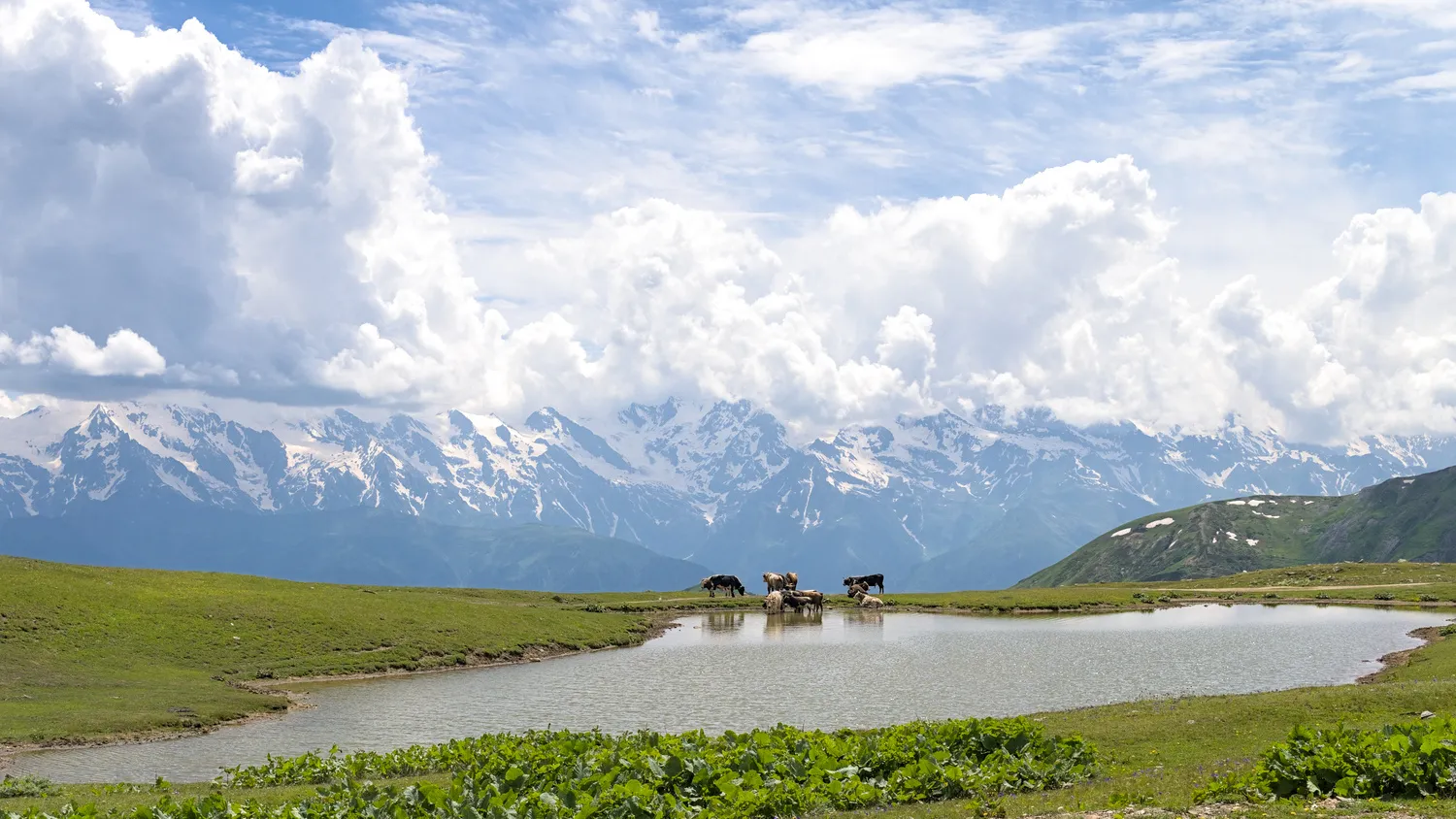
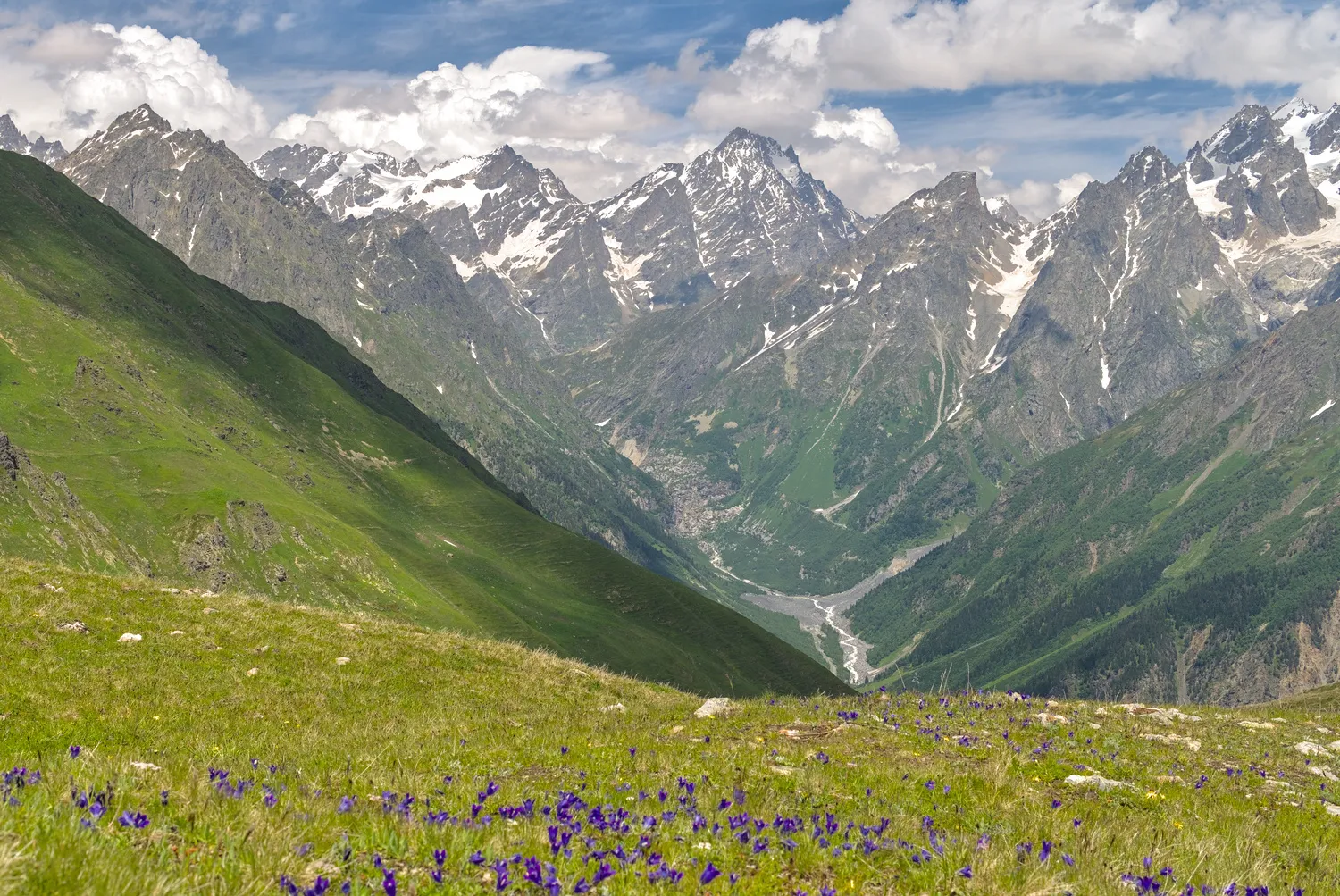
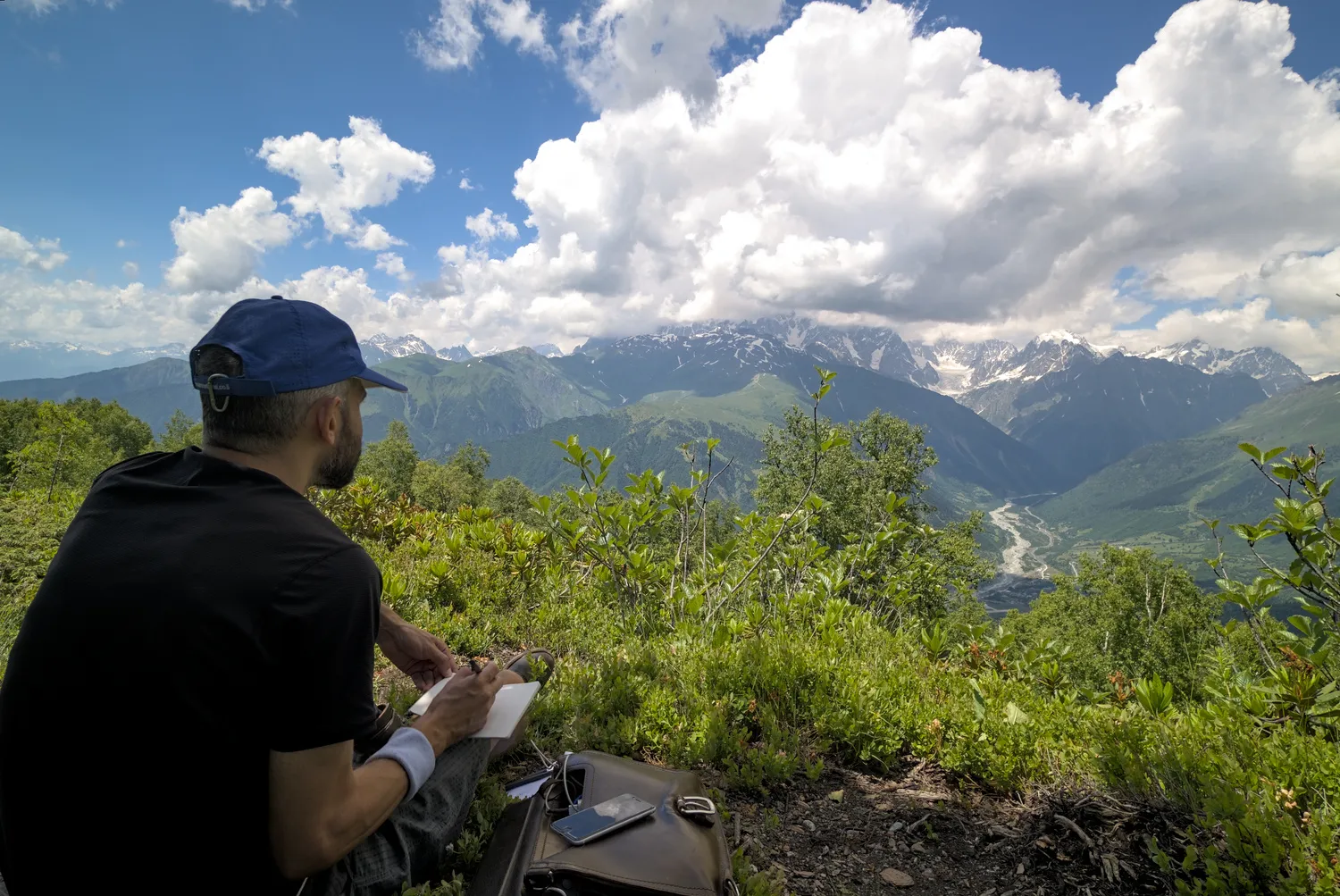
The following day I had arranged a short loop with Ariel – an American traveller. For reasons of time, and in my case energy, we took it a bit easier: we took the cable car up out of the valley and only hiked a short way to a nice viewpoint. Over interesting conversations I got to watch Ariel draw the mountain panorama opposite us. Meanwhile I tried my photographic luck with different lenses on the camera.
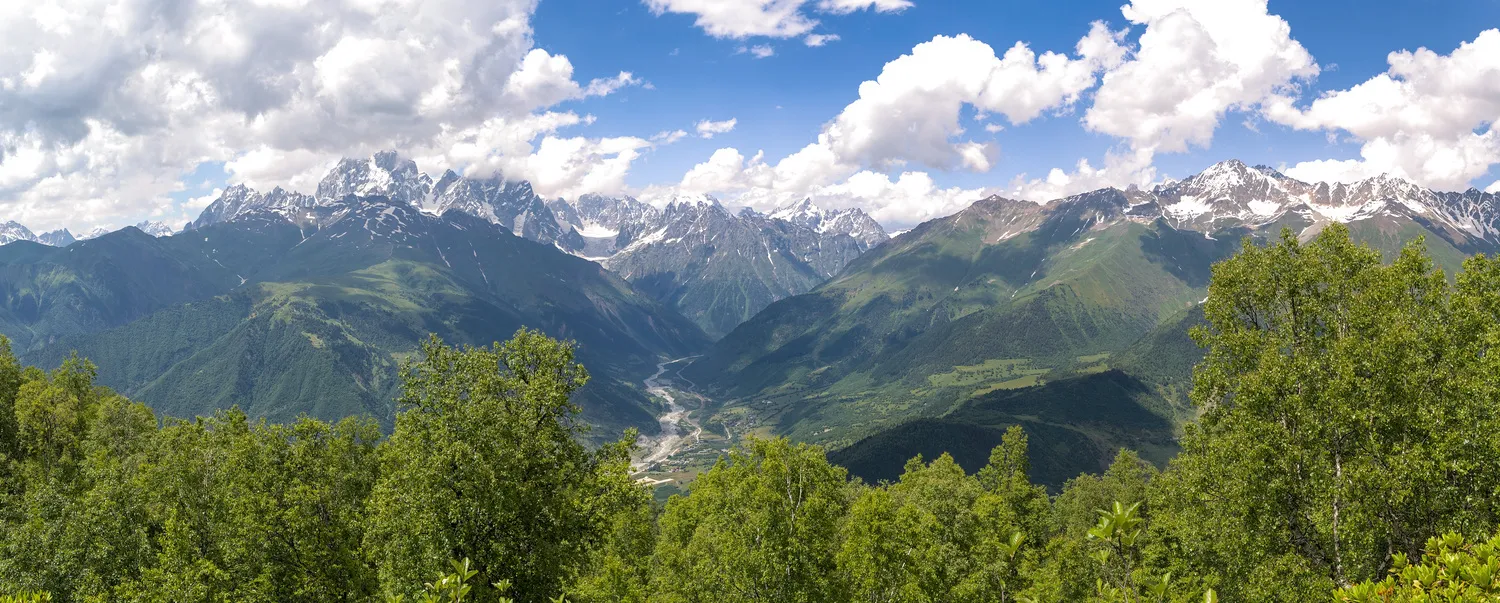
Back in the valley we heard that the road to Ushguli was open again – the best conditions for heading on the next day. Daniela and Milan were quite happy about that too – the Swiss, it seems, aren't all that into hiking in the mountains.
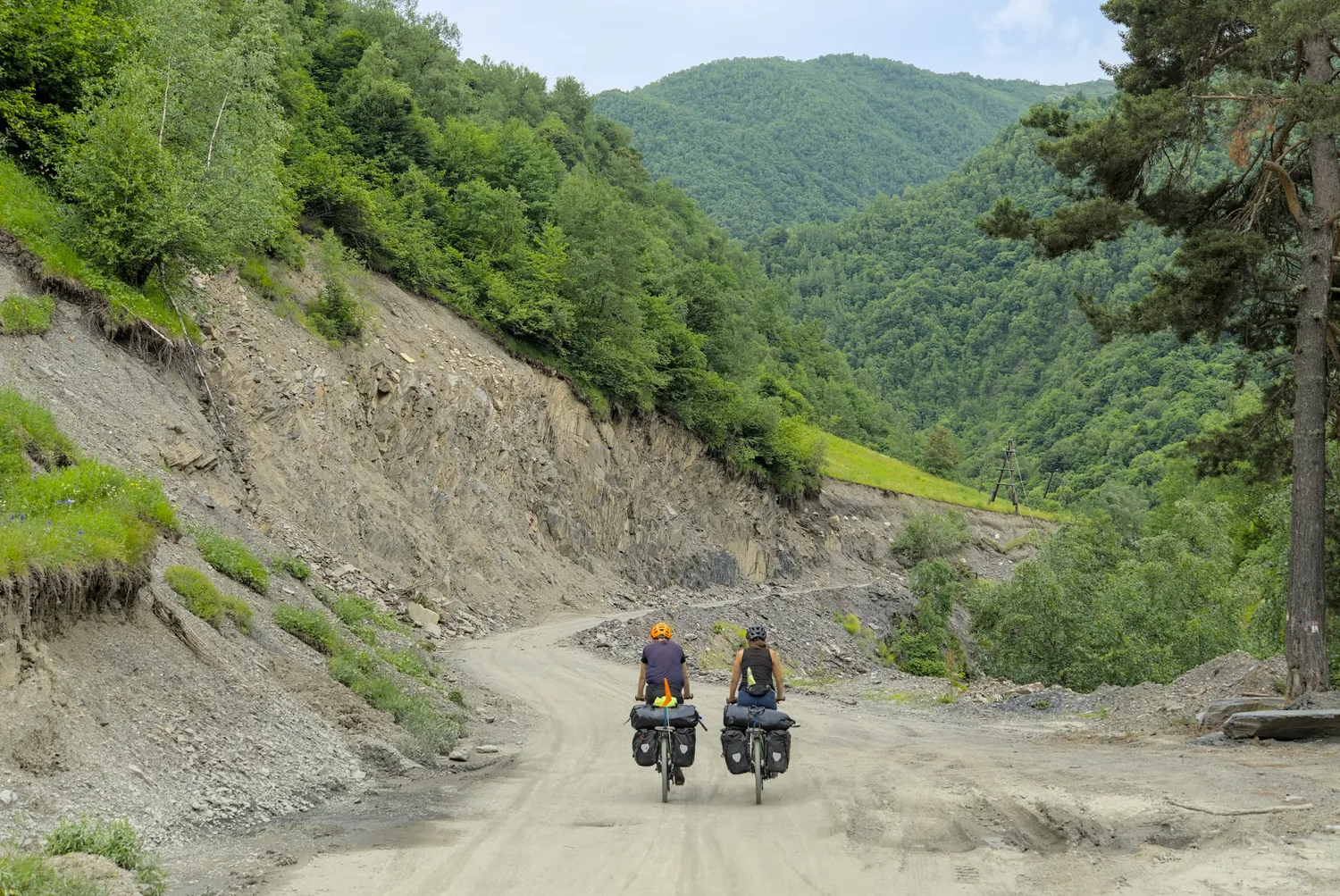
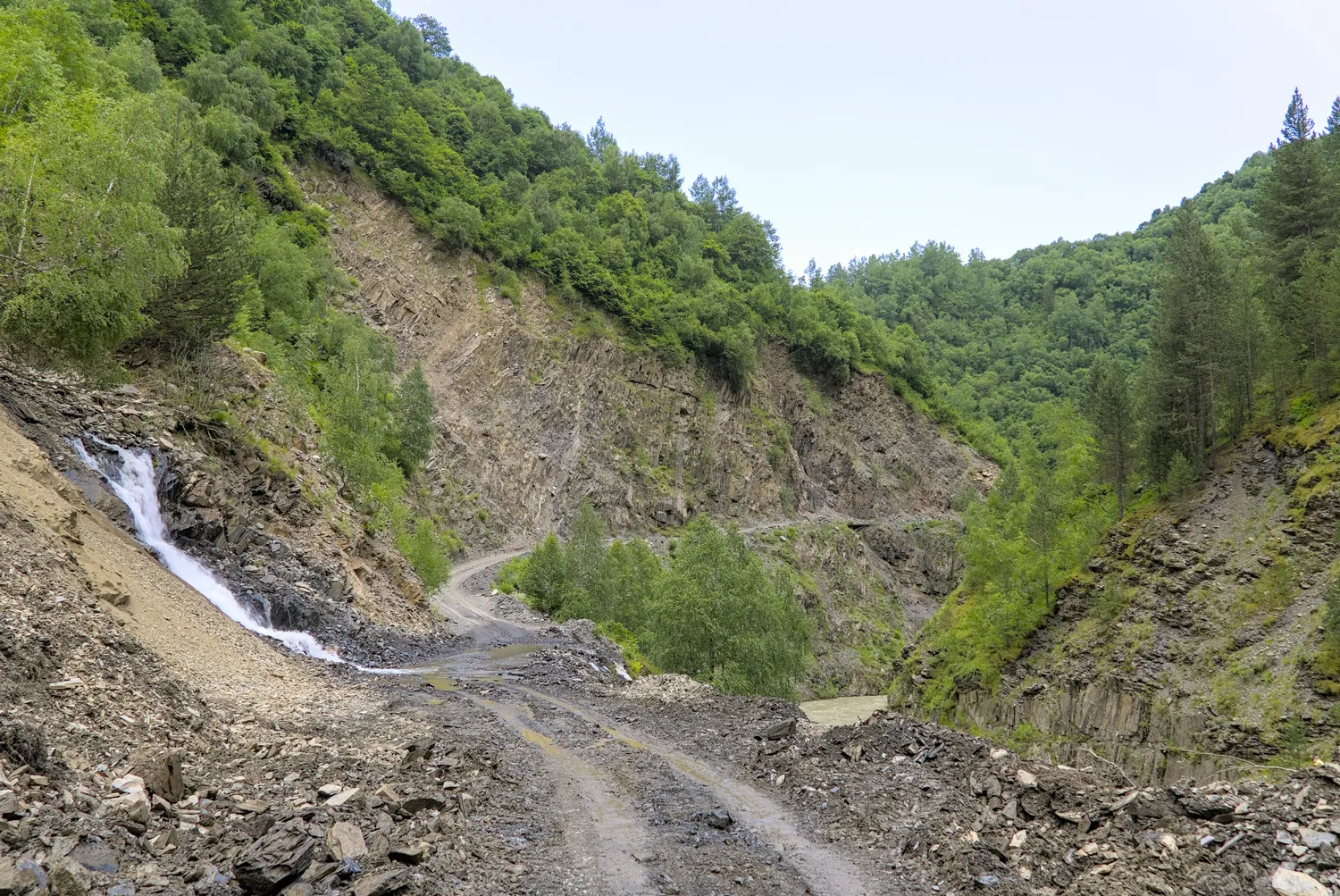
So we rolled on towards the highest permanently inhabited village community in Europe. Made up of four small villages, Ushguli lies at around 2,100 to 2,200 metres and is already pretty remote. Probably not entirely unrelated to that remoteness is the quality of the road. Most of the way out of Mestia is concrete and quite rideable – albeit with a few steep sections. But the last eight kilometres are unpaved. This stretch is challenging above all because of its exposed location. On the left there is a rather crumbly, steep rock face, on the right it mostly drops away quite deeply towards the mountain stream, without much of a “catch zone”. The road, which here is better described as a piste, is busily eroding away. And so, round a bend, we suddenly found ourselves right in front of a roadblock. An official explained that it wouldn't reopen for another two hours – apparently a construction team was busy securing the road at that moment. That was probably exactly the spot where a rockslide had caused the full closure in the past few days.
We weren't exactly happy about the situation, because there was no spot well protected from falling rocks to take a break. Still, we unpacked our little kitchen kit to make coffee, when unexpectedly the road was opened after all. The official signalled that we only had a few minutes to get through. So quickly back on the bikes and into a battlefield of rubble. The following maybe 500 to 1,000 metres were really pretty creepy. Small stones were trickling down to our left – it was obvious the mountain was at work here. Just get out of here as fast as possible. But everything went smoothly, and there followed one last climb up to Ushguli.
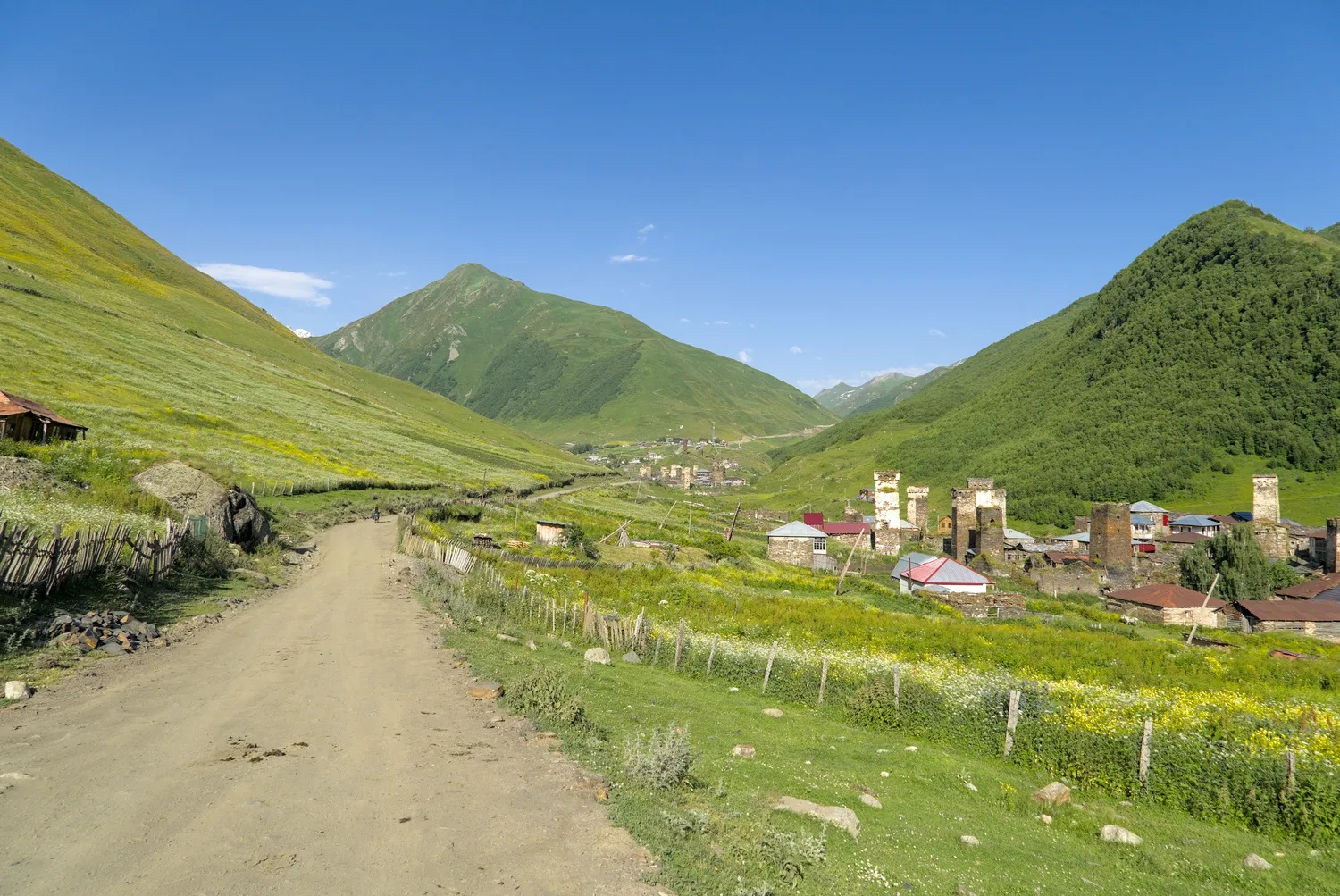
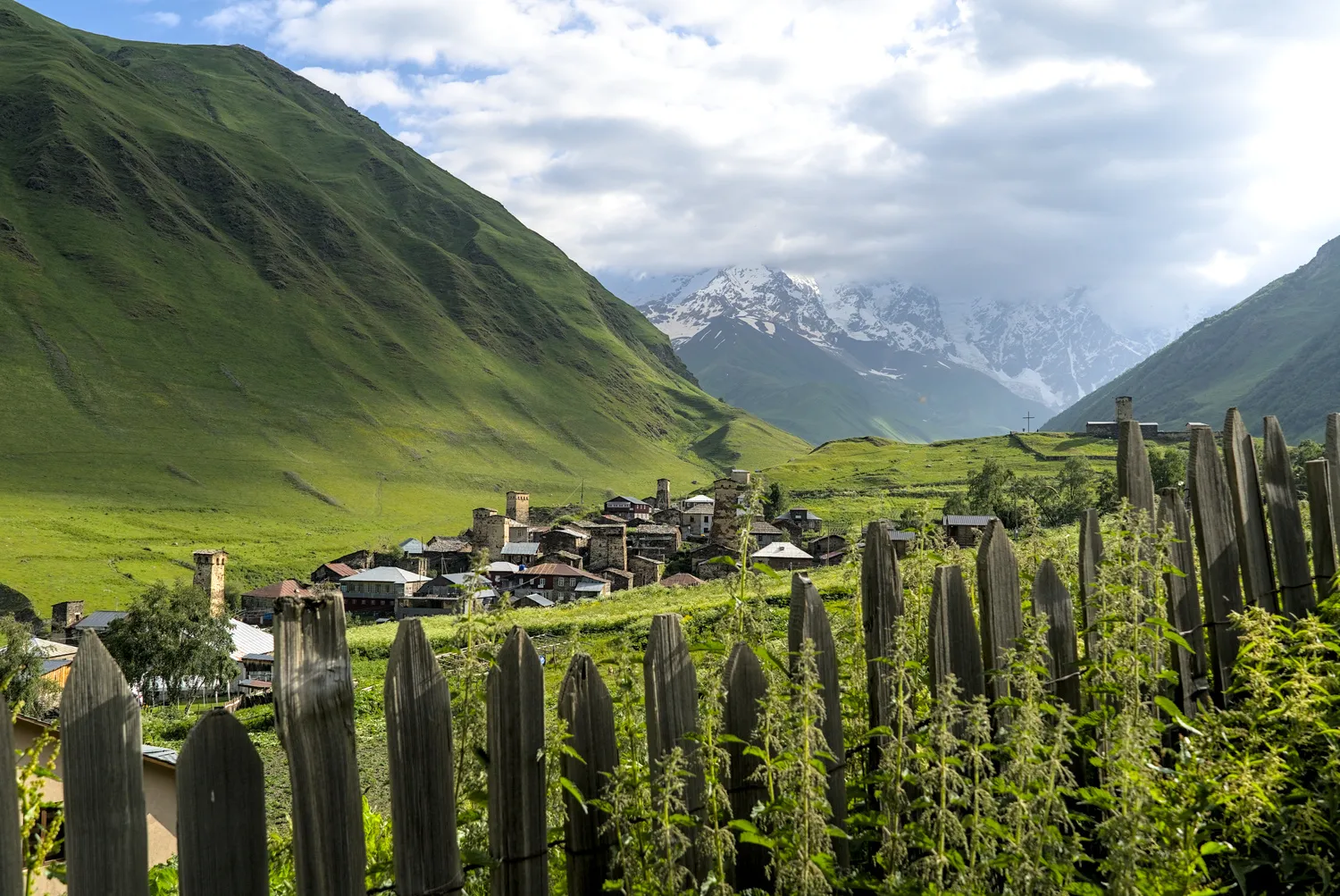
Arriving in the village community had something magical about it. The meadows around us were lush green and surrounded by mighty mountains. In the middle of it all stood the ancient rubble-stone houses, always accompanied by a defensive tower, of course. The plots were separated from each other by either dry-stone walls or wooden fences. I felt a bit as if I had been transported back to another time. Thanks to the clouds, the view of Georgia's highest mountain, the 5,201-metre “Shkhara”, was sadly denied us. To my surprise, though, Kaddi and Jevsej were suddenly standing in front of us – we had already met in Croatia and Greece. A perfect reason to raise a glass right away in a bigger round of cycle tourists.
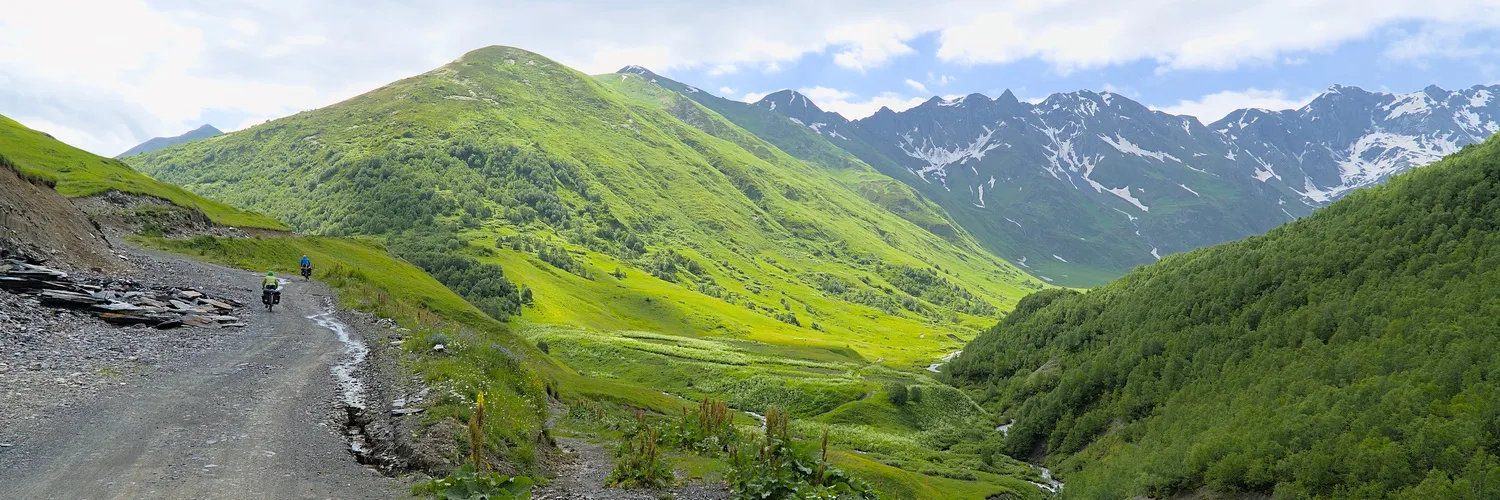
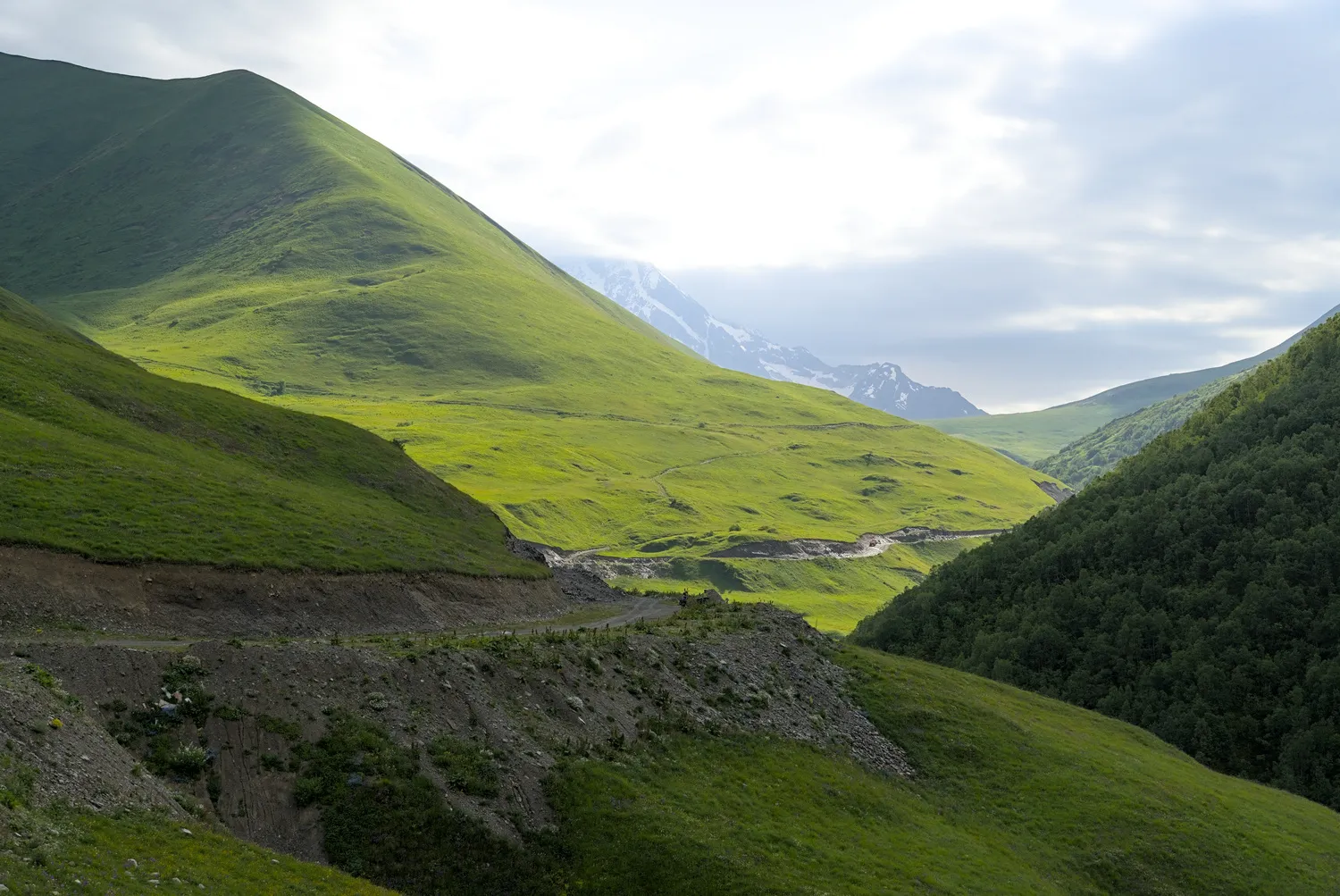
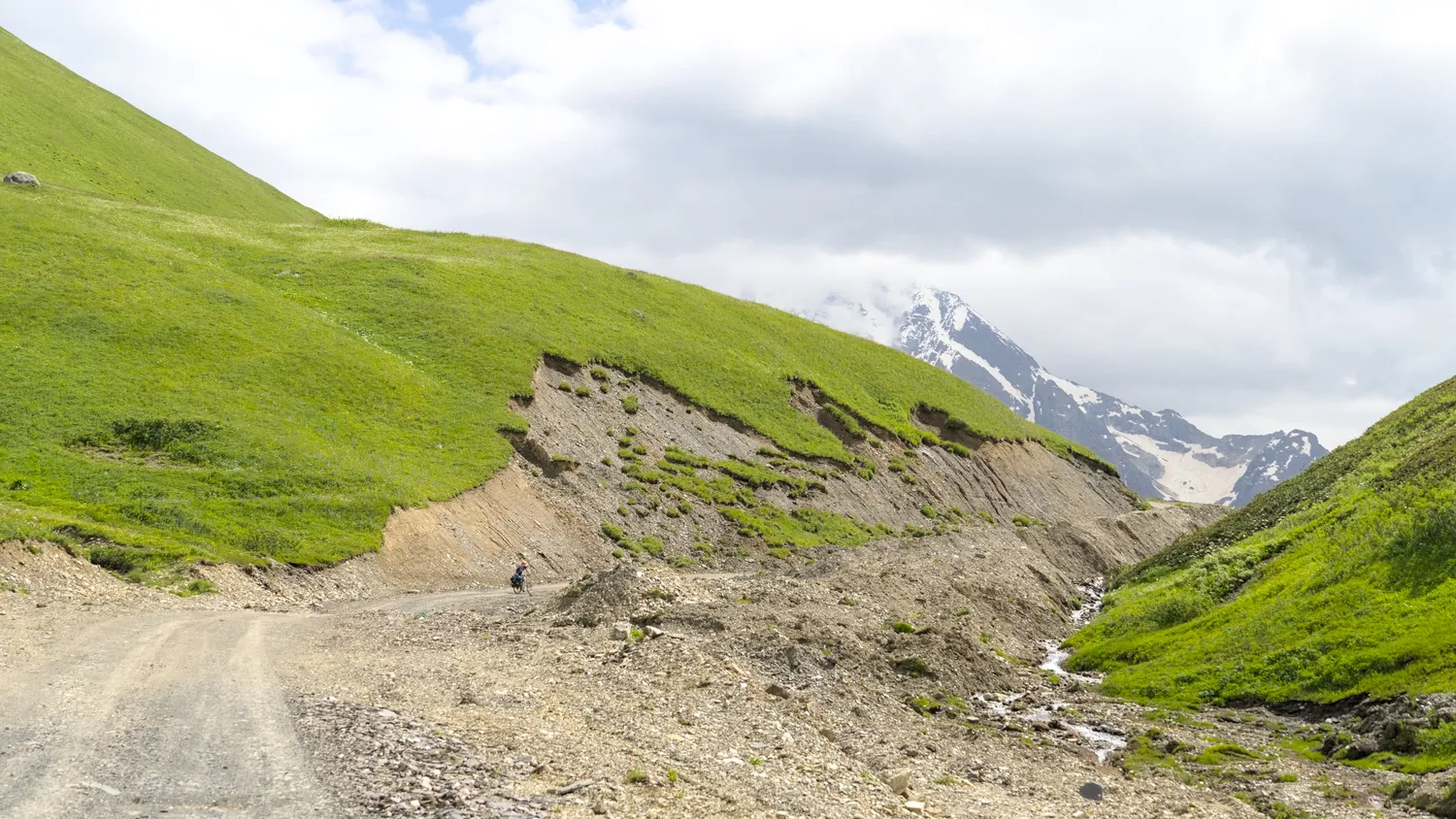
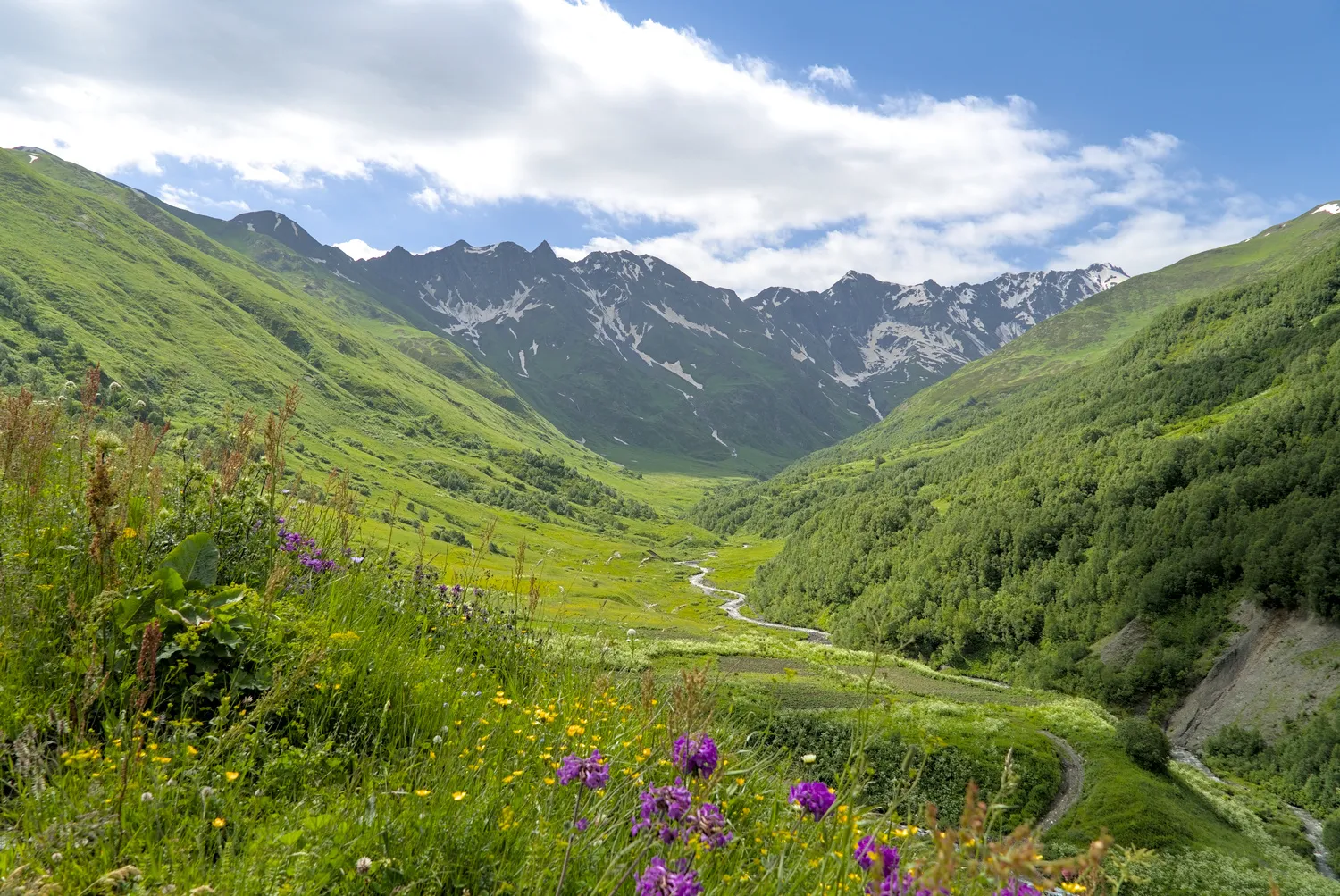
For most travellers Ushguli is a dead end. The track that continues from there is only doable for four-wheel-drive vehicles, motorbikes or crazy cyclists. The weather the next morning was good, so we ventured up towards the 2,623-metre Zagaro Pass. But after only the first three kilometres or so I declared a strike. The unpaved surface combined with the gradient challenged me so much that my body was screaming for energy. The other two immediately gave in to my “mood”, so we had breakfast first before carrying on. With renewed energy, I managed to tackle the final few kilometres up to the highest point of the tour after all – slowly and bit by bit. The little stops along the way were worth it just for enjoying the magnificent landscape.
When we finally reached the top of the pass, all three of us were super happy. Sharing a moment like that with other cycle tourists was something special – the last time I had that was quite a while ago in Albania.
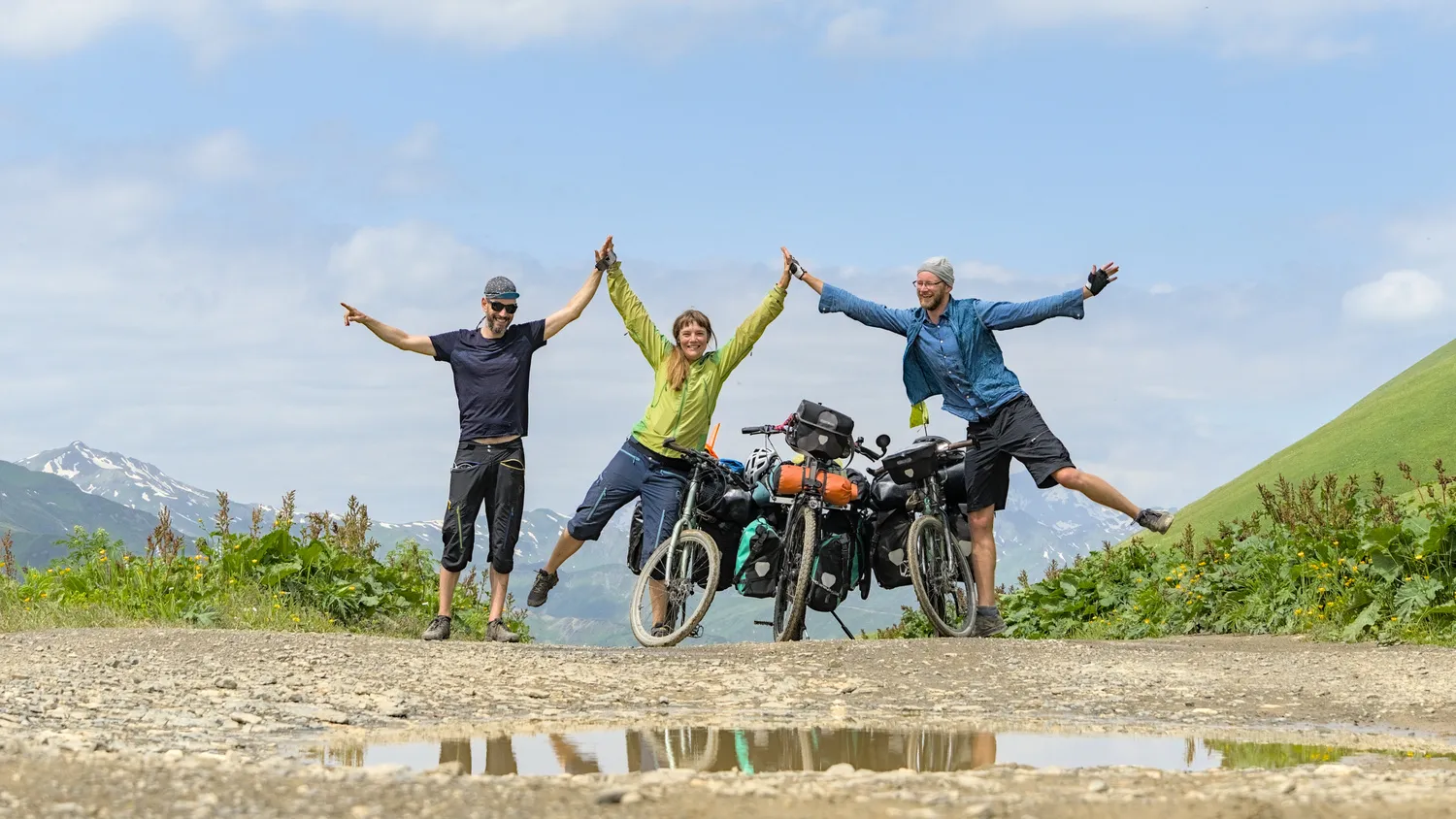
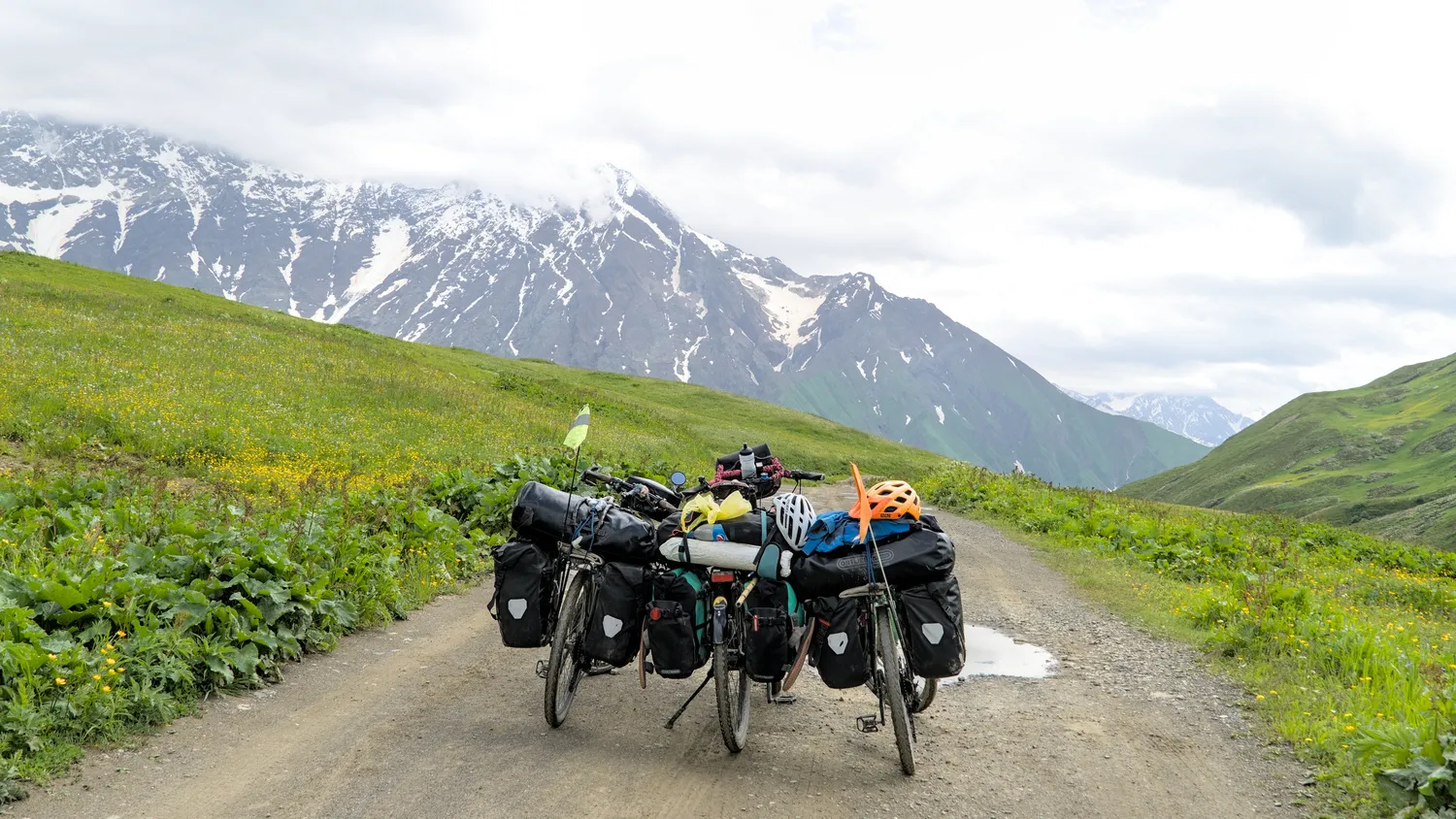
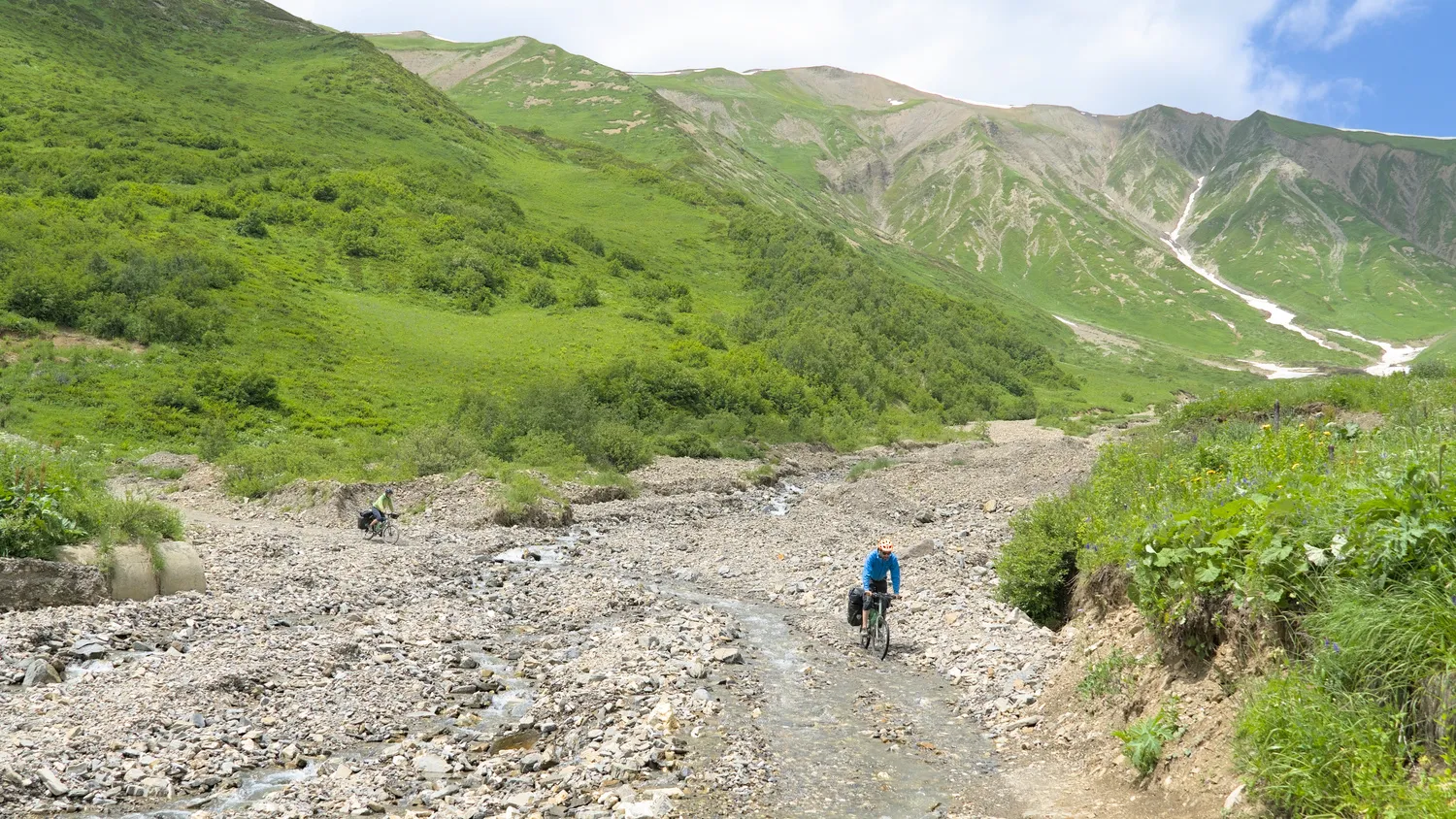
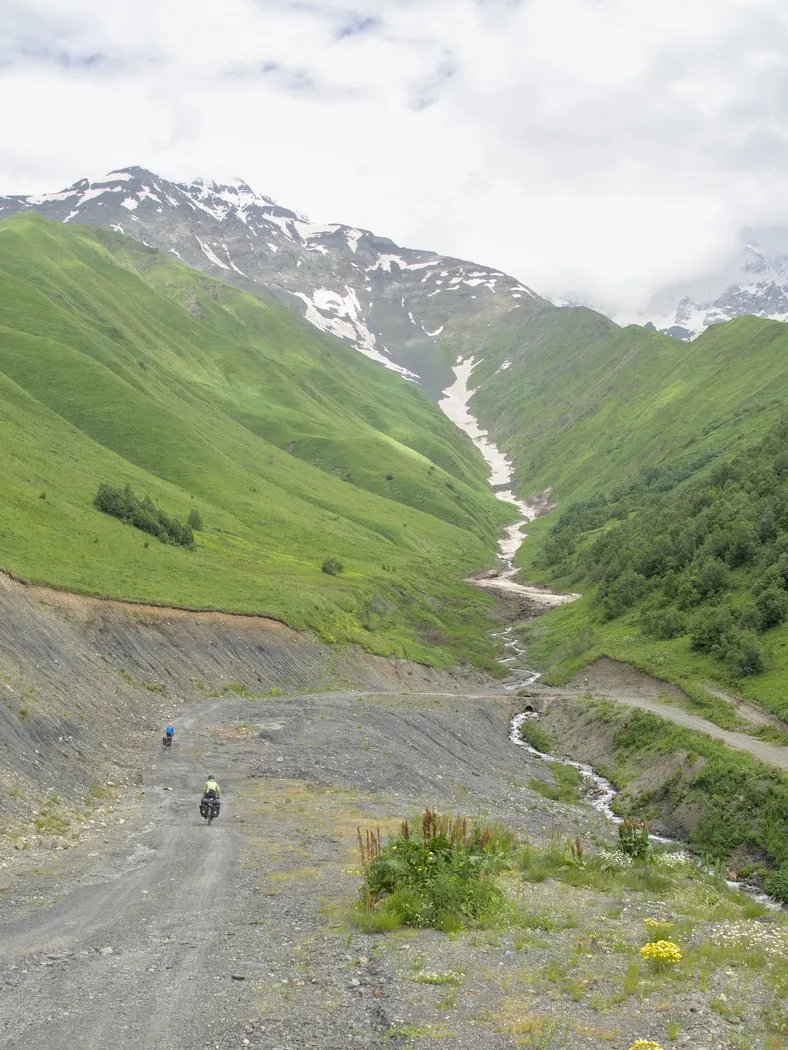
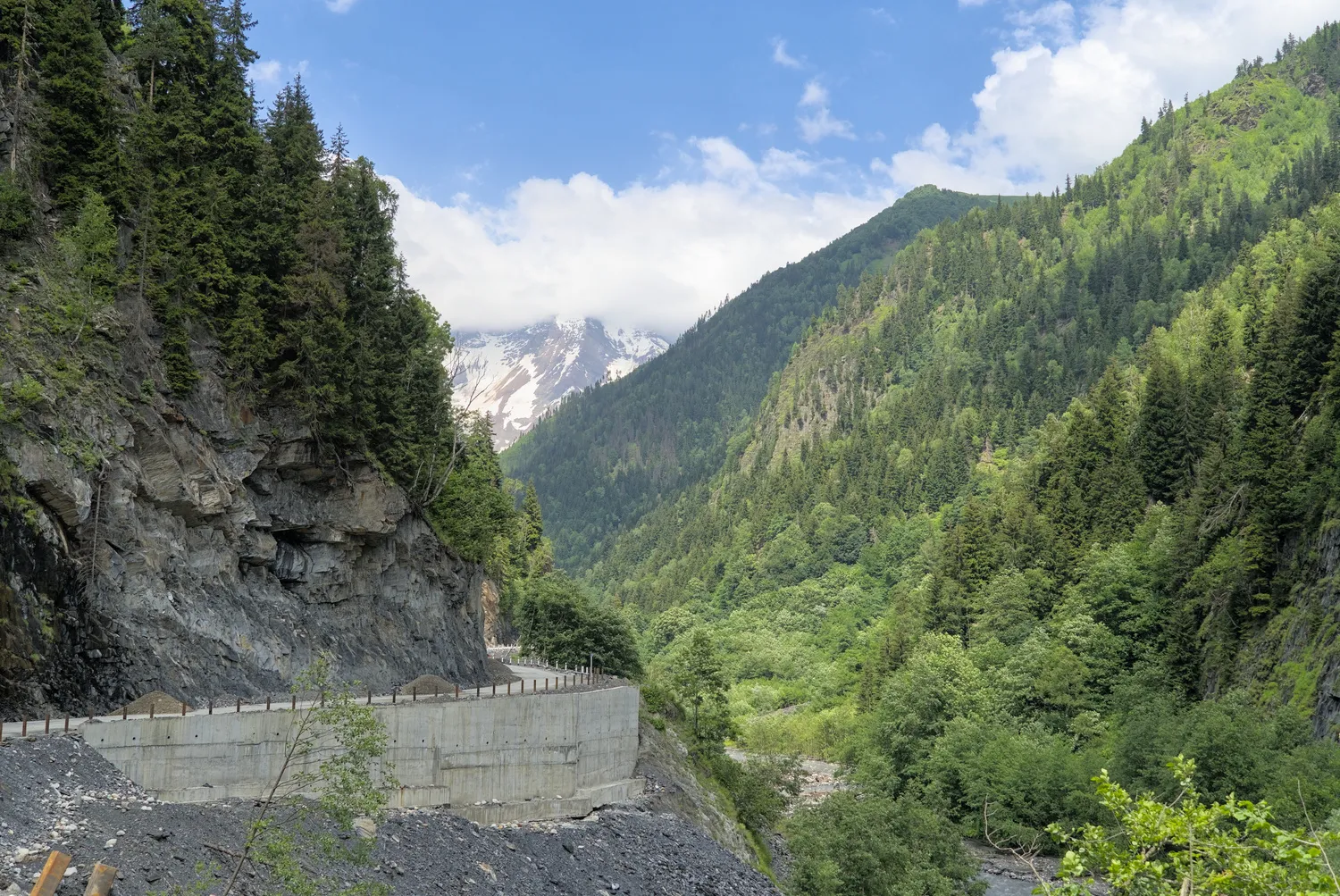
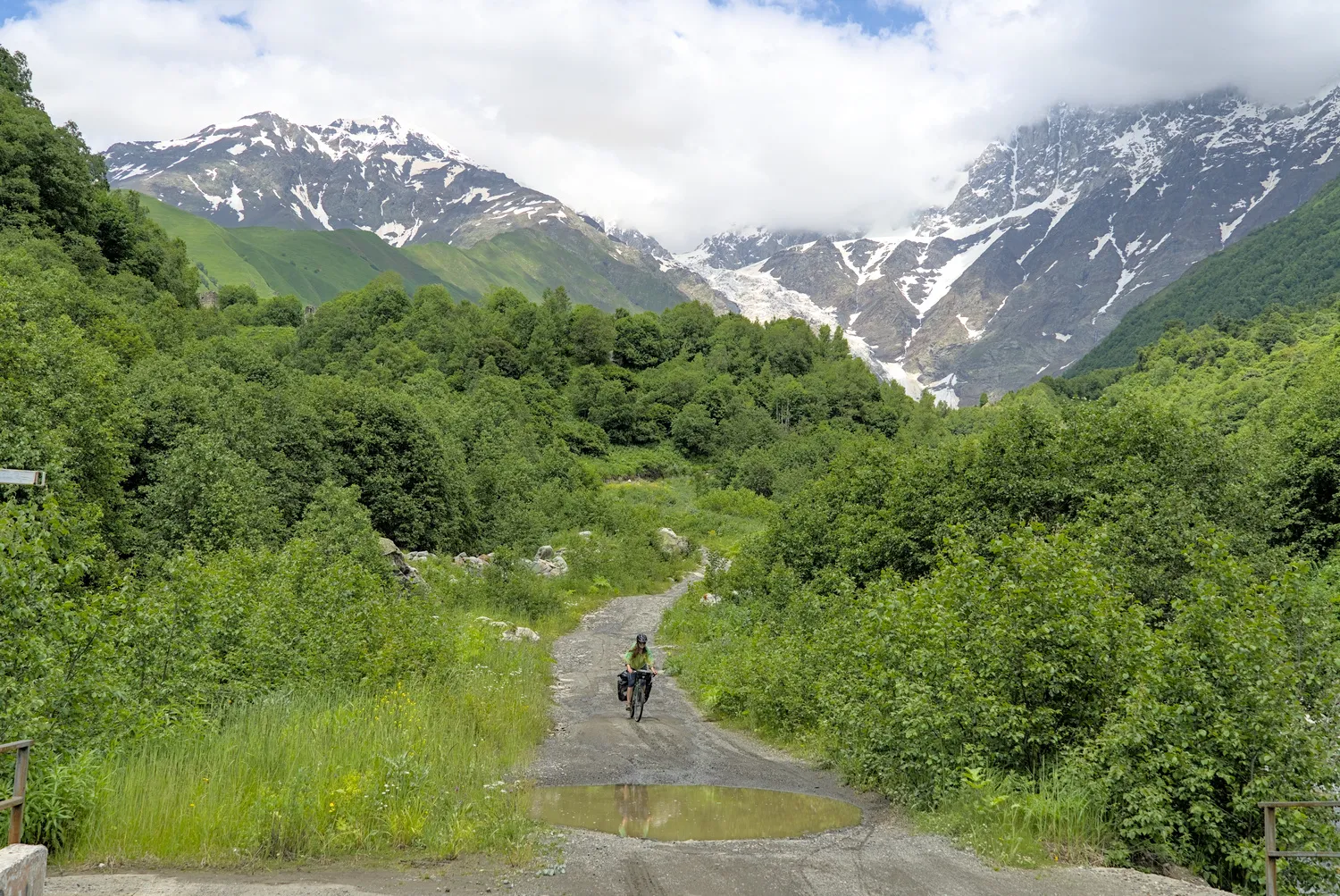
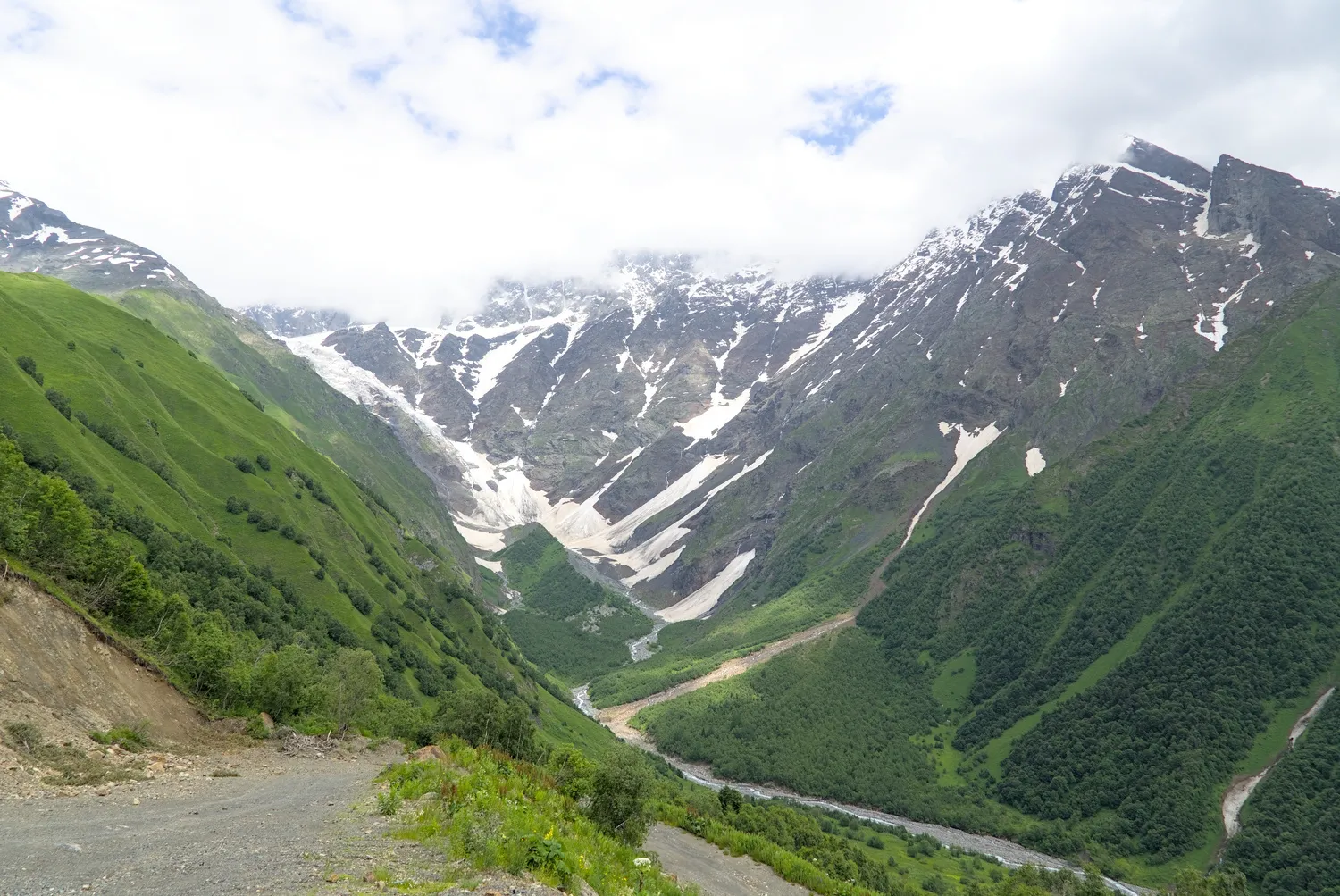
What came next could perhaps be called the prime cut of the whole tour: the descent from the pass. The “road” here was extremely rocky, pretty steep and again and again interspersed with sections of loose scree. Every now and then there was a ford or two as well. It was an extremely technical descent that demanded the utmost concentration. One wrong move would have led to at least a bloody crash. Quite a feat on the heavily loaded beast, but also a lot of fun. At least thanks to the dry weather – in the wet it would probably be an almost impassable mud hell.
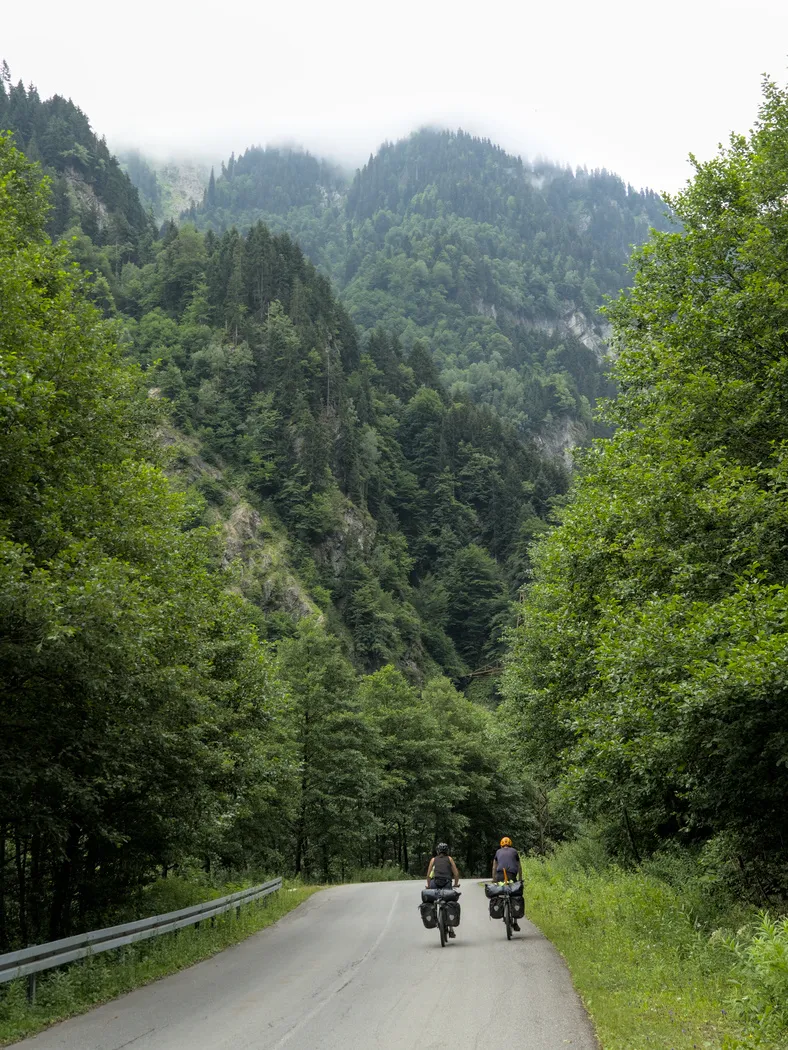
In the afternoon, further down the valley, we finally had a solid road surface under our tyres again, so we made considerably faster progress. Towards evening we camped together by the river one last time, before our paths parted again the next day a little way past Lentekhi.
A brilliant ride through the High Caucasus in great company!
Travel time: July 2022


