Three days by bike through the desert
There are quite a few routes that almost seem to be classics among cycle tourists. What the Mestia–Ushguli–Lentekhi loop was in Georgia, the Isfahan–Varzaneh–Nadushan–Yazd route seemed to be in Iran. Even if the landscape is completely different. I had heard about this desert stage many times and was really looking forward to tackling it myself. At the hostel in Isfahan I ran into Matthias for the third time, and I was very happy that he had similar plans, so in the end we set off together.
Judging by the title of this article, you might think I hadn't cycled through any desert before this stage. But that's not really true, because most of Iran simply is desert or semi-desert. And I had already covered hundreds of kilometres through such areas before this stage. Still, this was going to be different. Different because this time the route led through an even much, much more sparsely populated region, partly on roads that hardly see any traffic at all. For one section of the route it was advisable to carry water for two (better three, to be safe) days, since there would be no chance to refill along the way. So we were heading through a very remote and extremely dry region.
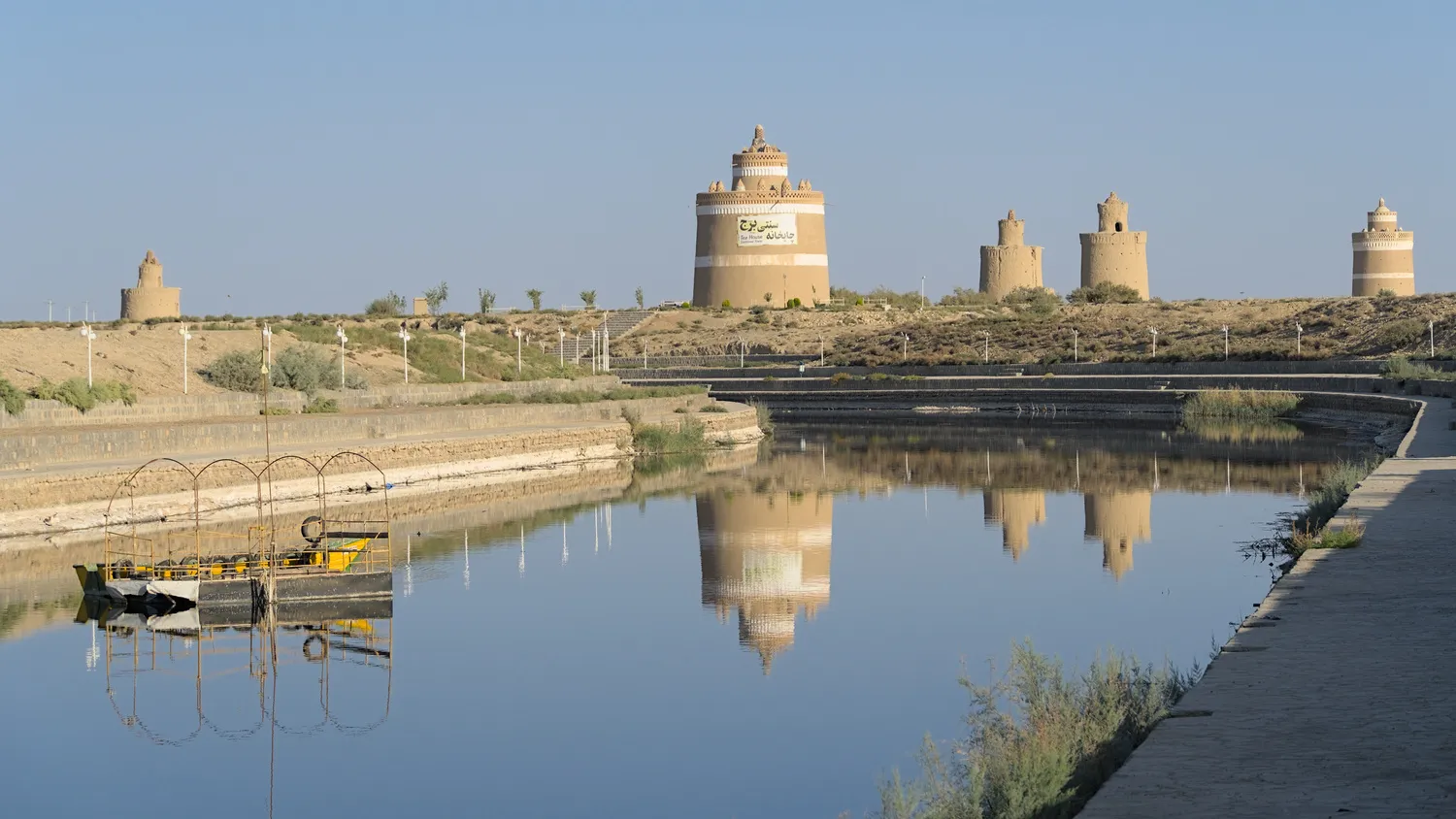
From Isfahan it was still quite a way until we left civilisation behind. We escaped the big city pretty well without any major traffic chaos and suddenly found ourselves cycling right past a “Nuclear Area”. Those are actually exactly the places you try to avoid as a tourist in Iran, so as not to suddenly get detained as a supposed spy. But we had no idea that such a facility would be so close to our route, and at the same time we were lucky not to be bothered by any police checks. Just outside Isfahan the landscape already looked rather bleak again, even though there was still some farming going on in places. Where the water for it came from was a mystery to me, though. The Zayandeh Rud, dried up in Isfahan, did have some standing water in Ezhieh – but nothing was flowing. There we also got to marvel at some of the historic pigeon towers. They were built to keep pigeons for producing fertiliser for the barren fields. So back then the Persians literally turned sh*t into gold.
Just a few kilometres further on, we pitched our tents in a “green space” next to a mausoleum. The mausoleum itself was basically just a mosque, maybe decorated a little more lavishly than usual. Inside was the tomb of some religious VIP – but we were more taken with the infrastructure in front of the mausoleum. The green space consisted of parallel concrete strips on which carpets could be spread out for picnics, with strips of pine trees in between. We chased off the resident fox with stones, and the Iranians disappeared after the last prayer without any help from us, so we had a quiet night. Unfortunately I can't show you a picture of this splendid campsite – I still manage far too rarely to photograph ugly things as well.
The next morning we watched a schoolboy go through what seemed to be his morning routine. He came riding up on his motorbike, did a few laps around the green space, then parked in front of the playground and disappeared into a tube of the climbing frame for an indefinite amount of time. Presumably he was playing on his phone there, sitting out the school lessons he considered pointless. Had at least two of his buddies been around too, they would probably have stopped their mopeds right in front of our muesli bowls, stared, tried to paw at our bikes, grinned stupidly and constantly tried to talk to us in Farsi – without even realising that we didn't understand them. But luck was on our side, his buddies seemed to be sitting in class. Anyway, we set off towards Varzaneh, bought food there for the coming three days and loaded up on plenty of water.
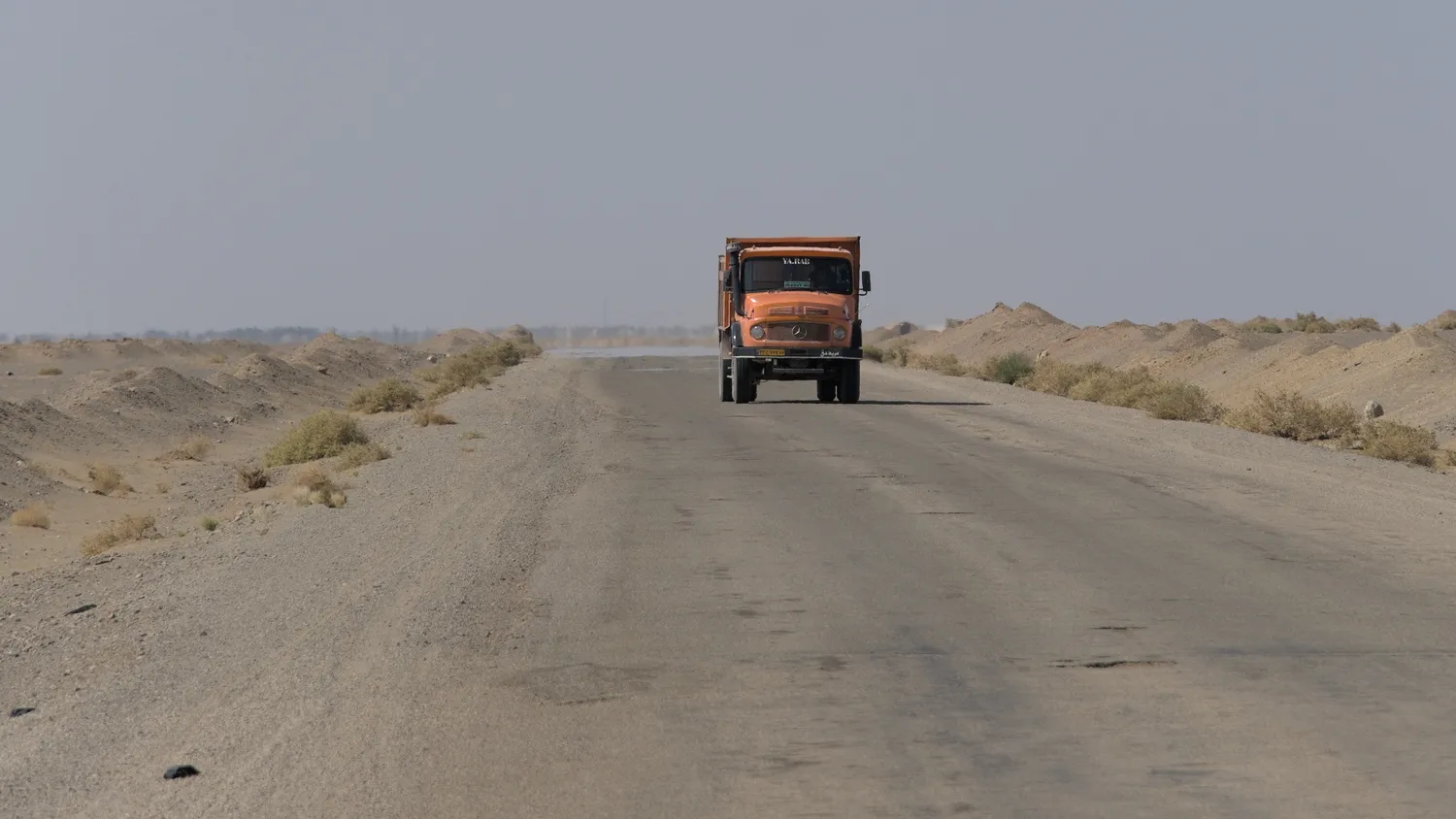

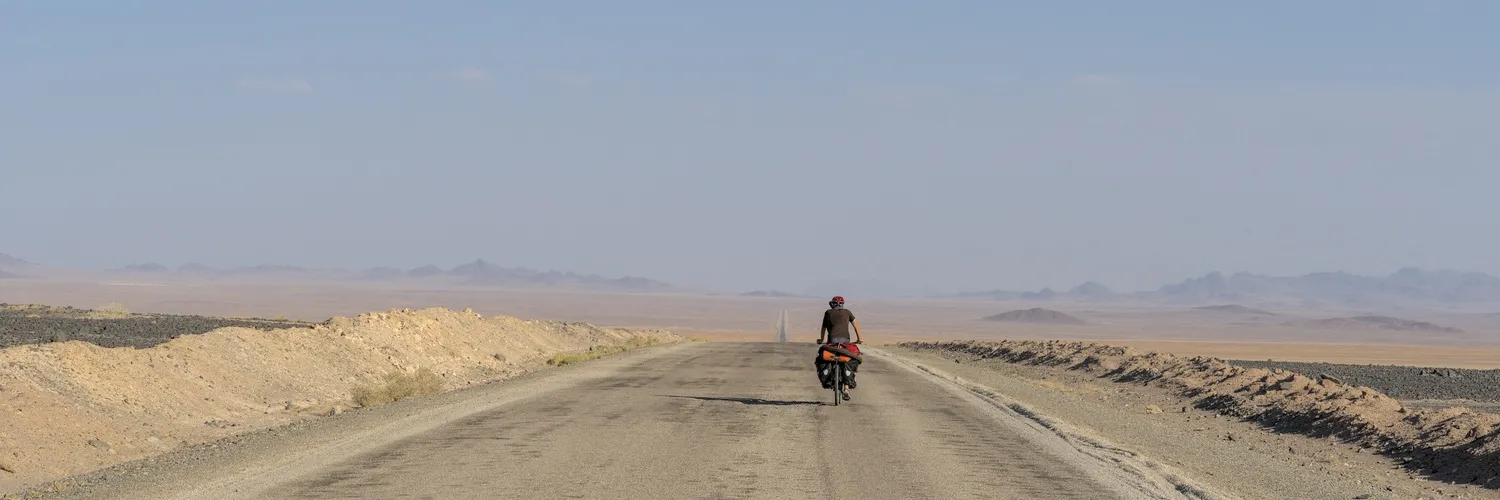
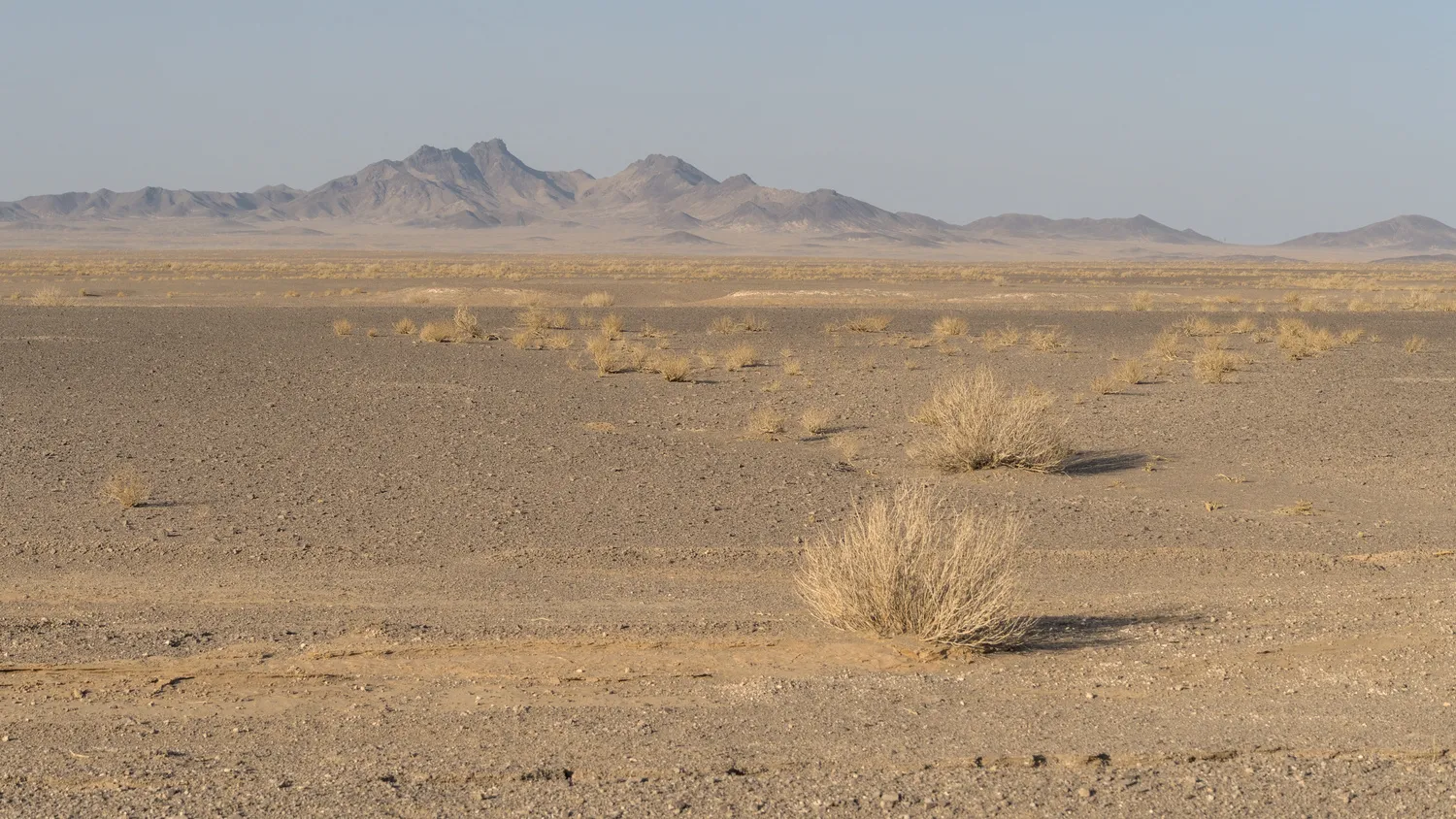
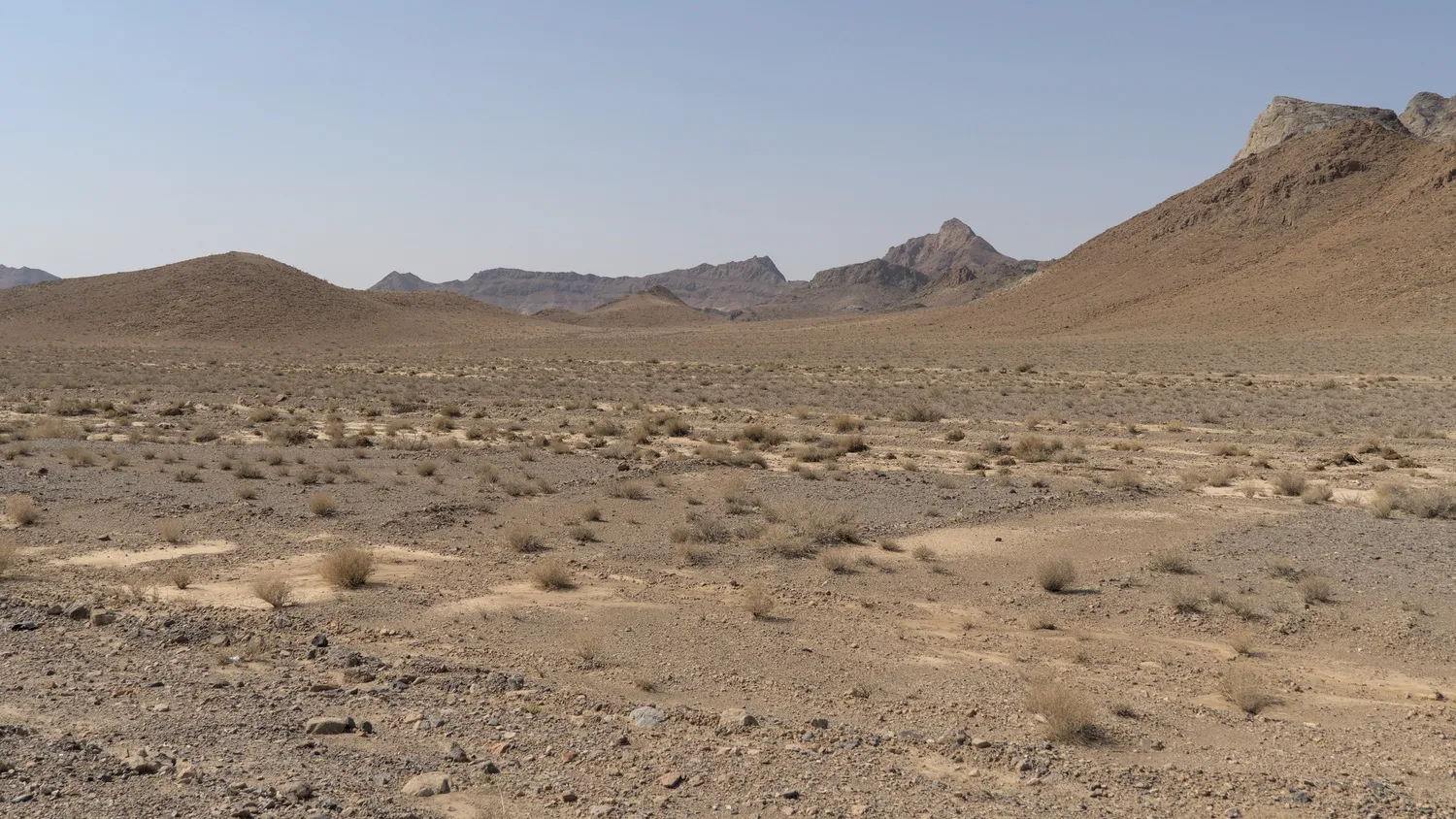
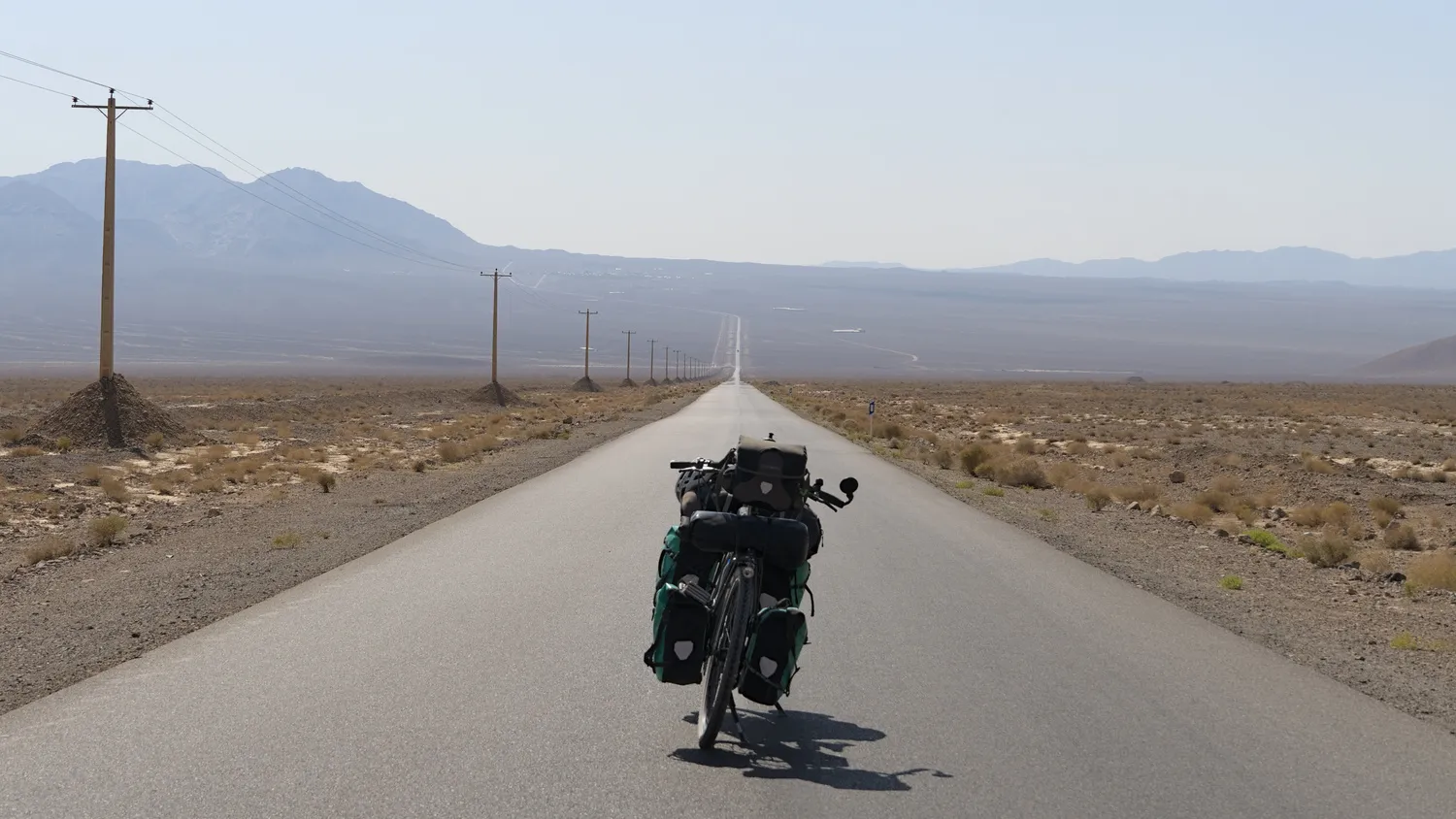
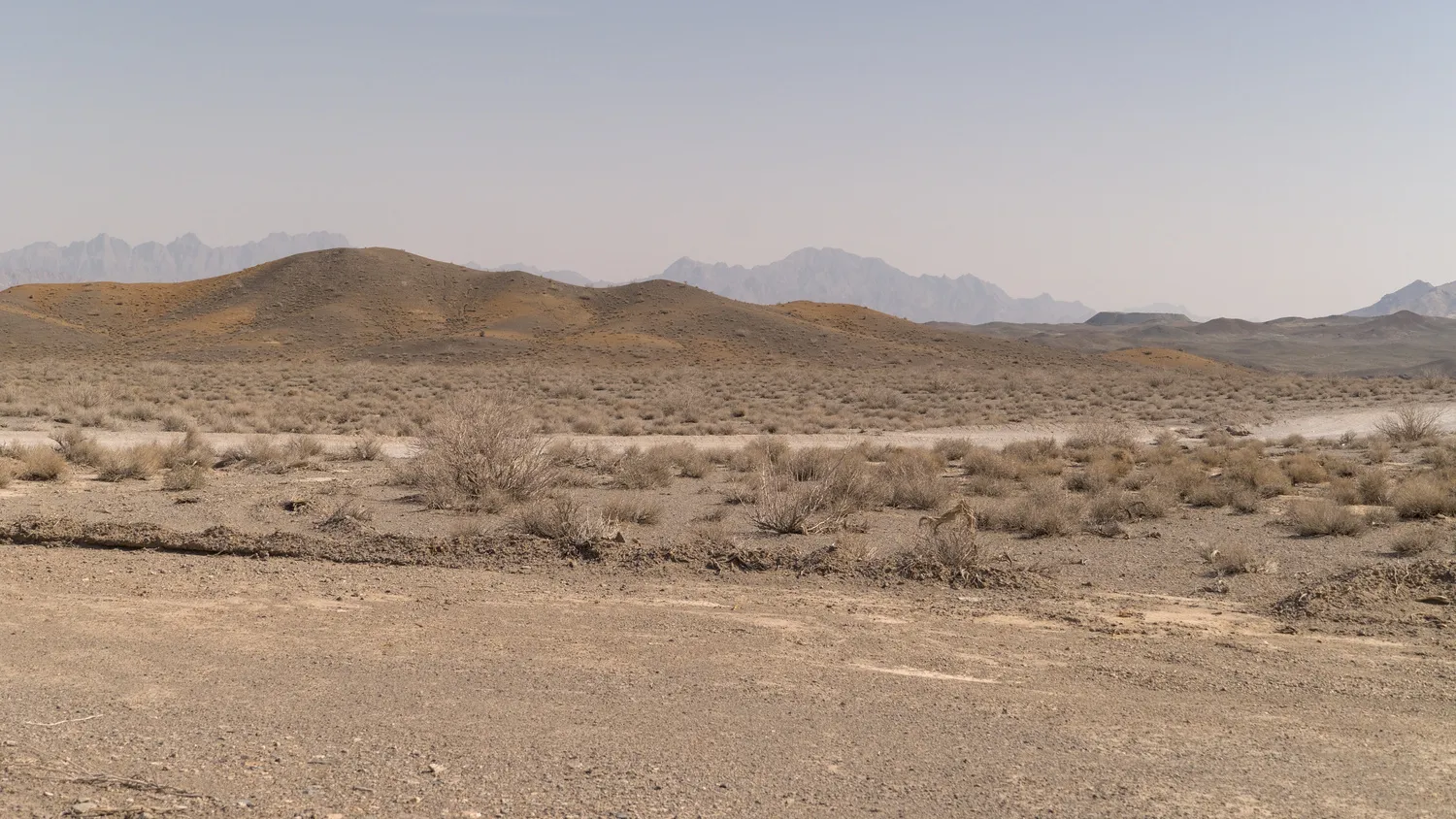
Right after leaving Varzaneh our route turned off the main road and we found ourselves straight in the desert. Finally! Yes, it was hot, there was no shelter from the sun, and apart from the sweat running down, it was bone dry. But this was exactly where I belonged, this was where I wanted to be. For the next three days we would ride through the wilderness, on lonely roads without constant traffic.
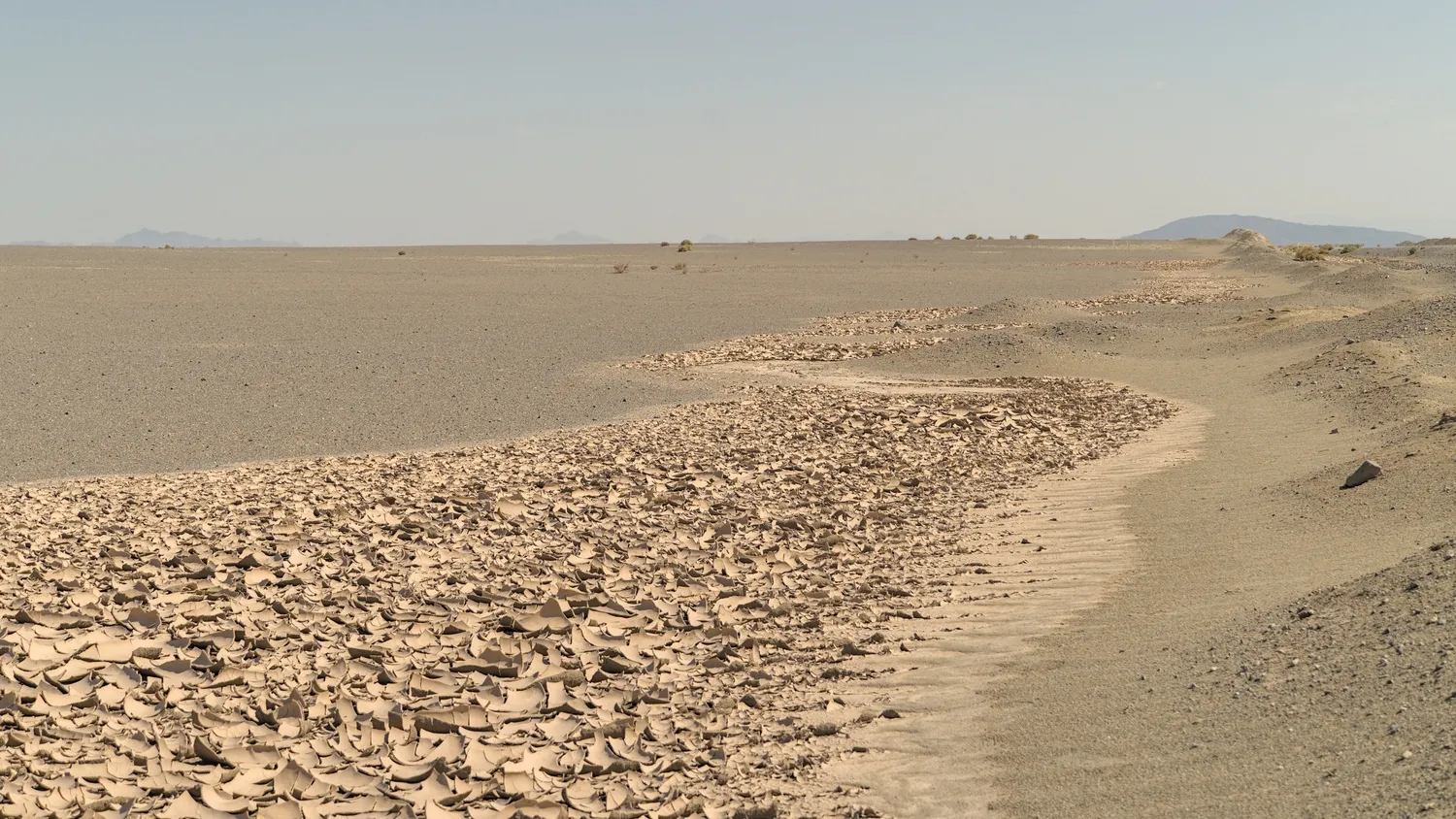
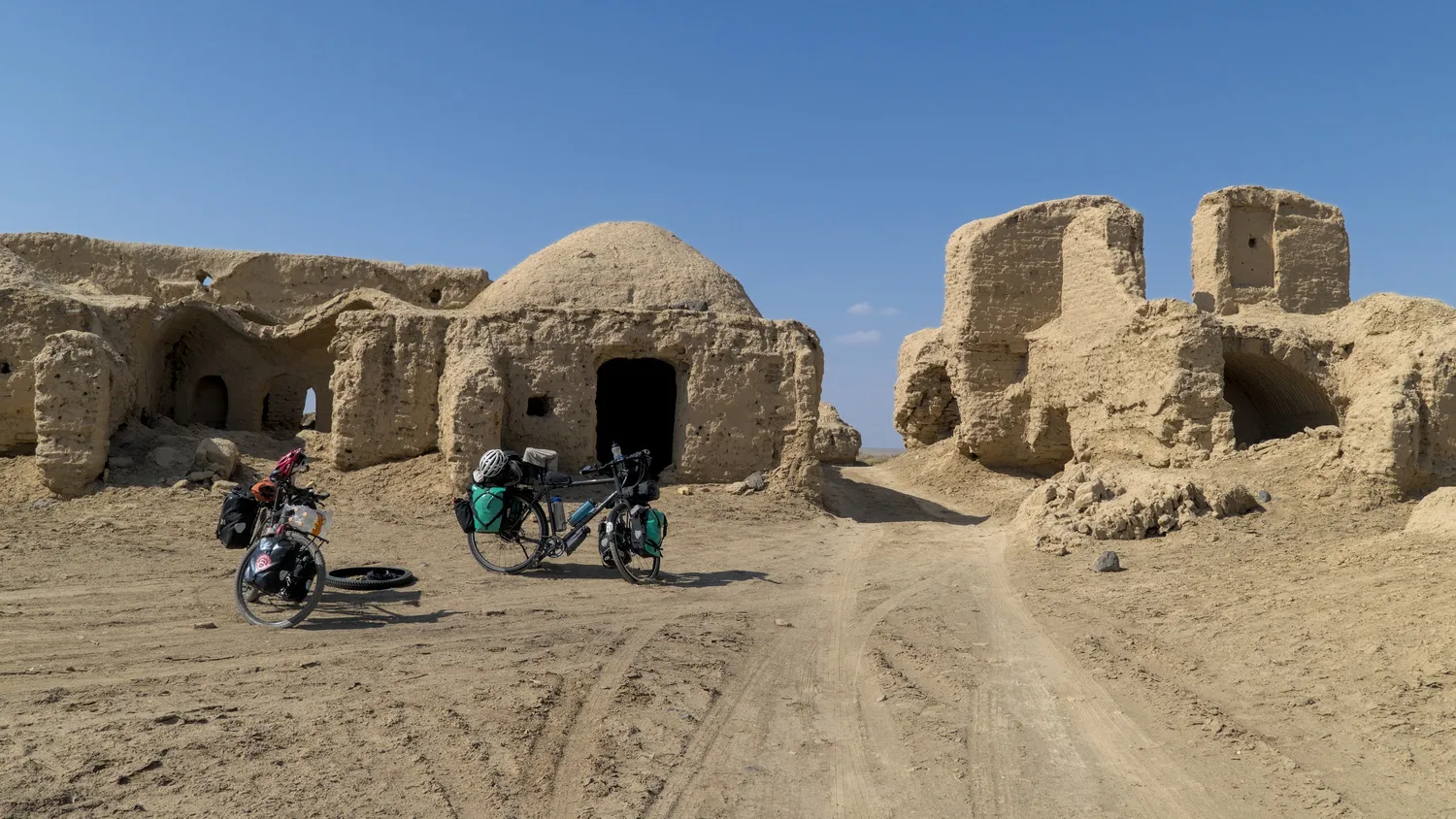
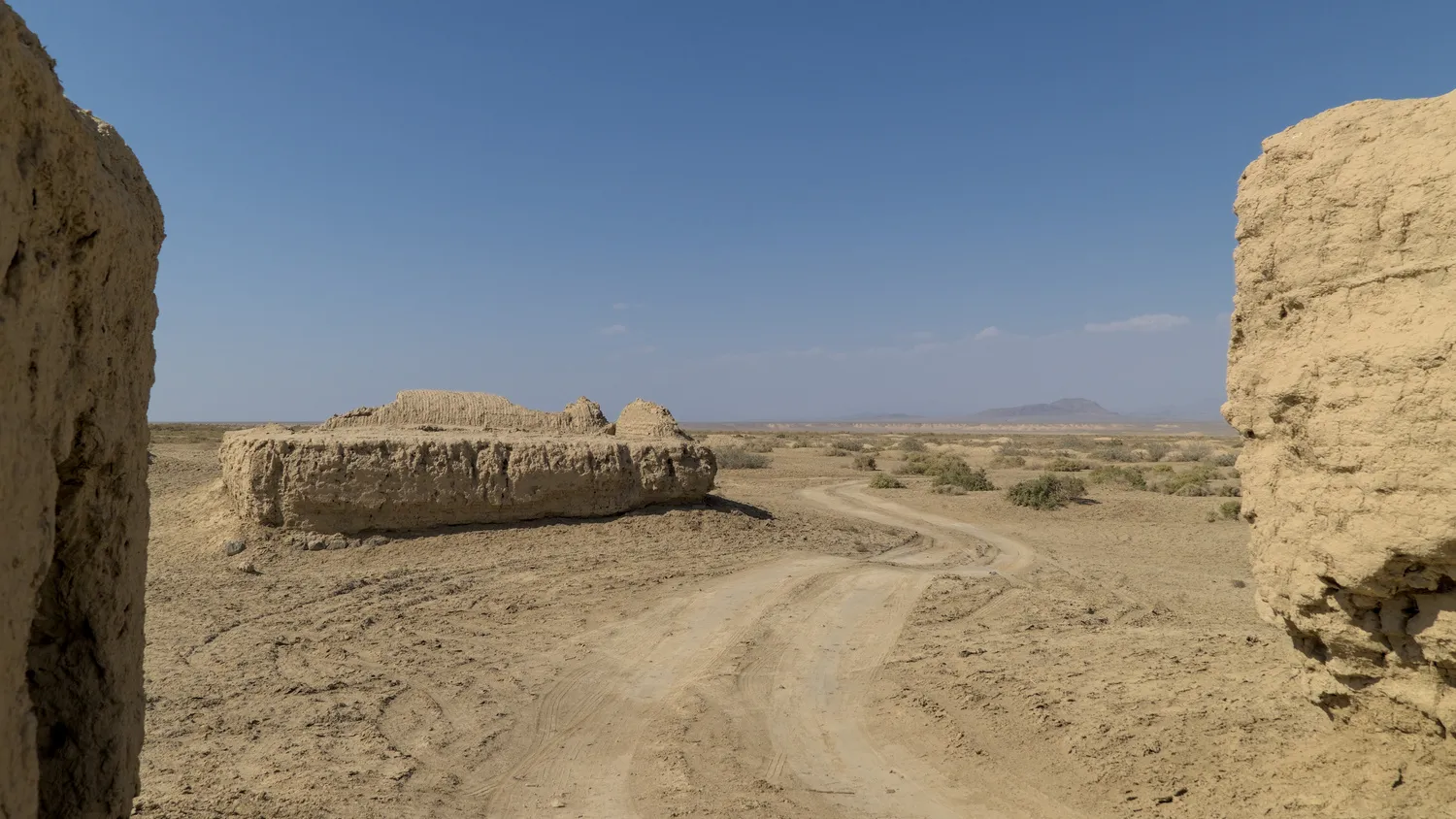
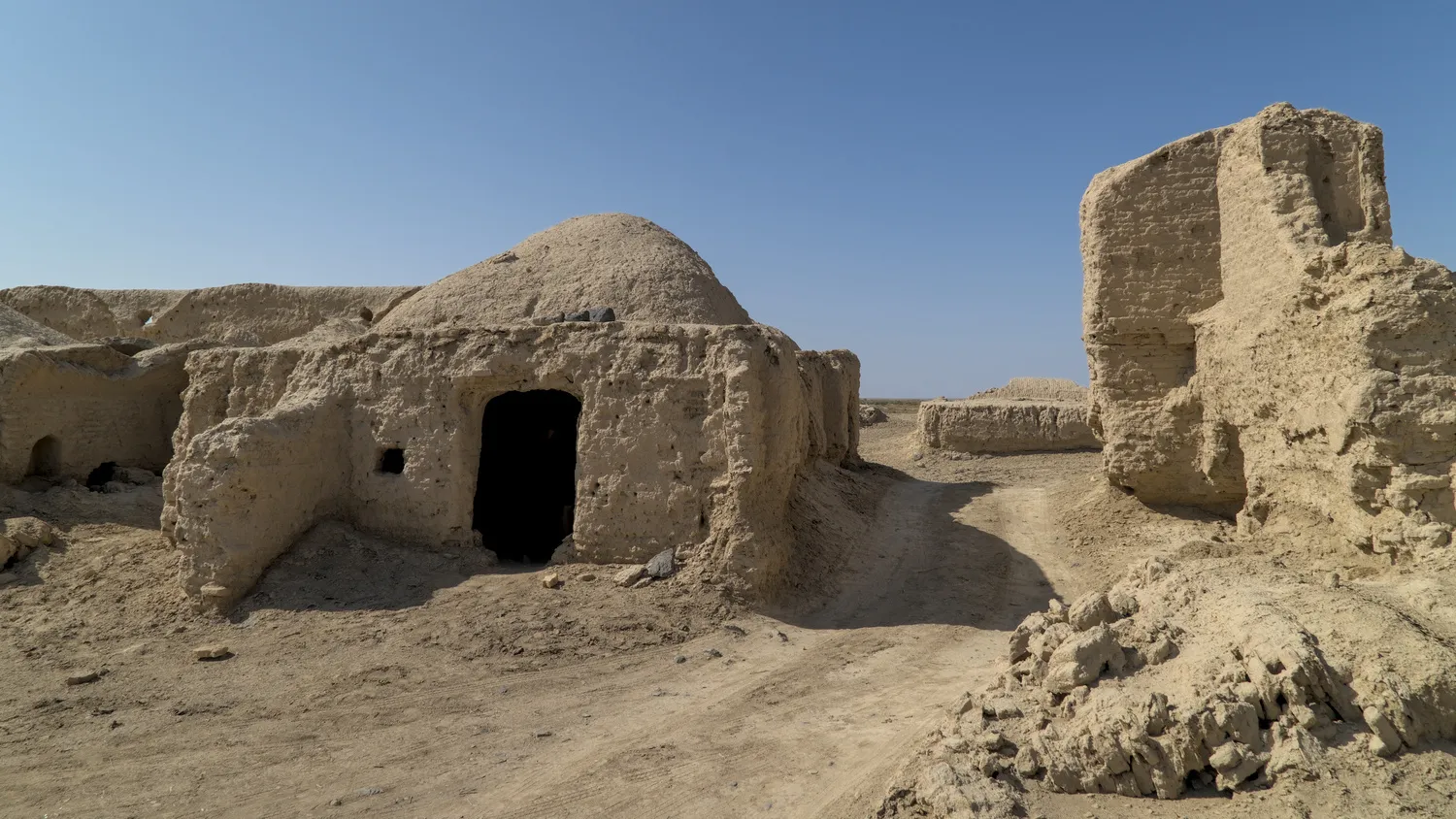
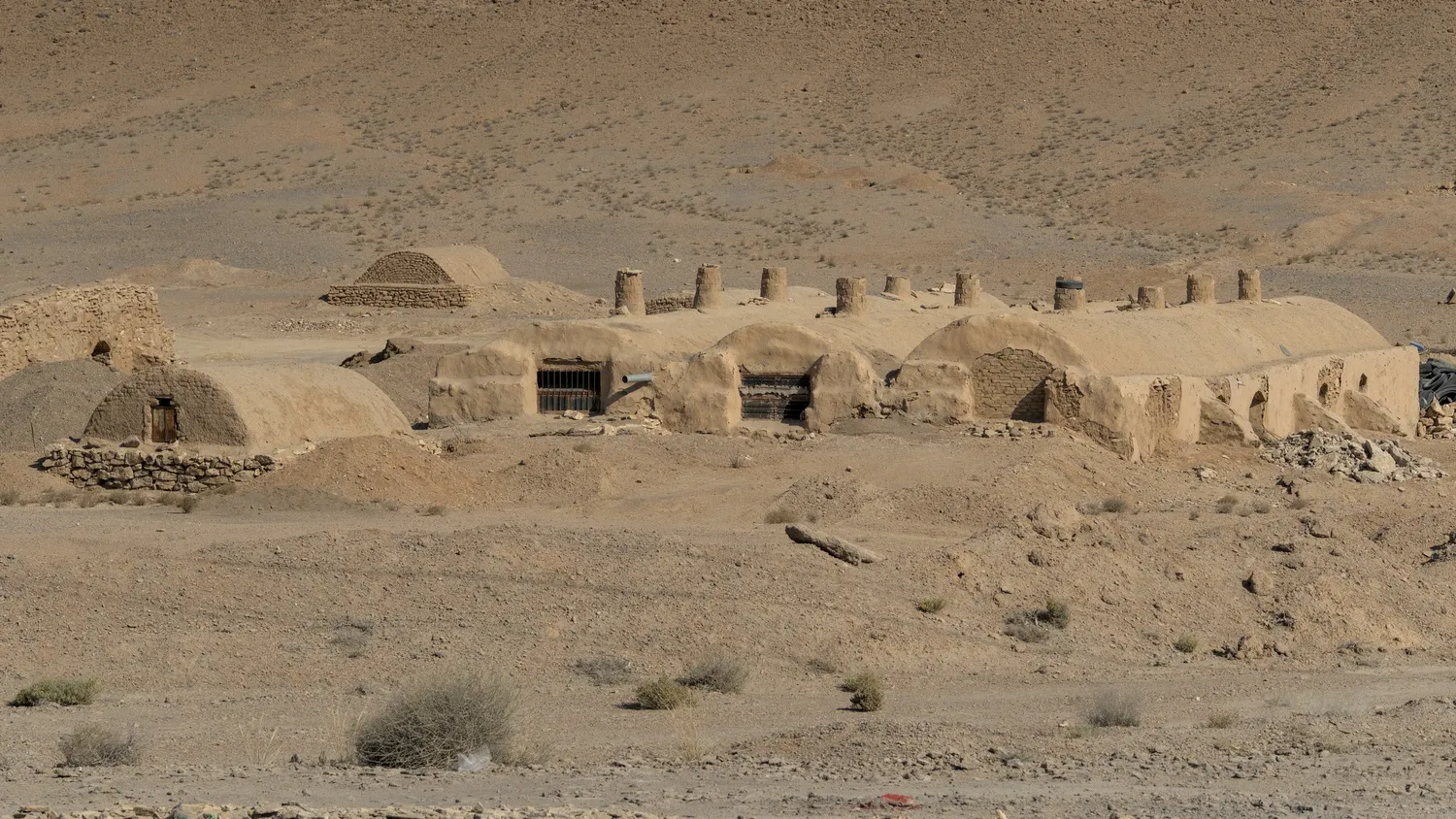
Under our wheels we had asphalt – not the best, but still good enough to make decent progress. Every now and then we had to stop – photo break. I had already warned Matthias before the tour that the camera wouldn't stay in the bag all the time. It didn't seem to bother him – or was he just putting up with it out of politeness? Whatever, he had been warned. It was also extremely handy to finally have a cyclist as a subject again, and he pressed the shutter button now and then too. Thanks a lot for that! And even though it was actually a pretty desolate landscape, there were still plenty of things to photograph. For example, traces of long-past rainfall reflected in the cracked top layer of clay, different textures of sand, mountains in the background or the dried-up desert vegetation – all things you just don't get to see that often otherwise. An abandoned settlement of old mud huts was particularly interesting. No idea how old they were, but for us they were just right for the lunch break. Once again I was amazed at how well this natural building technique worked: inside the huts it was pleasantly cool, which made the little break really nice. Maybe even a bit too nice, because later that day the daylight said goodbye an hour too early.
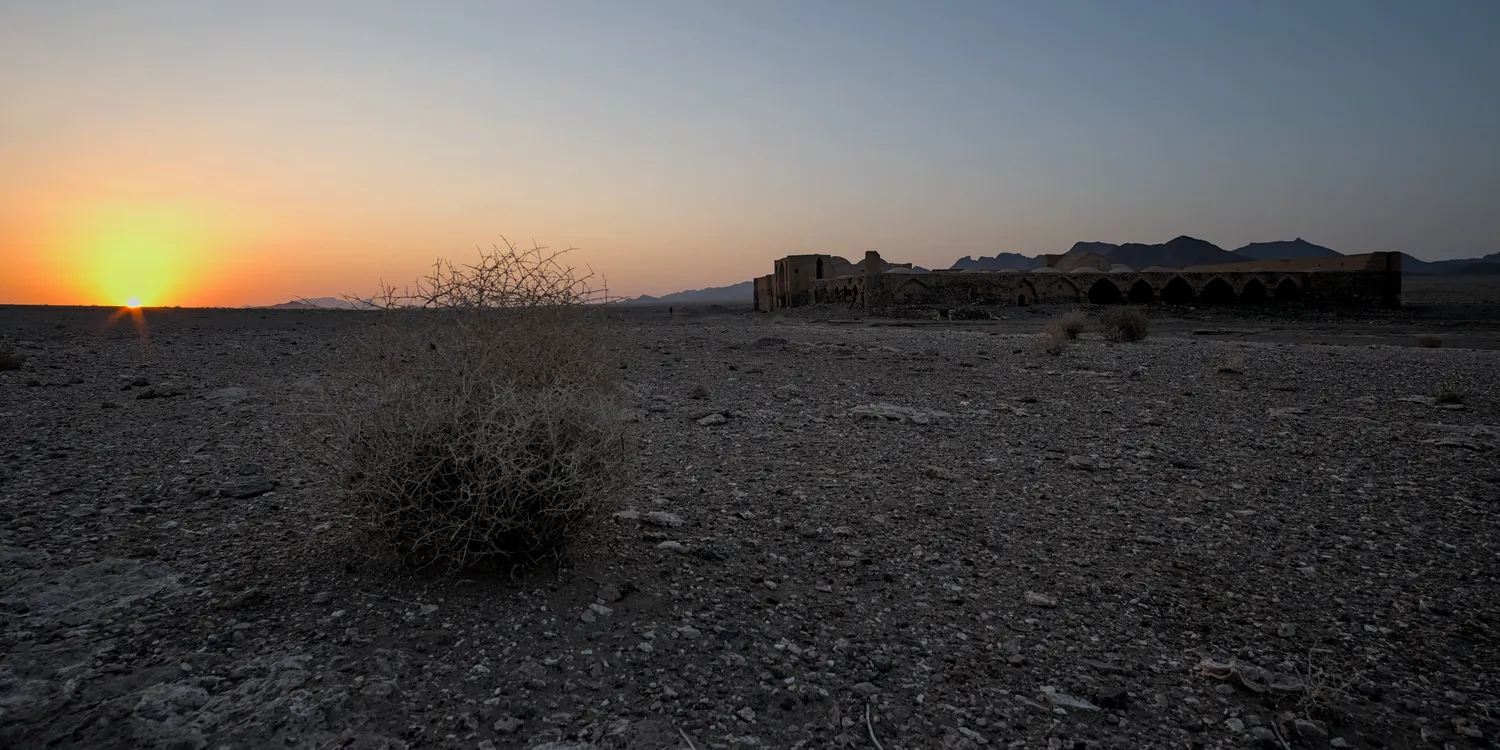
There were still a few more kilometres to our declared destination, an old caravanserai, and towards the end of the day they really dragged on. So we got the sunset on the road instead of at our destination. As a small consolation a few dromedaries appeared in the evening light – of course we had to stop for a few photos again. About five kilometres before our destination the asphalt said goodbye. In return we now had a sandy track. In the dark it really wasn't easy to tell which spots were a bit firmer and therefore rideable – so it meant pushing again and again, bit by bit.
At some point we had made it and stood in front of the old abandoned caravanserai. Would we be alone? Or were there perhaps other travellers, or even locals? Since it was already pitch dark, for safety reasons we were actually hoping for the first option. We stashed the bikes a little way in front of the huge building and first inspected the inside with our torches. Phew, jackpot – we had the whole caravanserai to ourselves. The bikes were quickly fetched, everyone found a suitable spot for each others tent, and once everything was set up we could finally get to cooking and relaxing. Matthias had already gone to sleep while I spent ages trying to capture the gigantic night sky with the camera, cleverly lighting up the caravanserai at the same time.
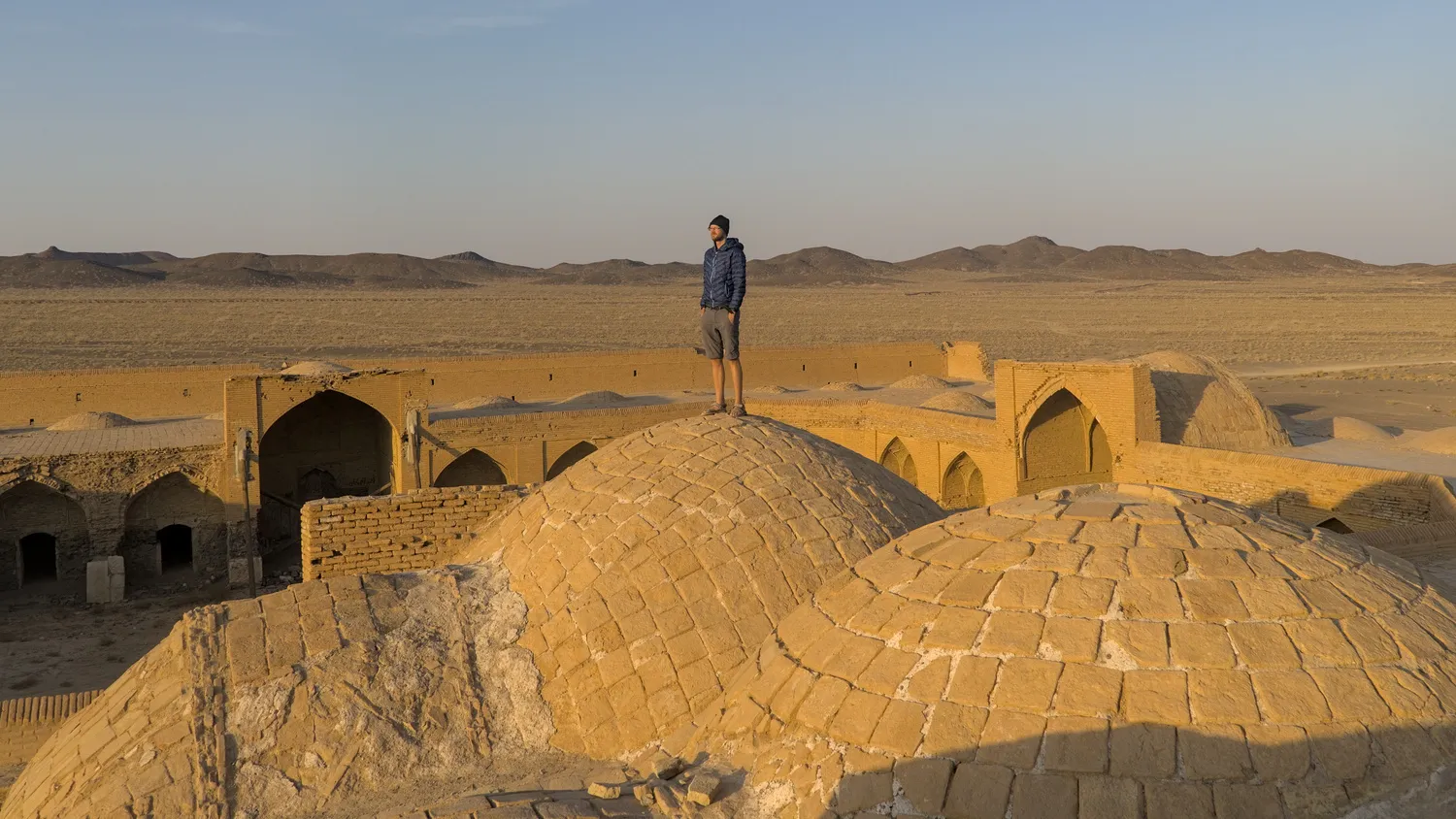
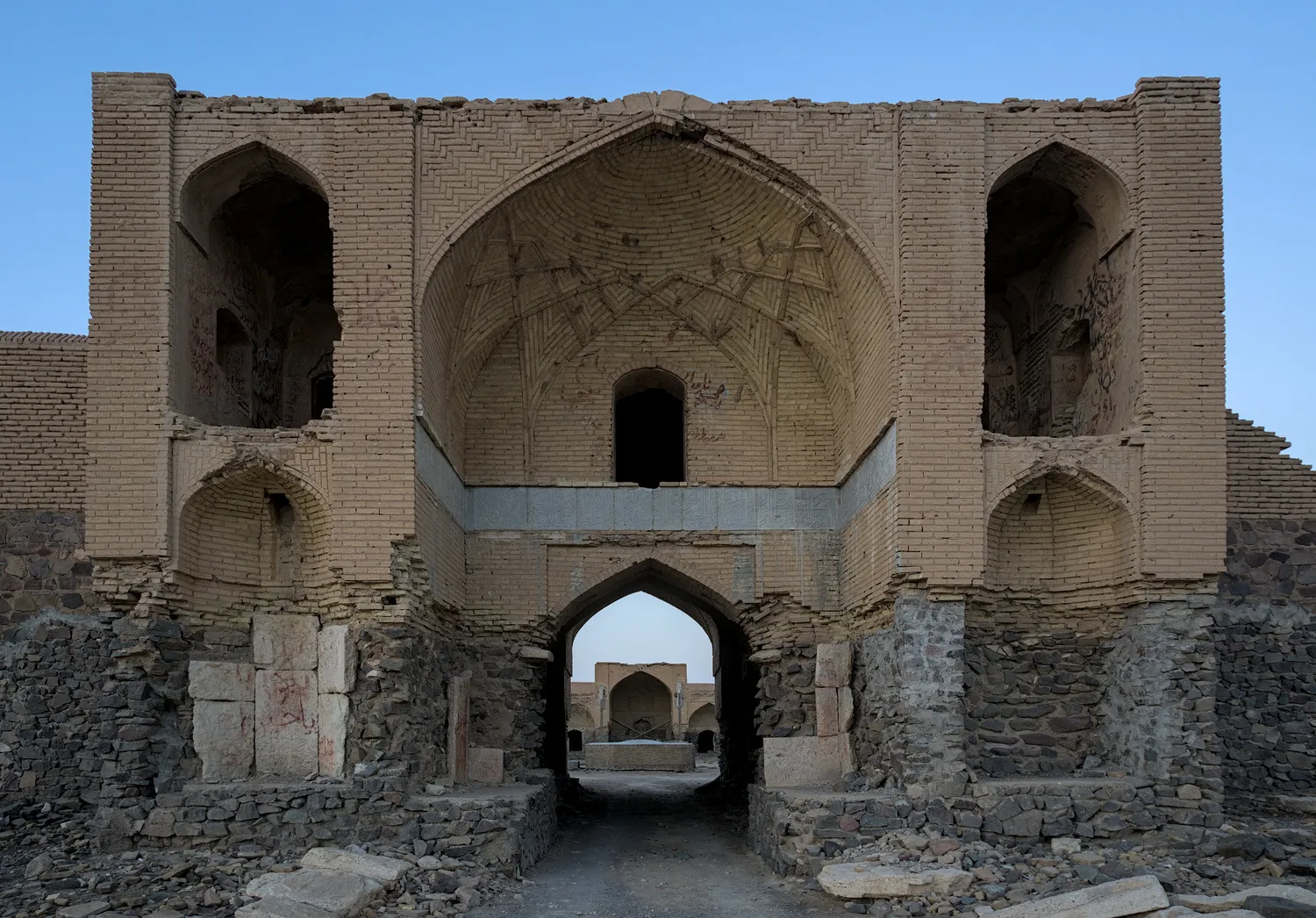
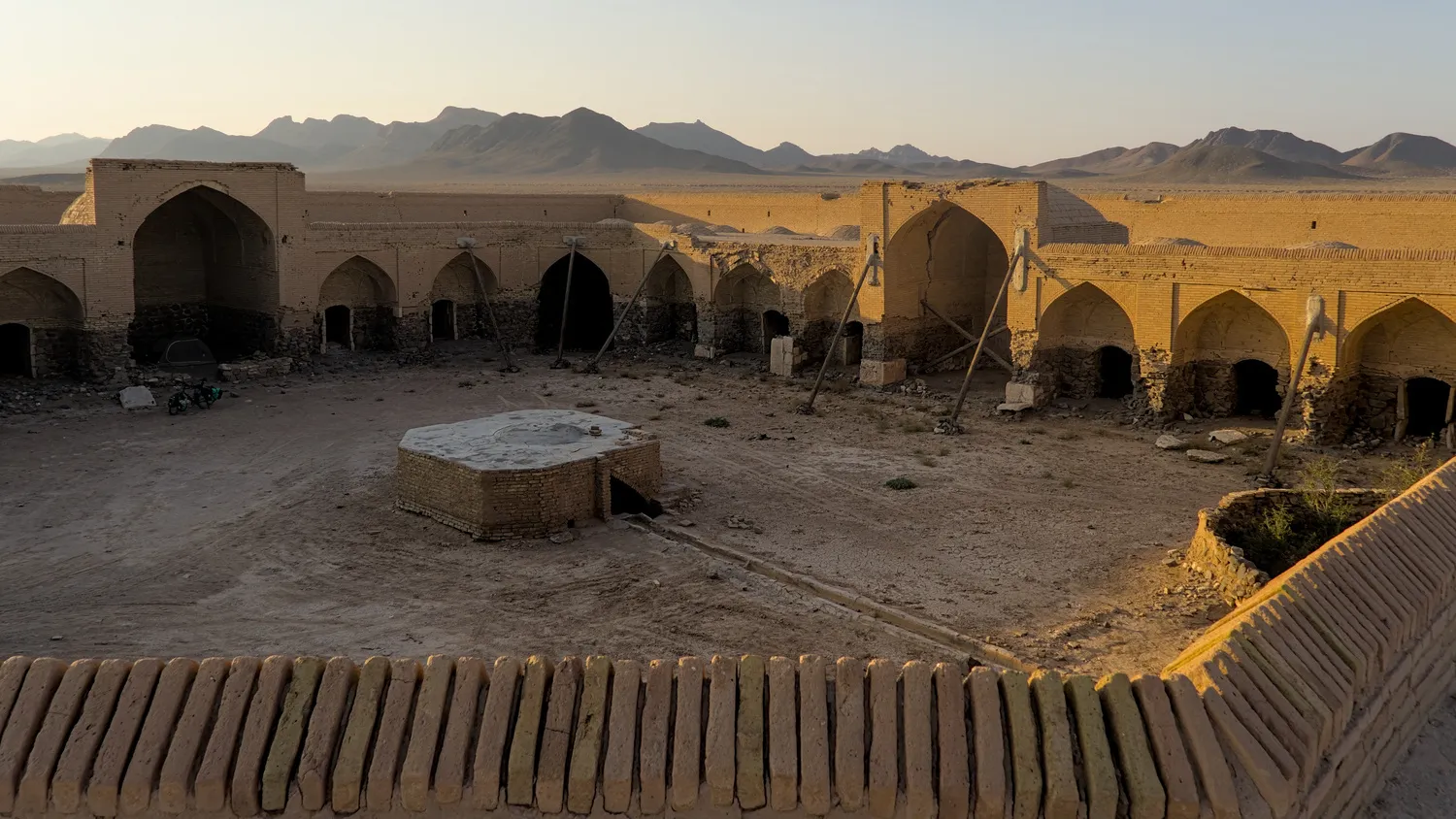
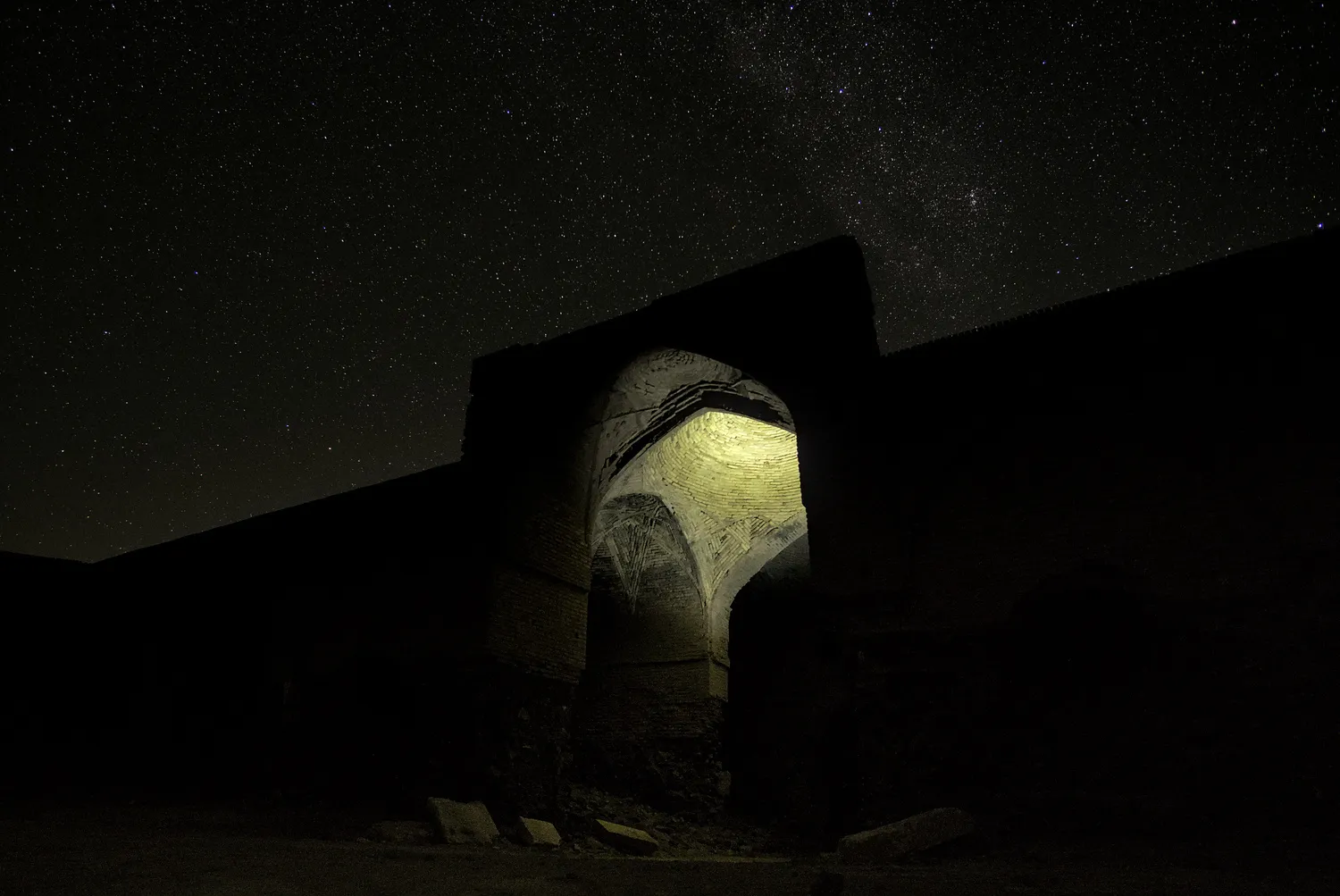
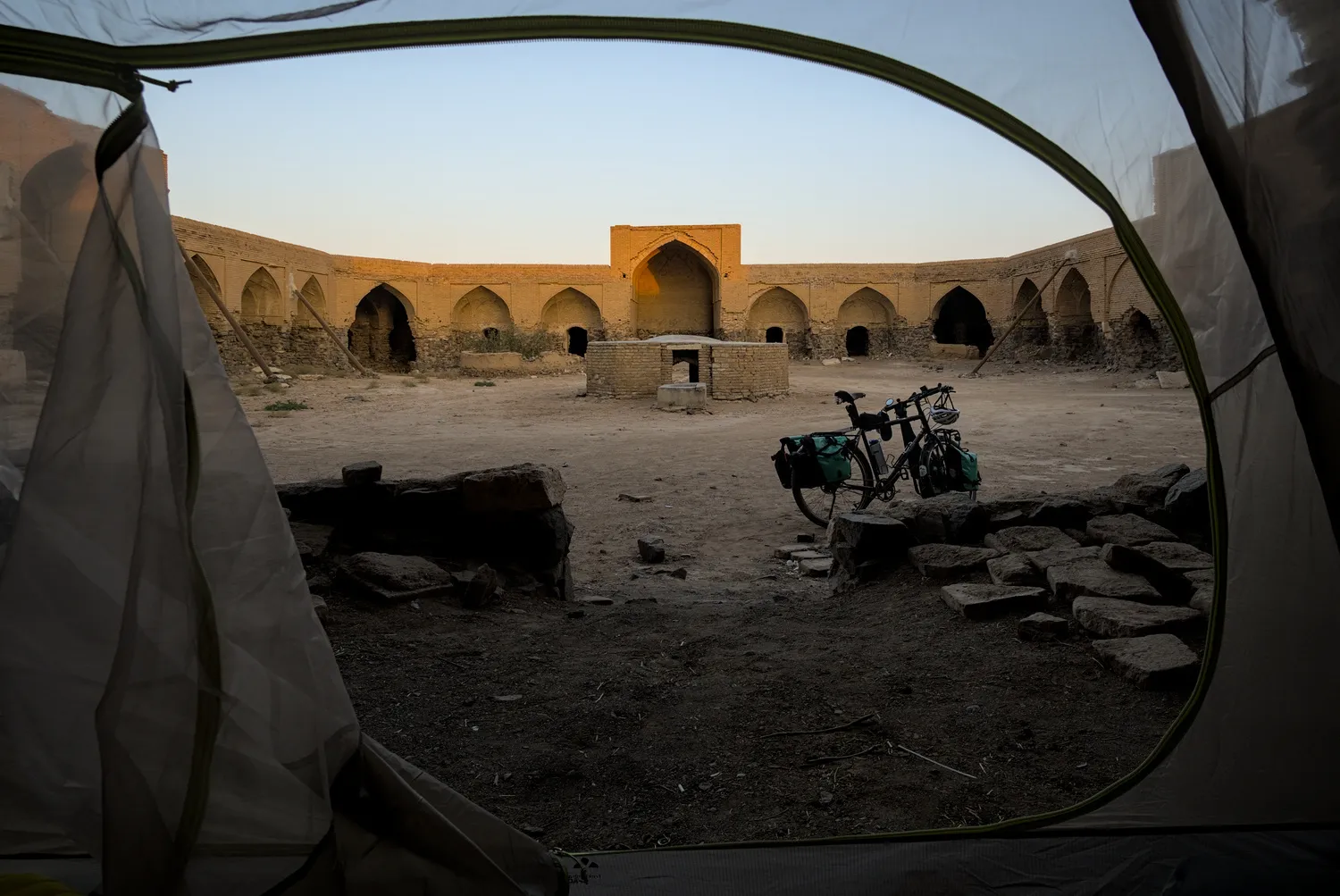
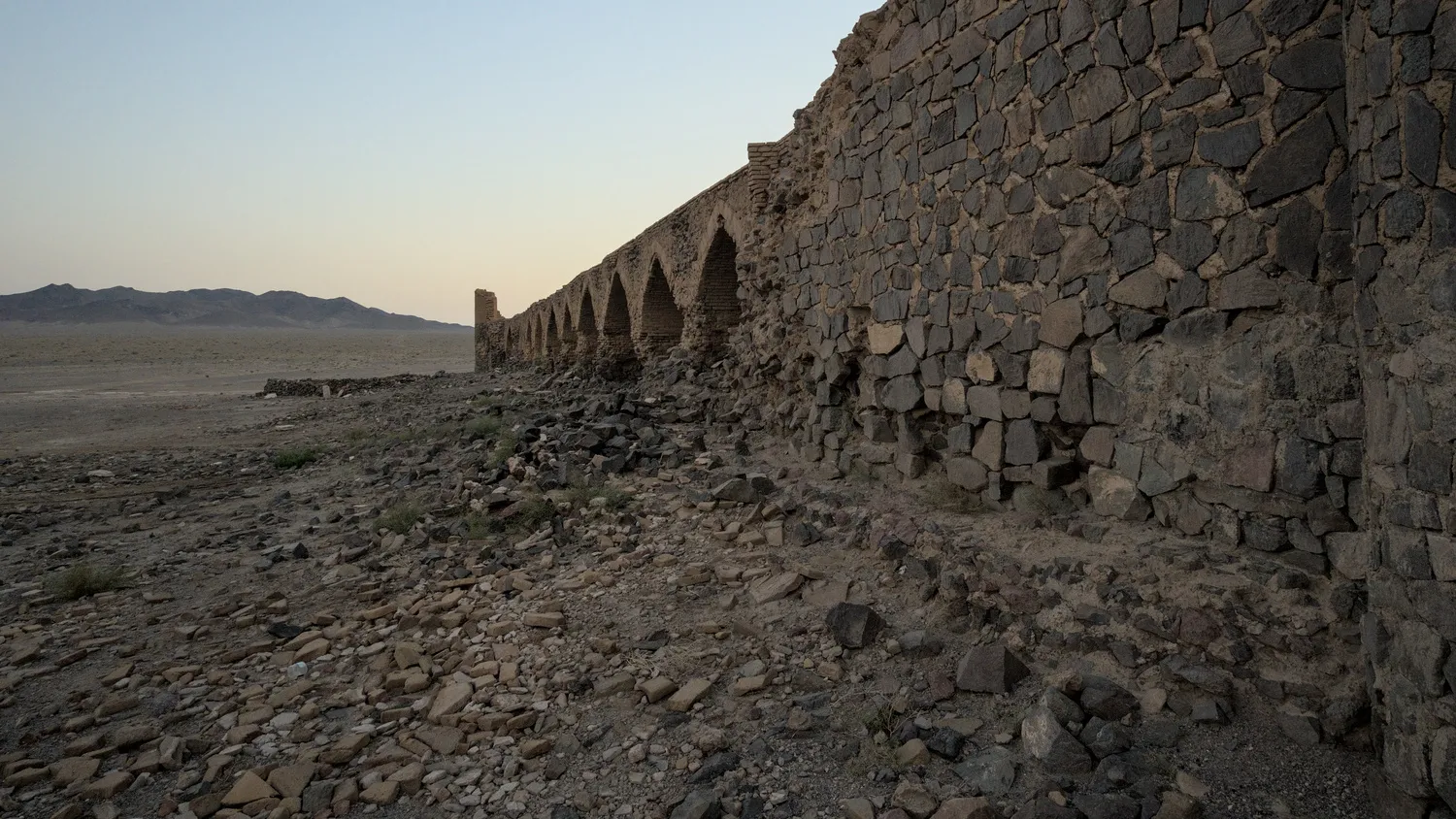
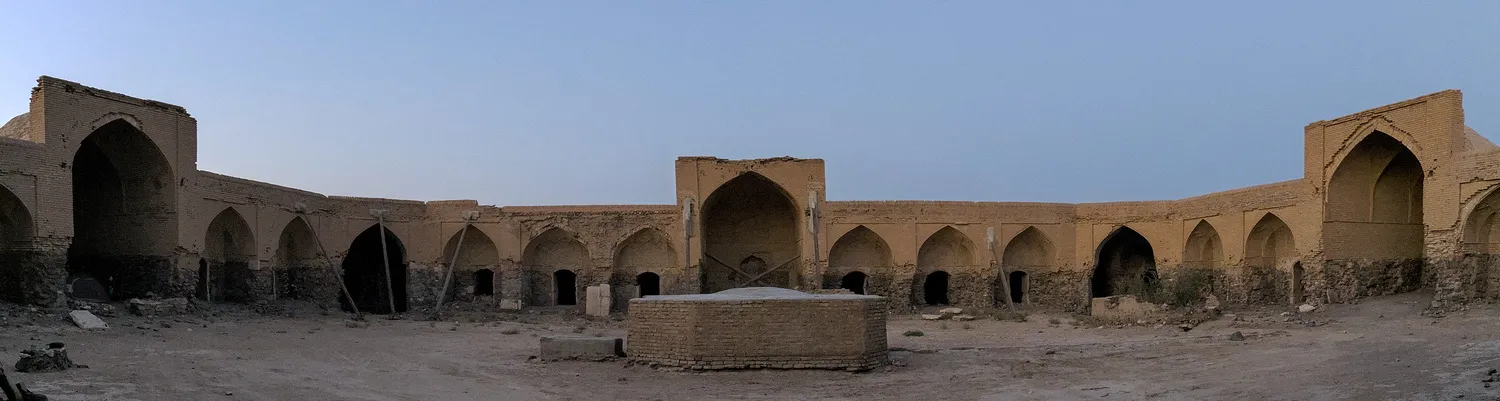

When dawn broke the next morning, it was time to finally explore the caravanserai properly. A dreamlike lost place! In some places support beams had been put in and a few stone blocks added to stabilise the building. But it hadn't really been restored yet – luckily. Because the charm this place gave off was unique. Too much “new” would have destroyed that again. The caravanserai was also still in pretty good condition. At the main entrance there was a winding staircase leading up to the roof. It felt like finding a secret door to a beautiful secret room in a computer game. The sun had risen only a few minutes earlier as we explored the roof with its countless round domes – the light was still so soft and gave the whole thing something magical.
The first kilometres of this new day turned out to be almost as exhausting as the last ones the evening before. The track was simply a sand piste. But at least it was light now, so in the end it went a little better. At some point the ground got firmer and much more rideable, until we were travelling on a future road that was just waiting for its layer of asphalt. A shame, really, because once this connection is properly paved, the silence and the super lonely desert charm will probably be gone. About 20 kilometres after the caravanserai and a good while later, we had asphalt under our tyres again. A little further on, having reached the highest point of the tour, I expertly lectured that the straight line far off in the distance was the railway line to Yazd. Matthias didn't really want to believe me. We rolled on, now downhill. On and on. The straight line came closer and turned out to be our road, which then led dead straight uphill again for what felt like forever. So much for my expertise and the thoroughly studied map. With this unspectacular mountain section and the somewhat blowing wind I somehow ran out of energy, and I was glad Matthias was waiting at the next junction. It really was time for lunch. Matthias was already hugely looking forward to the pickled paste of peppers and other vegetables that was going on our bread – the day before he had talked me into buying two jars of it, it would go down well. The combination of sourness and spiciness wasn't quite what he had imagined, though – the next day he generously did without his share.
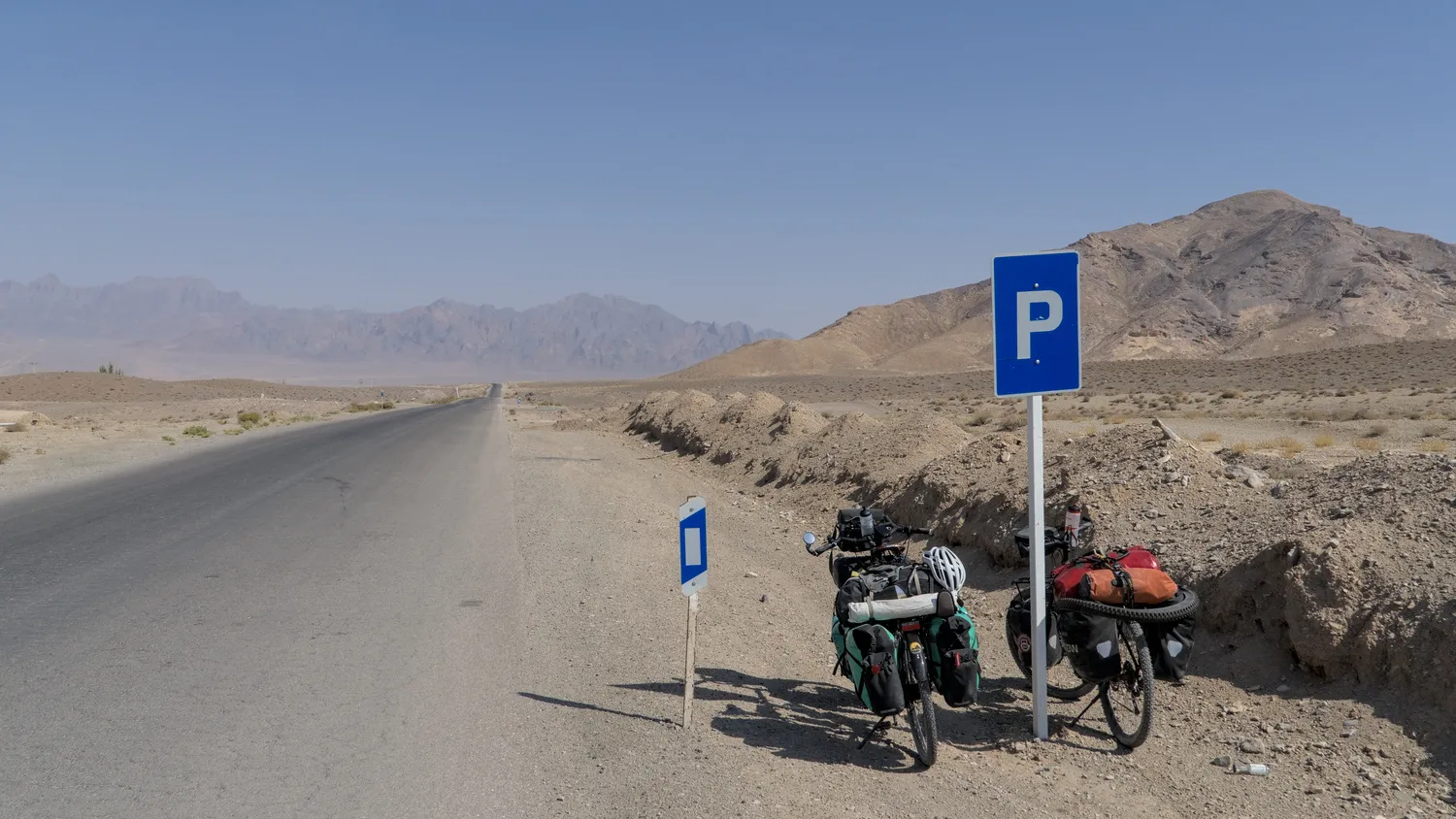

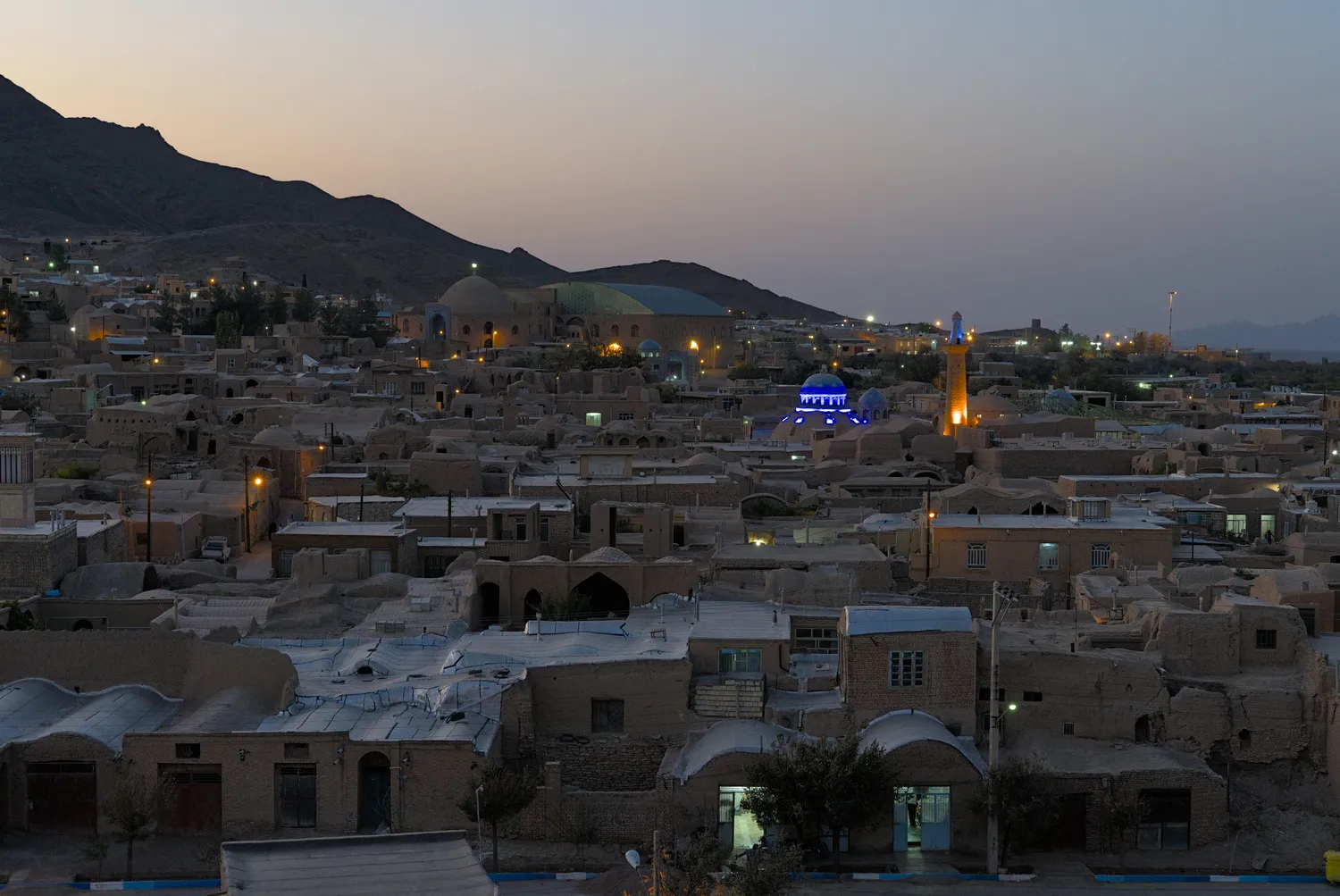
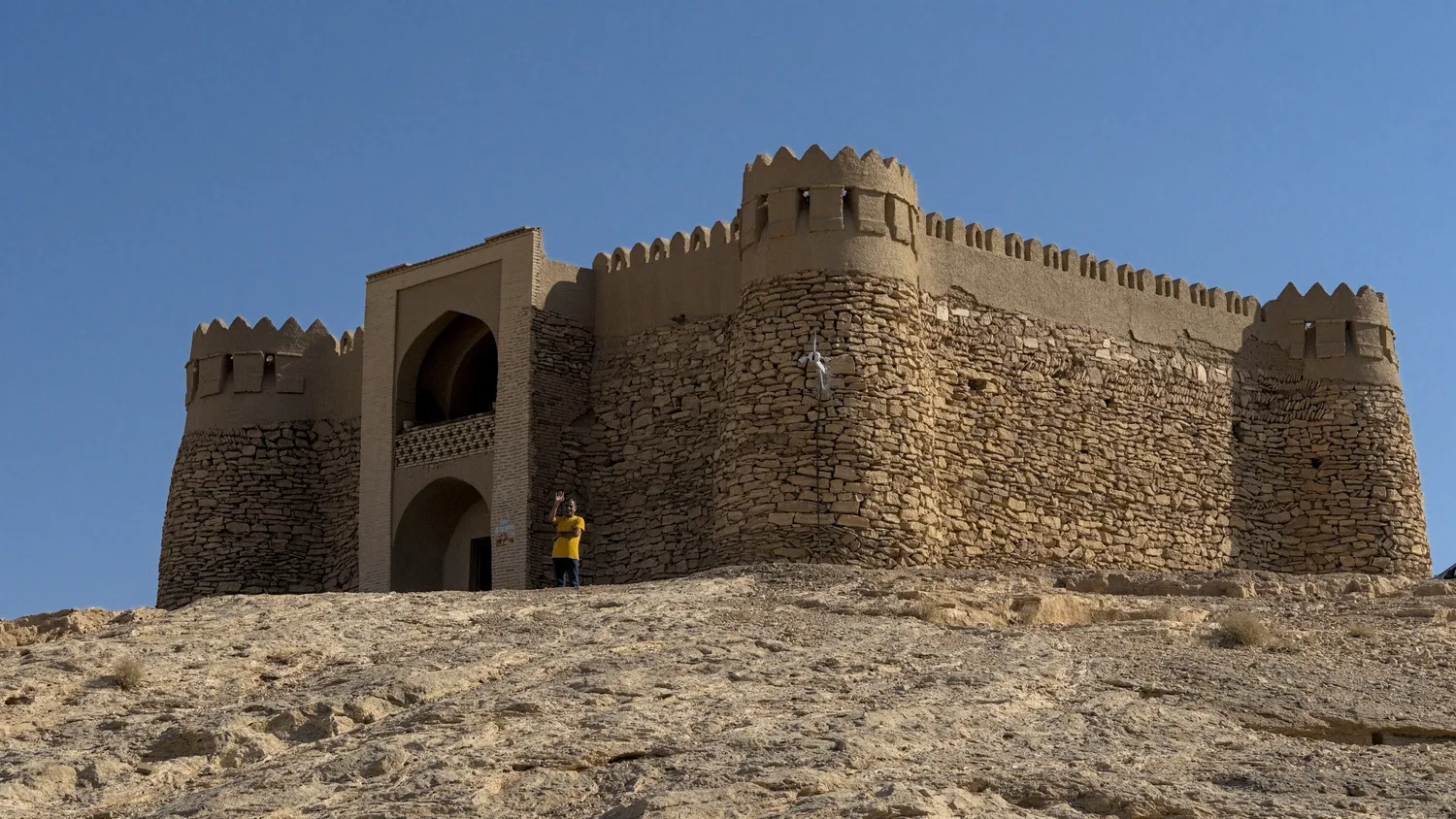
It actually wasn't that far to the day's destination any more, but the rather exhausting morning was taking its toll, and so was the headwind. We took turns riding in each other's slipstream – handy being two. In the late afternoon we finally made it: we had reached the desert village of Nadushan. We knew from other cycle tourists that there was supposed to be a cheap place to stay here. But where the map showed a guesthouse, the doors stayed shut. But we were in Iran, after all, and it didn't take long until a friendly villager drove ahead of us to the castle of Nadushan. Yes, that's right, we were going to spend this night in a castle. The building was much more compact than the old caravanserai and lovingly restored. The owner only spoke a few words of English, but that didn't diminish his hospitality in the slightest. We were really well looked after here. Juicy pomegranates were served for relaxing on the balcony, and dinner was a delicious stew. Our host proudly played a little on the traditional santur and afterwards showed us the guest books, which went back a few years already. We were by far not the first cycle tourists he had hosted.
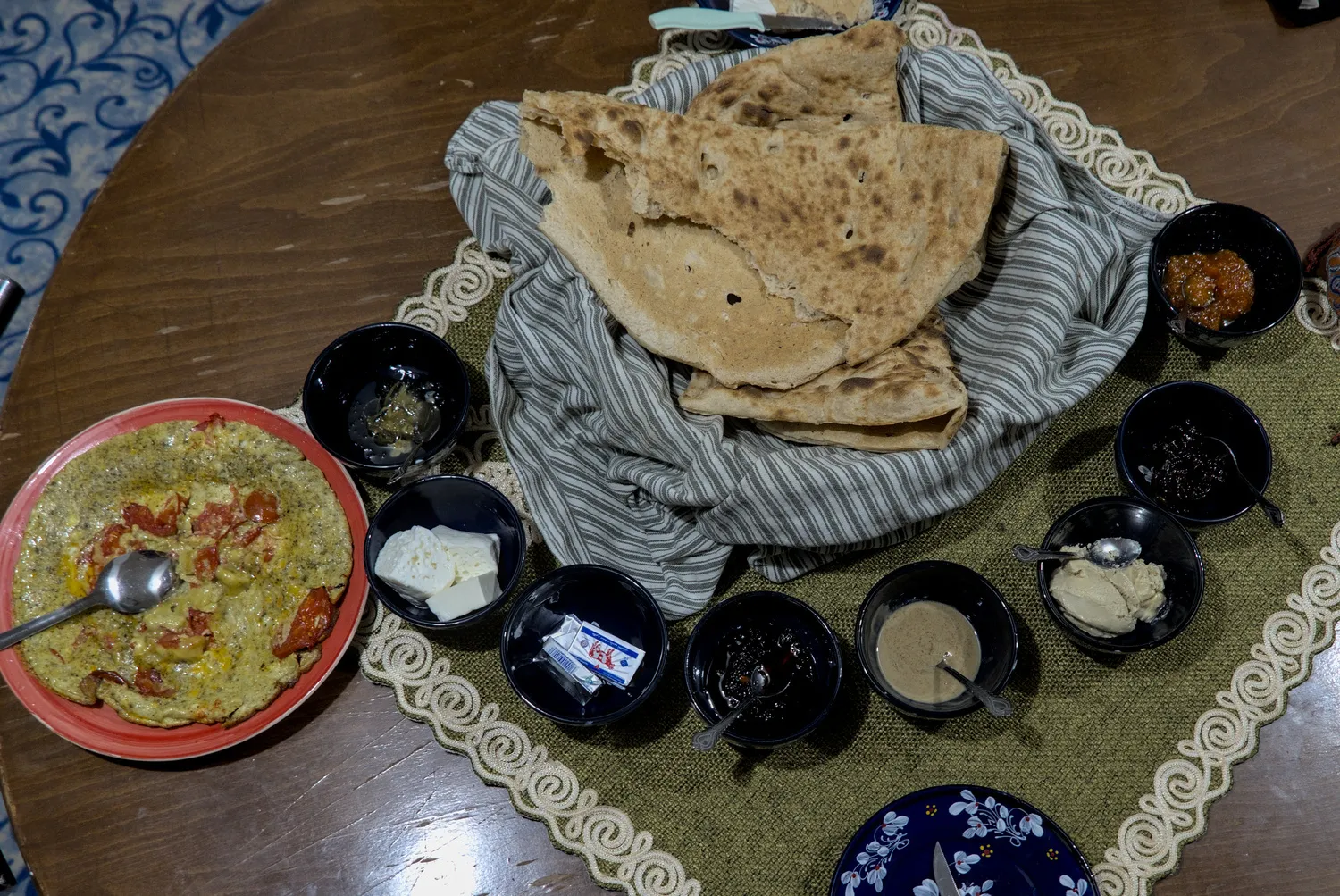
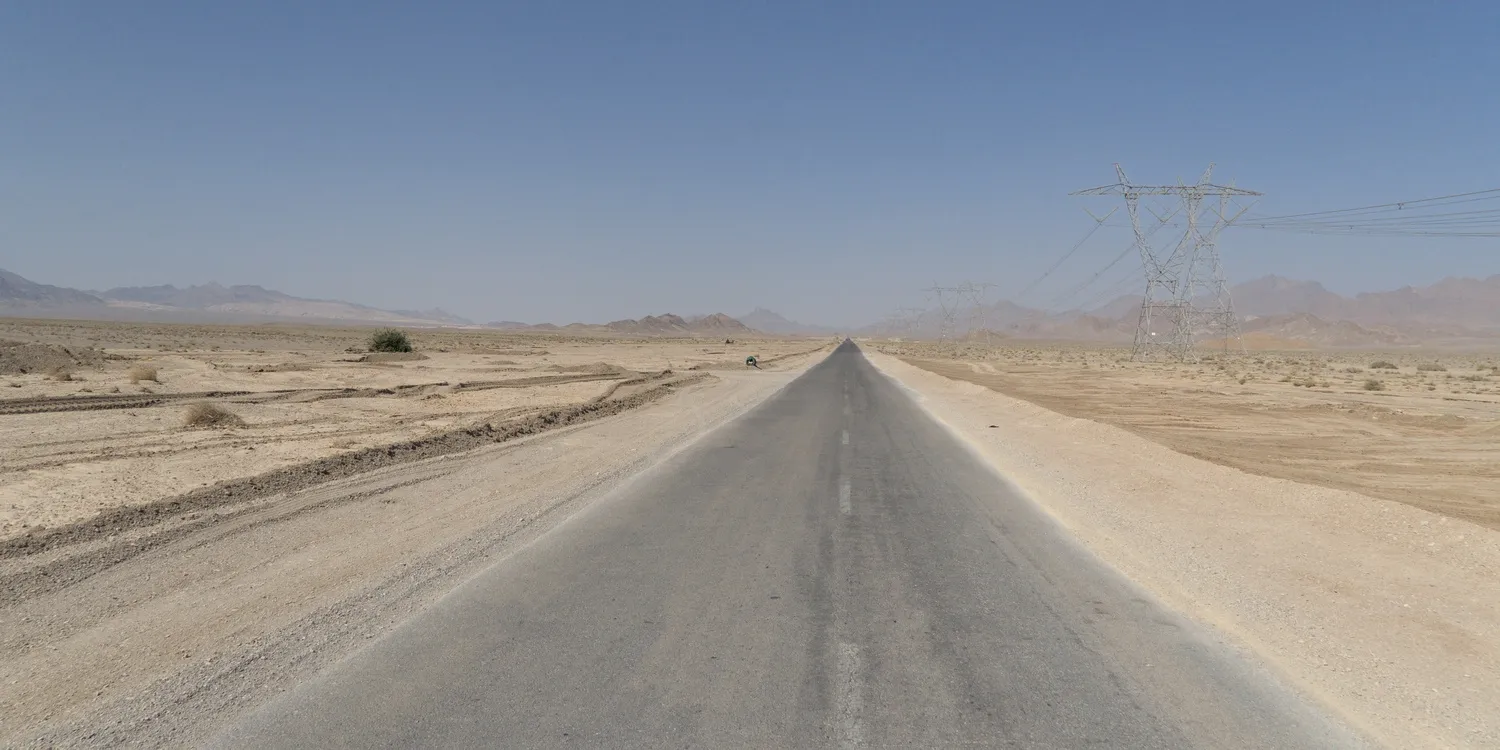
Breakfast the next morning was just as delicious as dinner. Accommodation and food there were really top-notch, and incredibly cheap too. Actually, it would have been a good place for a rest day, but unfortunately my visa was running out the day after next and urgently had to be extended in Yazd. So we tackled the last section to the desert city. At about 90 kilometres it was quite a stretch again, but it was supposed to be mainly downhill. Quite doable without a nasty wind. And we were lucky again. It went like a charm. Some sections seemed almost endless to me, but that was probably simply down to the lack of anything interesting, because most of the time it just went straight ahead, with nothing but vast emptiness all around. As a “new element” there were high-voltage pylons and, in the distance, large industrial complexes, which we eventually passed as well. But they weren't exactly appealing either.
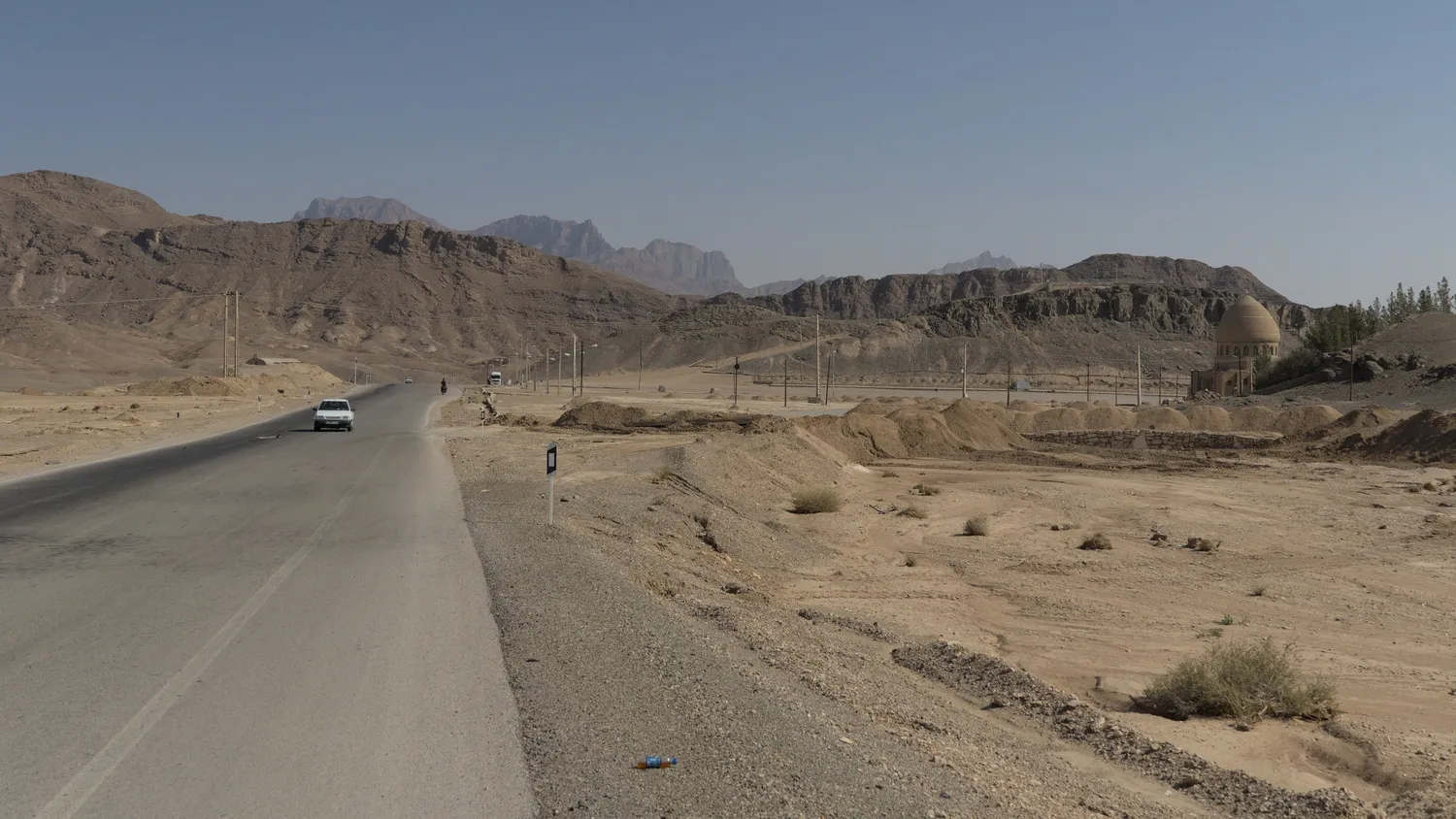
But this desert tour wouldn't be a dream tour if the ending weren't great as well. And it was, because at some point we found ourselves in the beautiful old town of Yazd. Freshly showered, we even made it in time for sunset to wander through the alleys and let the unique charm of the labyrinth of mud buildings in the evening light sink in.
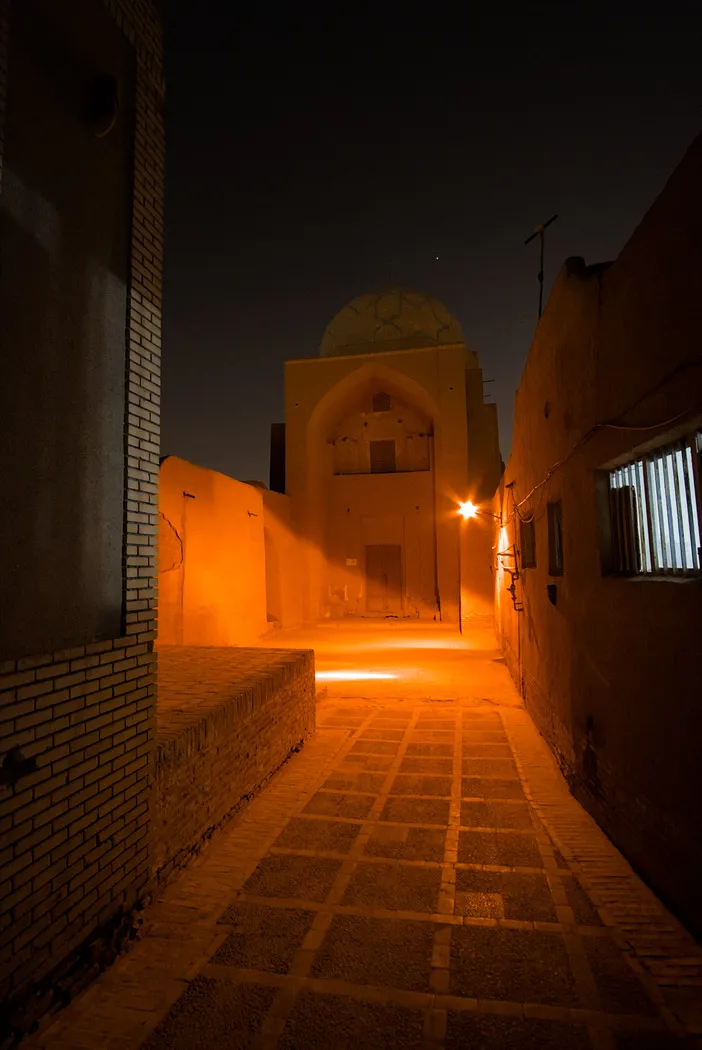
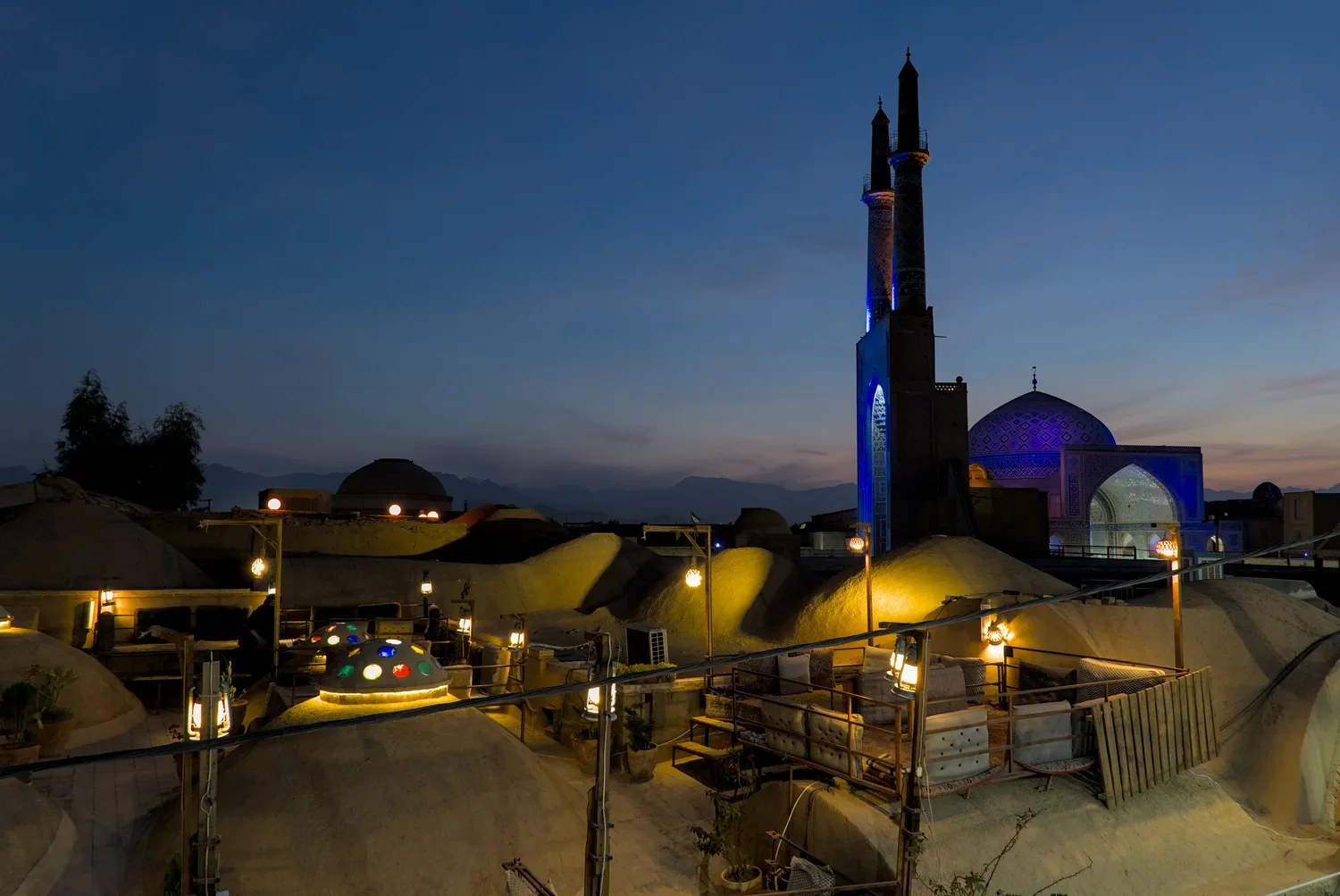
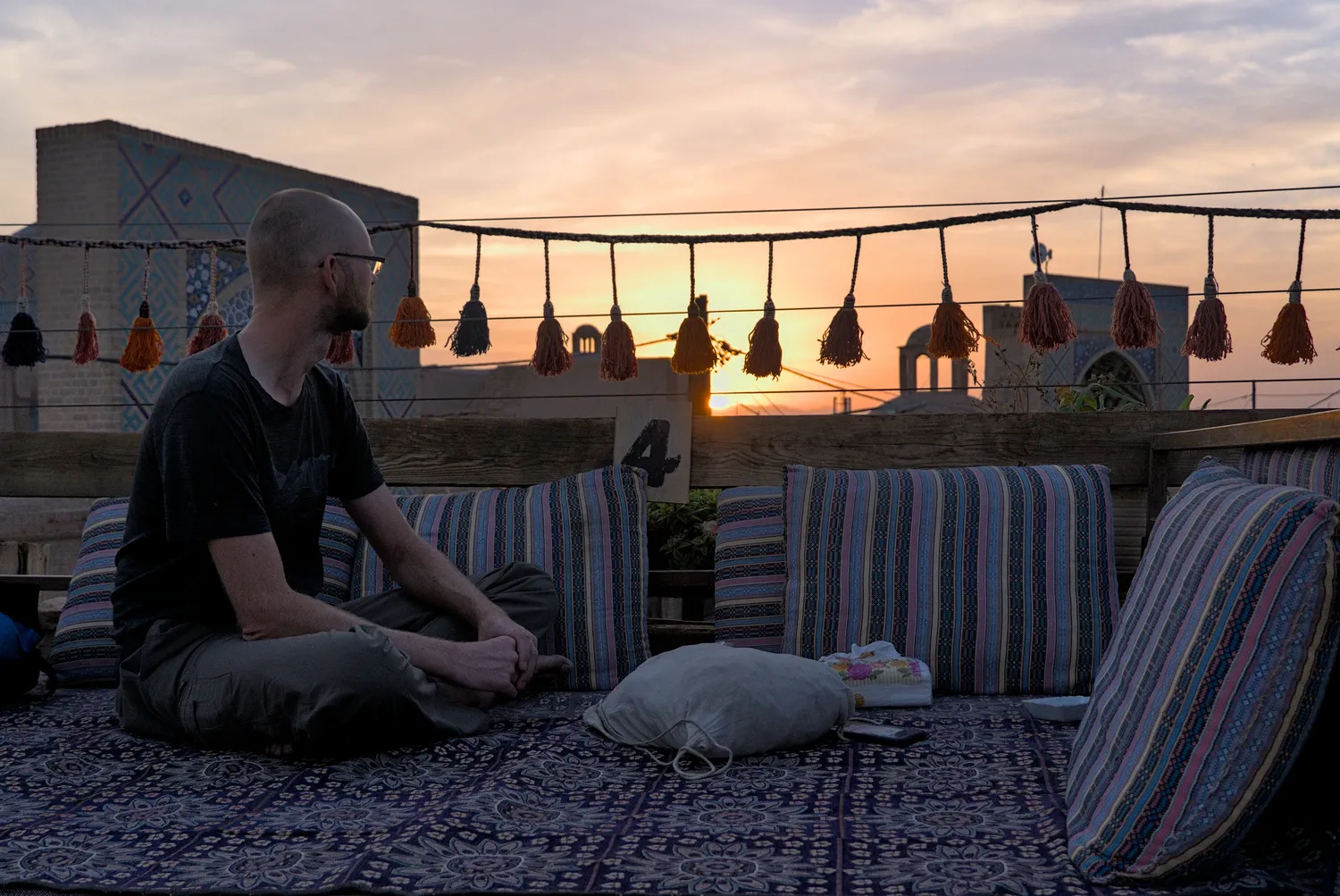
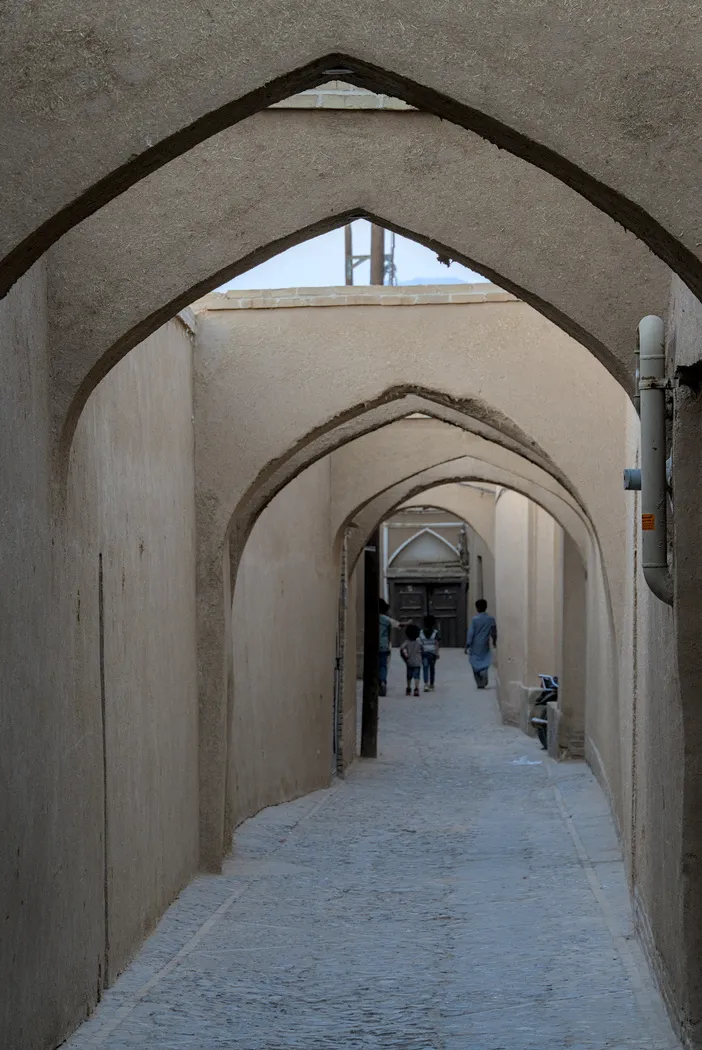
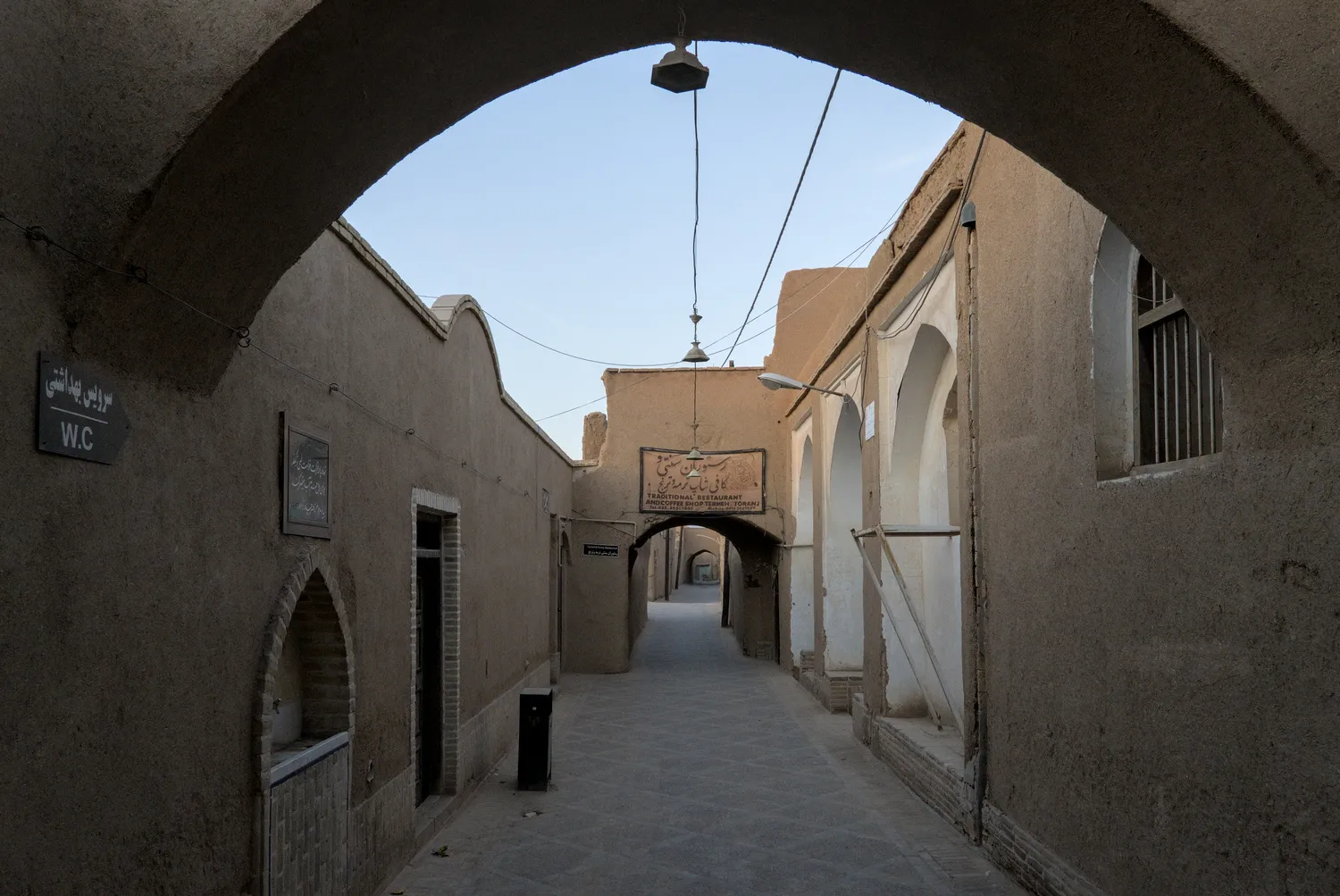
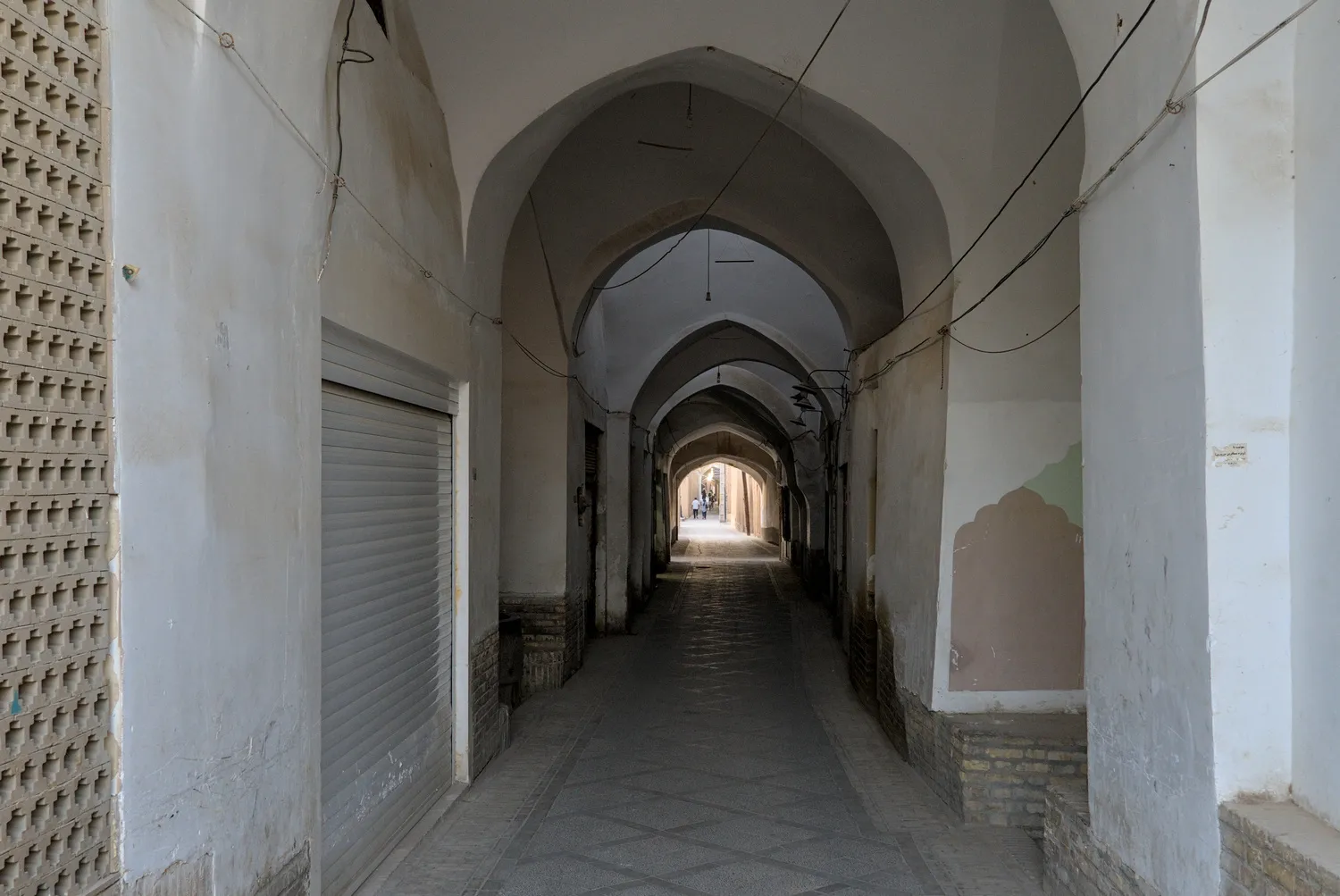
This ride through the desert is one of my best memories of Iran. It was simply perfect. Solitude, endless, utterly barren expanses, excellent weather and outstanding company. The abandoned caravanserai in the middle of the desert, the village of Nadushan and then arriving in the desert city of Yazd – it had as much oriental spirit as I had dreamed of, it was my very own tale from the Thousand and One Nights.
Practical info
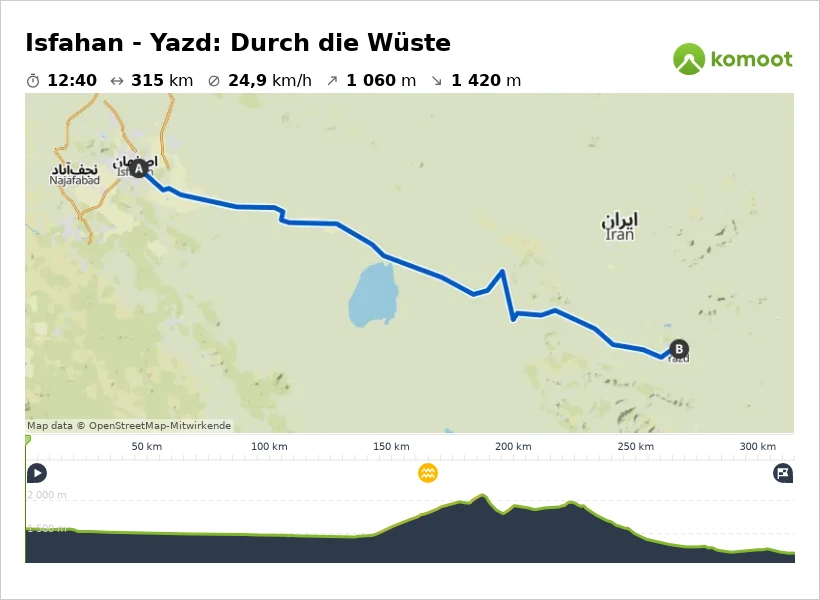
For everyone who wants to ride the route themselves: at a comfortable pace it's not three but at least four days. For us the actual desert section only took three days. With crosswind or headwind it's probably more like five than four days, in which case you might also want to be a bit more economical with your water.
As for supplies, you can still shop well in the small town of Varzaneh and should above all fill up on water there. The next reliable source is only about 120 kilometres further on in Nadushan, unless you flag down any drivers who might happen to pass by. On this section, especially shortly before and after the caravanserai, we made the slowest progress because of the condition of the track. The accommodation in the old castle in Nadushan can only be warmly recommended. The owner is extremely hospitable, there's good dinner and breakfast – all at almost too low prices.
Travel time: October 2022

